Dosya · an essay series
Smart Cities, in Questions
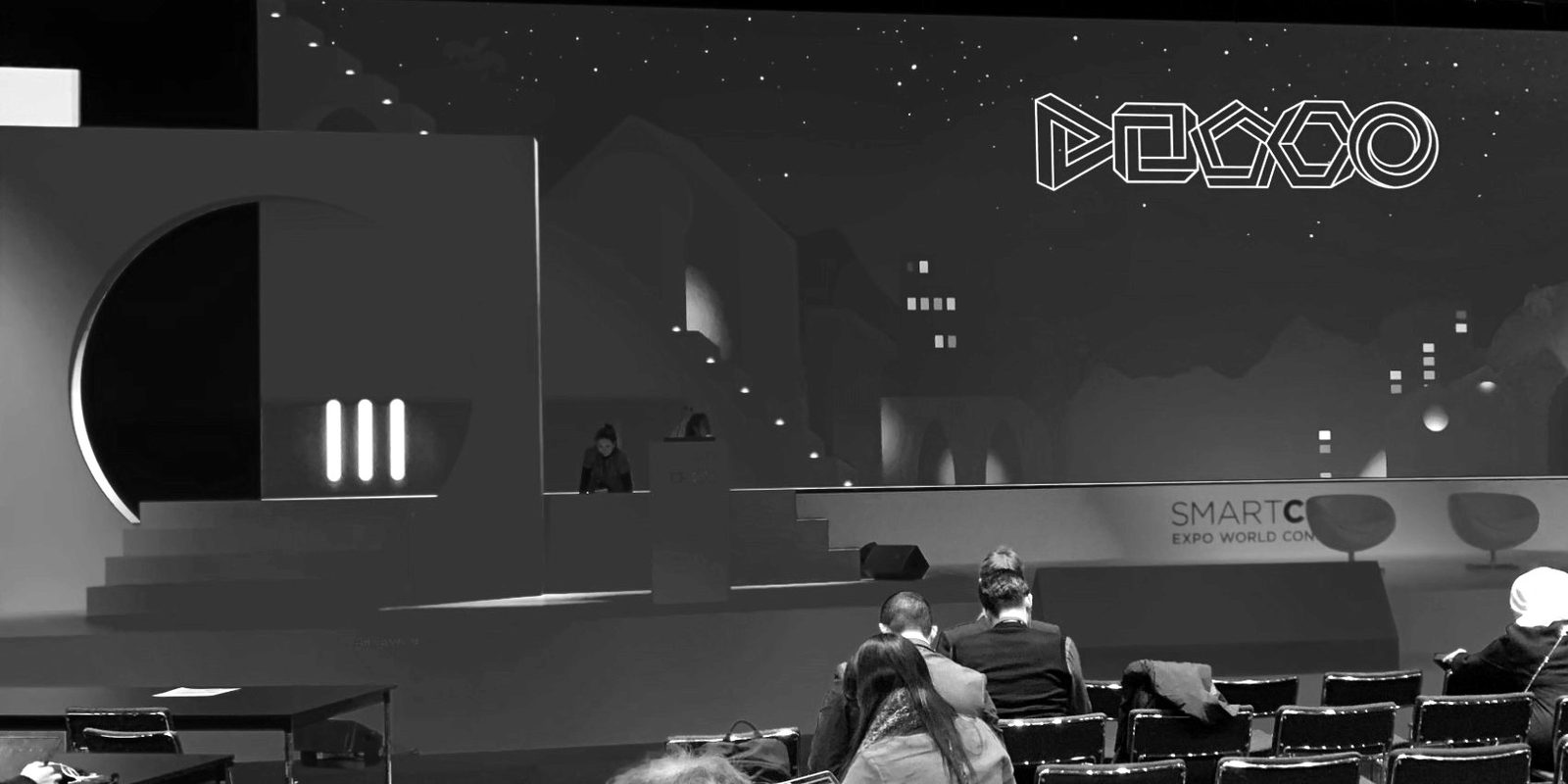
I have been hearing the vocabulary of smart cities for a long time. Recently I asked myself how much of what I thought I knew I actually knew; the answer was what I had learned on a three-day visit to a fair in 2019.
I came back from that fair with a suspicion: the part on show was the easy part, and the hard part had been swept under the carpet — at least, that is what I thought. I still have my notes from those days; I built this series on them.
Today I have ten questions in mind. I know their order, but not their answers, nor where the answers will take me.
- What is a city, really?
- What kind of problem is a city?
- What did “smart” promise, and who promised it?coming
- What is a digital twin: a map, a model, or a mirror?coming
- What feeds the twin? Whose data is it?coming
- Can the twin foresee the city's future?coming
- Who decides: planners, algorithms, or residents?coming
- Where does seeing the city turn into watching people?coming
- What actually worked, and how do we know?coming
- What does AI change, and what does it leave unchanged?coming
The first question is different from the others; I asked it out of curiosity alone. The last one will make me think about how artificial intelligence might affect what I learn on the way to the ninth.
One loop, taken from my Barcelona notes, ties all the questions together: notice, decide, respond.
The fourth, fifth, and sixth questions are about digital twins, but the series is not about digital twins. A digital twin is one of the important things that come to mind when someone says “smart city”.
I have tried to build every answer the same way: first the honest answer, then the best technique we have today, then an example with a name. Every claim is tied to a note, and every note gives the sentence from the source in the source’s own language.
As you read, please bear in mind that I am not a smart-city expert — but that I have been on the side that designs the technologies in question.
For the whole series, I had help from the Thinking Studio I built and from Claude. Emel Okay’s and Özgür Yüksel’s feedback improved it; at the end of each essay I say who read it. The decisions and the mistakes are mine.
The order matters; I begin with the first question: What is a city, really?