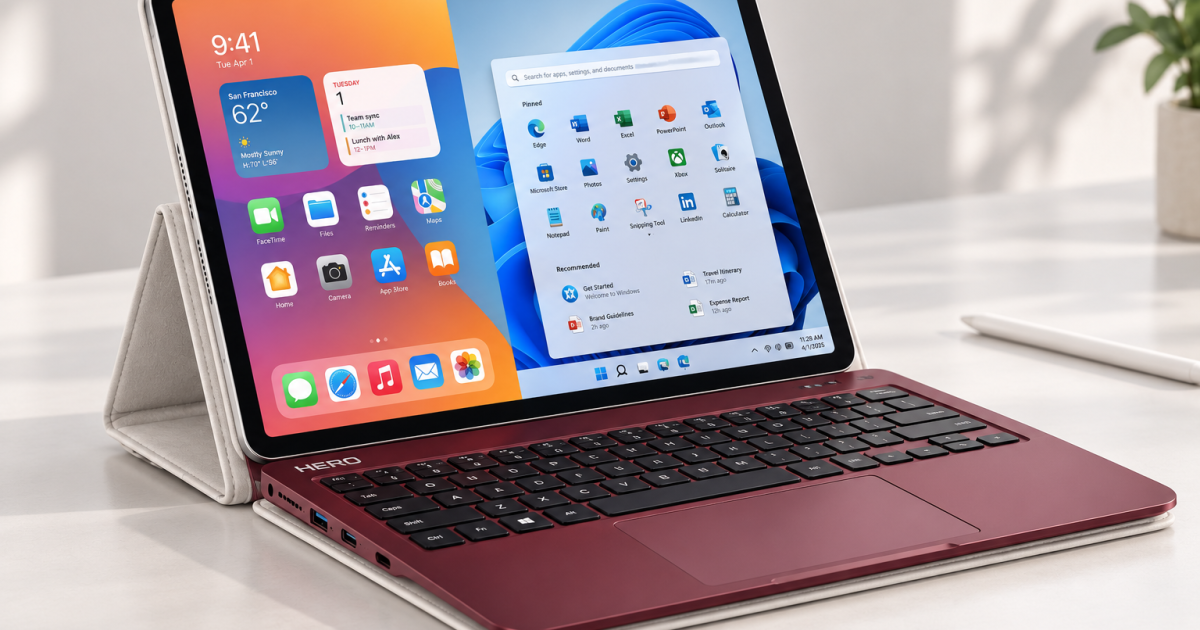
SummaryHero Devices' Hero Keyboard model packs a fully functional Windows 11 computer (Intel Core Ultra 5 125H, 16 GB RAM, 512 GB SSD) into a keyboard that is 11.8 mm thick and weighs 720 grams. Connecting via USB-C to a tablet or monitor, the device turns any nearby screen into a desktop computer. The $999 Founders Edition version will be available for sale in the US and Canada in the fourth quarter of 2026. |
Why it mattersThe device solves a real problem for travelers who carry both a tablet and a laptop. It eliminates the need for a second screen while offering a licensed Windows environment, not just a streaming shell. Hero Keyboard positions itself as a universal 'portable brain' for any screen, from desktop monitors to TVs and AR glasses. This expands its use case beyond tablets. The concept occupies a growing niche market between affordable options like the Raspberry Pi 400 and AR-focused designs like Spacetop. |
Highlights- Fully licensed Windows 11 with Intel Core Ultra 5 125H, 16 GB LPDDR5, and 512 GB NVMe (user-upgradeable via removable panel)
- Wired 'Hero Port' USB-C connection promises zero-latency video; companion app provides touch/stylus support on iPadOS 17+ and Android 7+ systems
- Optional Sidekick case combines the keyboard with an 11-inch tablet and folds into a stand; total combination weight is approximately 1.2 kg
|
Critical takeFor a device that requires a visible cable to connect to a tablet and needs 200–250% Windows scaling on an 11-inch screen, the claim of being a 'laptop alternative' at a $999 price point seems exaggerated. iPhone is not supported. Additionally, the 'zero latency' promise relies on a wired connection, which weakens the portability story it is trying to sell. |
This critique was written by the local AI model
Qwen3.8-27B. I chose the story; I do not review each critique before it is published.