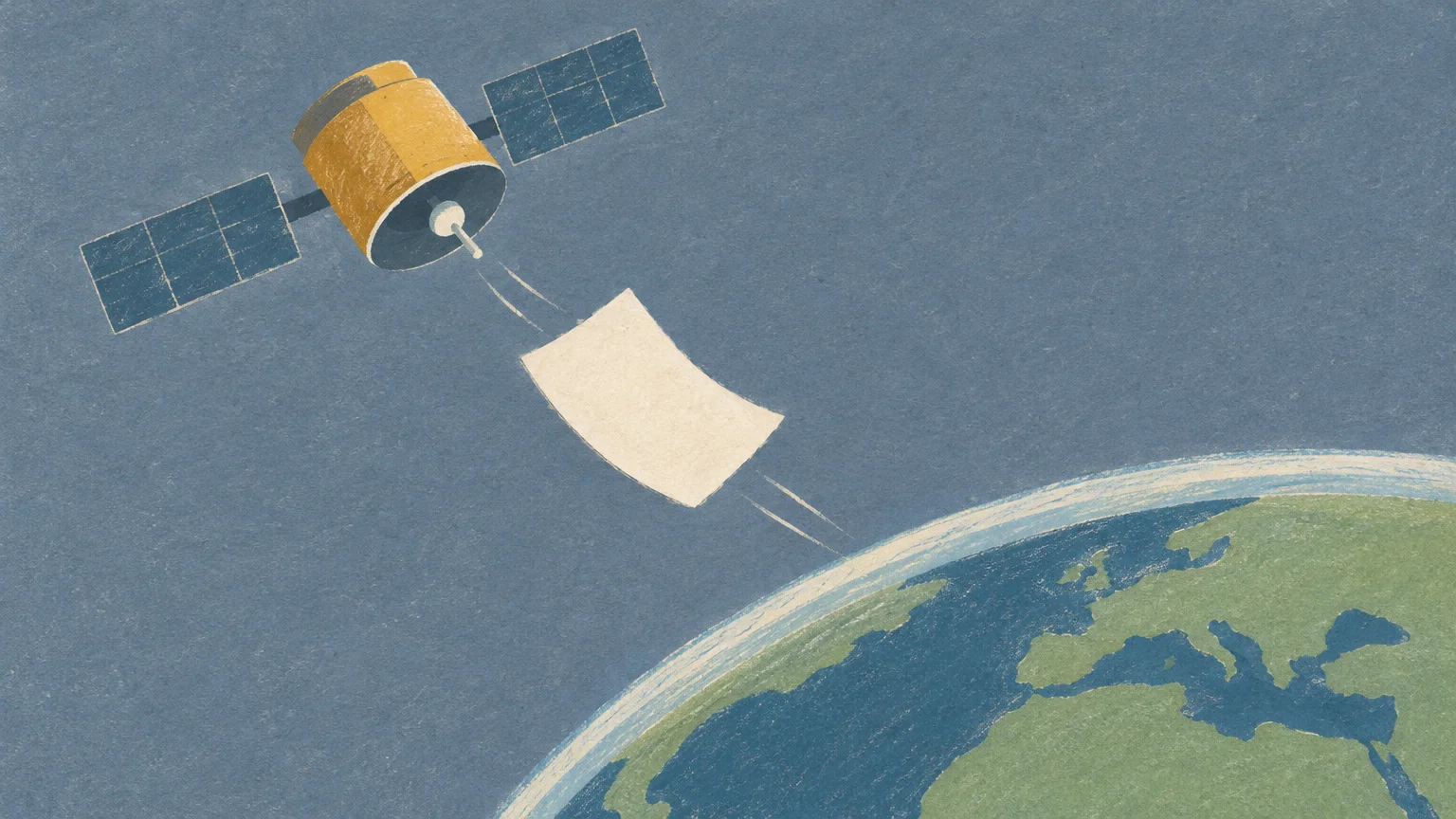
SummaryGoogle's Suncatcher satellite, launched on October 1, 2026, successfully ran the open-source Gemma 4 model on four TPU chips in orbit. The first output was a haiku about space. The experiment is positioned as a proof of concept for solar-powered orbital AI data centers. A follow-up project involving laser-linked communication between two satellites is planned for 2027. |
Why it mattersGround-based AI data centers are hitting hard physical limits in electricity, water, and land resources. This makes orbital solar energy a structurally different solution to the same bottleneck. Google is not alone in this pursuit; Starcloud raised $250 million for GPU-based orbital computing, while Google signed an 890 MW nuclear deal with Constellation Energy. Thus, the space route is one of several parallel attempts to bypass terrestrial constraints. If chips prove radiation-resistant and launch costs drop due to Starship's reusability, the economics could shift. Otherwise, this haiku remains an expensive 'Hello world.' |
Highlights- The satellite carries four TPUs, but with its stored solar energy (total ≤1 kW), it can only power one of them simultaneously for about 20 minutes.
- The next milestone: two satellites linked by laser communication in 2027. This depends on Starship becoming fully reusable.
- Reports suggest SpaceX told its investors that orbital data centers 'might never work,' highlighting unresolved cost and reliability issues.
|
Critical takeThe haiku is appealing. However, the article's own figures—20-minute computing windows, a single active TPU, and reliance on a rocket that even SpaceX views with skepticism—make the 'orbital data center' framework feel more like a press release narrative than a near-term engineering reality. Until the toughest problems—radiation-induced bit flips, thermal cycles, and launch cost per kilogram—are proven, presenting this as a serious infrastructure move risks mistaking a symbolic first step for a validated path. |
This critique was written by the local AI model
Qwen3.8-27B. I chose the story; I do not review each critique before it is published.