 BIG and to.org Launch Modular Model Designing Refugee Camps as CitiesRead the article |
SummaryBIG and to.org have introduced 'Refugee Cities,' an interlocking modular master plan that reimagines refugee settlements as long-term urban systems. The project's first detailed application targets Bidi Bidi in northern Uganda (~230,000 residents). The design employs a productive, parametric logic that transforms 250 m² family plots into courtyards, neighborhoods, and centers. By embedding markets, workshops, and production facilities into the system, it aims to attract institutional investment rather than relying on charity. |
Why it mattersSince the average duration of camp stays has extended to two decades, the proposal challenges the 'temporary' framework that has guided humanitarian architecture for generations. By treating displaced communities' settlements as investment-ready economic nodes, it seeks to shift financing from limited philanthropy to long-term institutional capital. The modular, rule-based system is explicitly designed to adapt to different climates, cultures, and population scales, transforming it from a one-off project into a potential template. |
Highlights- Interlocking productive framework: plot → courtyard → cluster → neighborhood → center. Each level adds layers of shared infrastructure such as markets, co-working spaces, healthcare, and production.
- Economic transformation: Production facilities and local employment are integrated into the master plan to turn the settlement into a self-sustaining node and reduce aid dependency.
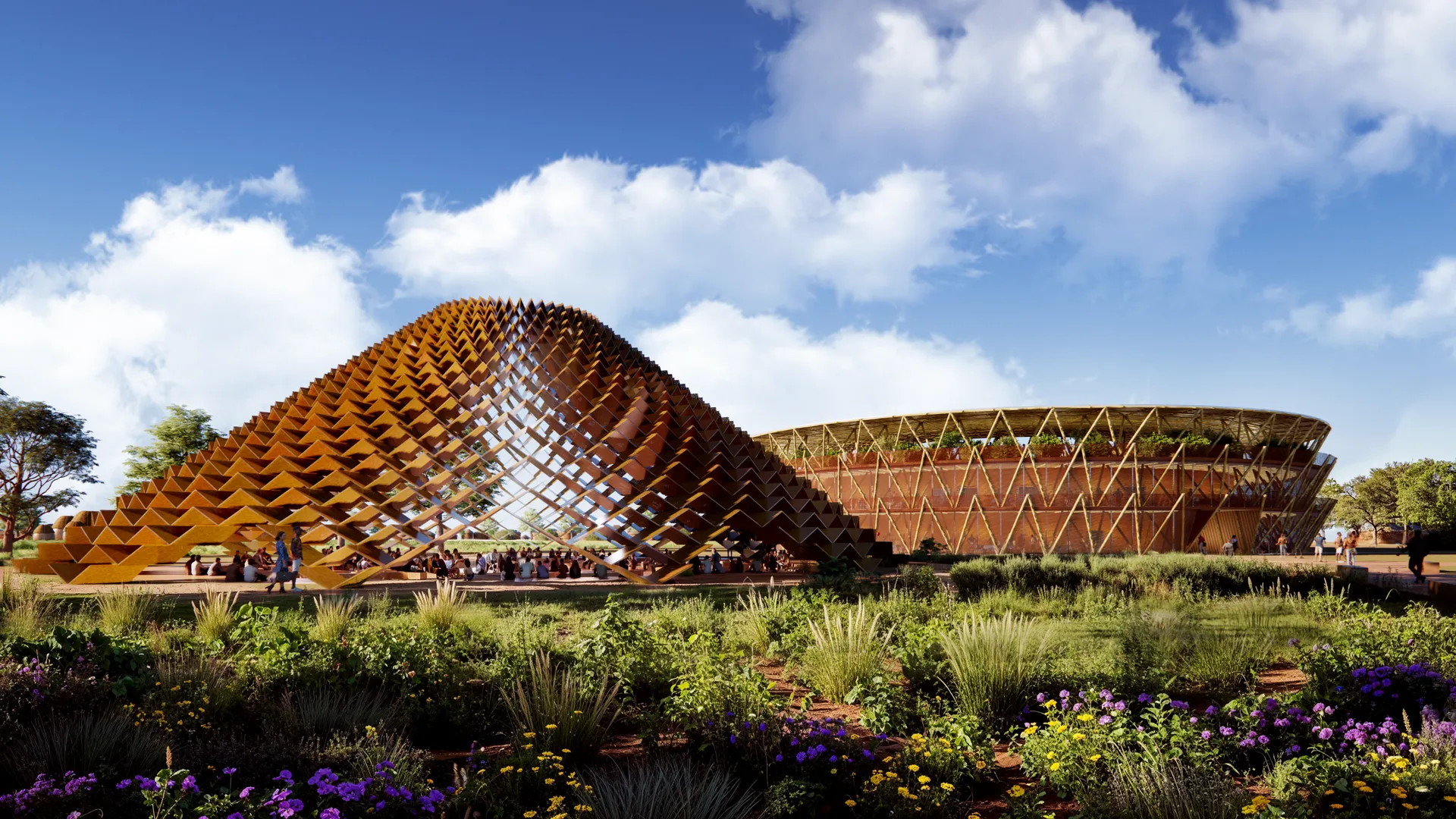
- The prototype is already being realized at the Bidi Bidi Performing Arts Center, grounding the vision in a concrete, physical, and testable first step.
|
Critical takeThe article reads more like a press release than an independent analysis: it lacks details on funding figures, governance, or land ownership. Furthermore, there is no explanation of how the political and security constraints that actually determine camp operations in Uganda are addressed by this modular system. Labeling the parametric logic as the 'most interesting feature' serves as a veneer of design journalism that obscures the far more difficult questions of who will build, who will maintain, and who holds decision-making power once tents become 'city blocks.' |
This critique was written by the local AI model
Qwen3.8-27B. I chose the story; I do not review each critique before it is published.