 Brain circuit enabling awakening to pup cries discovered in miceRead the article English (automatic translation) |
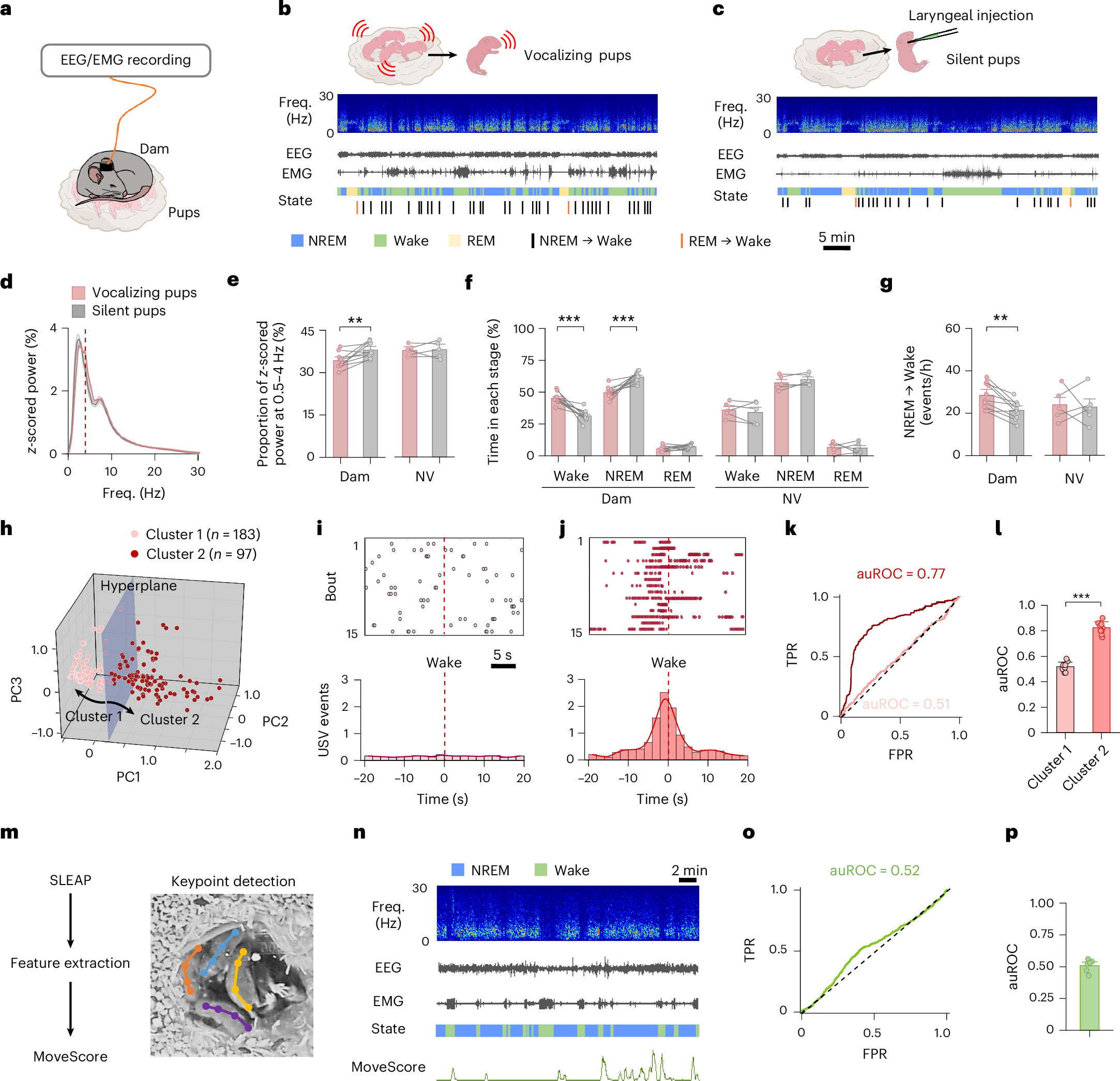
SummaryResearchers identified a specific cortico-hypothalamic circuit in mice that governs maternal wakefulness. This circuit consists of projections from L6 neurons in the temporal association/ectoral cortex to the anterior preoptic area. It selectively awakens mothers from NREM sleep in response to pups' ultrasonic vocalizations. During this process, an increase in dopamine D1 receptors serves as the fundamental molecular switch triggered by the transition to motherhood. |
Why it mattersThis study is the first to elucidate at the circuit level why infant crying provides 'special access' to wakefulness systems. It fills a long-standing gap in maternal neurobiology by linking a specific thalamo-cortical-hypothalamic pathway to a defined receptor change, Drd1. This provides a testable mechanistic framework for caregiving behaviors that may disrupt sleep. Such a framework could guide human sleep medicine and perinatal mental health research. Furthermore, the study proves the selectivity of this mechanism, as non-social sounds do not activate the same pathway, ruling out a general auditory arousal explanation. |
Highlights
|
Critical takeThe claim that this circuit is 'likely a fundamental adaptation for caregiving in mammals' is a significant generalization based on a single mouse model. The article does not provide human imaging or comparative anatomy data to support this broader conclusion. Additionally, while the increase in Drd1 is identified, the upstream endocrine or neuromodulatory signals that trigger this receptor change during the postpartum transition have not yet been characterized, leaving a critical link in the mechanistic chain missing. |