 Farelerde yavru seslerine uyanmayı sağlayan beyin devresi keşfedildiBrain circuit enabling awakening to pup cries discovered in miceHabere gitRead the article Türkçe (otomatik çeviri) English (automatic translation) |
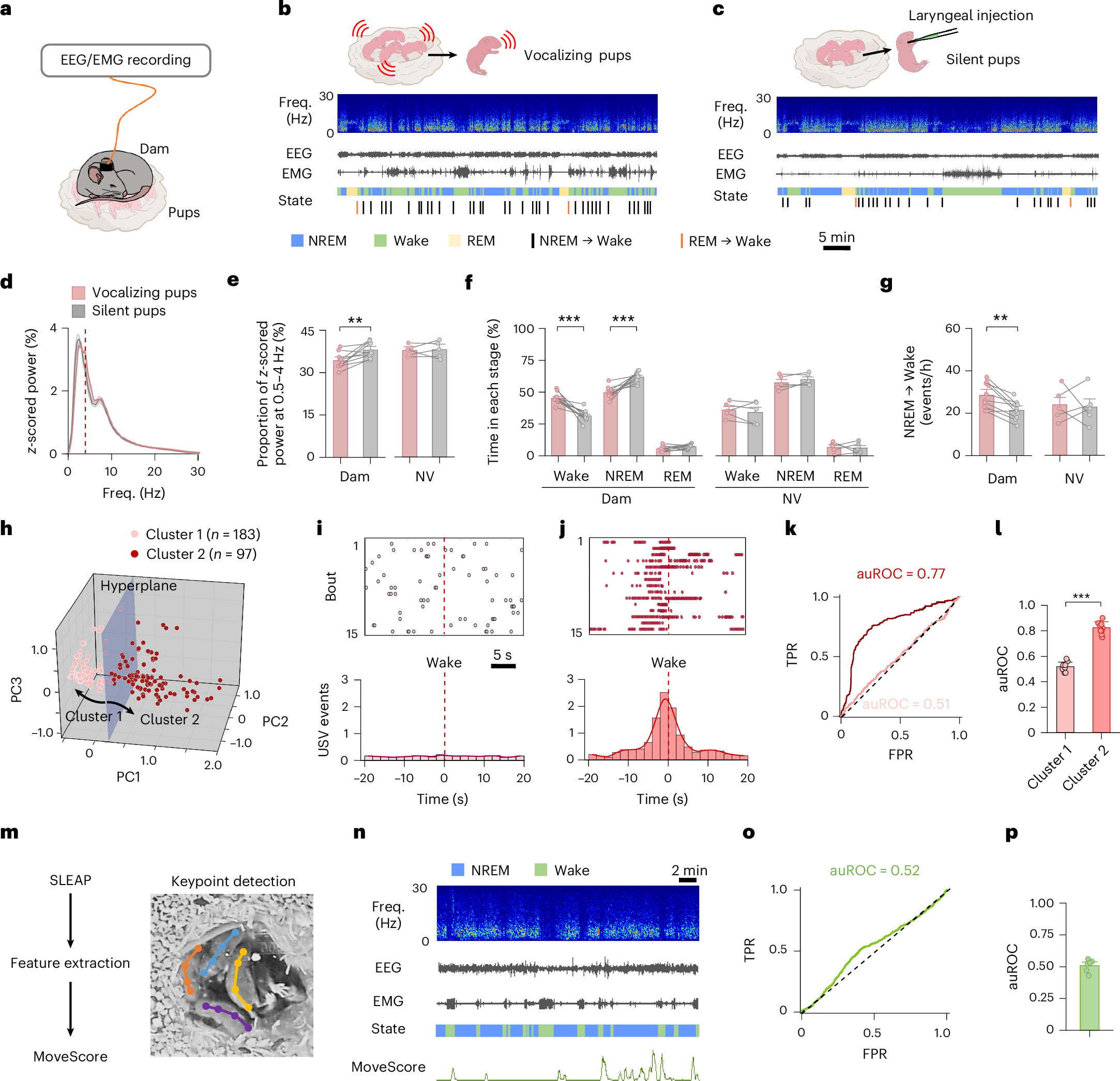
ÖzetSummaryAraştırmacılar, farelerde anne uyanıklığına özel bir kortiko-hipotalamik devre keşfetti. Bu devre, temporal asosiyasyon/ektoral korteksteki L6 nöronlarından ön optik alana uzanan projeksiyonlardan oluşuyor. Devre, yavrunun ultrasonik seslerine yanıt olarak anneleri NREM uykusundan seçici olarak uyandırıyor. Bu süreçte dopamin D1 reseptörlerinin artması, anneliğe geçişle tetiklenen temel moleküler anahtar işlevi görüyor.Researchers identified a specific cortico-hypothalamic circuit in mice that governs maternal wakefulness. This circuit consists of projections from L6 neurons in the temporal association/ectoral cortex to the anterior preoptic area. It selectively awakens mothers from NREM sleep in response to pups' ultrasonic vocalizations. During this process, an increase in dopamine D1 receptors serves as the fundamental molecular switch triggered by the transition to motherhood. |
Neden ÖnemliWhy it mattersBu çalışma, bebek ağlamasının neden uyanıklık sistemlerine 'özel erişim' sağladığını devre düzeyinde ilk kez aydınlatıyor. Bu bulgu, maternal nörobiyolojide uzun süredir var olan bir boşluğu dolduruyor. Çalışma, belirli bir talamo-kortikal-hipotalamik yolu tanımlanmış bir reseptör değişimi olan Drd1 ile ilişkilendiriyor. Bu sayede, uyku bozukluklarına yol açan bakım davranışları için test edilebilir bir mekanistik çerçeve sunuluyor. Bu çerçeve, insan uyku tıbbı ve perinatal ruh sağlığı araştırmalarına yön verebilir. Çalışma ayrıca seçiciliğin gerçek olduğunu da kanıtlıyor. Sosyal olmayan sesler aynı yolu aktive etmiyor. Bu durum, genel bir işitsel uyanıklık açıklamasını dışarıda bırakıyor.This study is the first to elucidate at the circuit level why infant crying provides 'special access' to wakefulness systems. It fills a long-standing gap in maternal neurobiology by linking a specific thalamo-cortical-hypothalamic pathway to a defined receptor change, Drd1. This provides a testable mechanistic framework for caregiving behaviors that may disrupt sleep. Such a framework could guide human sleep medicine and perinatal mental health research. Furthermore, the study proves the selectivity of this mechanism, as non-social sounds do not activate the same pathway, ruling out a general auditory arousal explanation. |
Öne ÇıkanlarHighlights
|
EleştiriCritical takeBu devrenin 'muhtemelen memelilerde bakım için temel bir uyum olduğunu' iddiası, tek bir fare modelinden yapılan önemli bir genellemedir. Makale, bu boşluğu doldurmak için insan görüntüleme veya karşılaştırmalı anatomi verisi sunmuyor. Ayrıca Drd1 artışı belirlense de, doğum sonrası geçişte bu reseptör değişimini tetikleyen üst akım endokrin veya nöromodülatuar sinyal henüz karakterize edilemedi. Bu durum, mekanistik bağlantıdaki kritik bir halkayı eksik bırakıyor.The claim that this circuit is 'likely a fundamental adaptation for caregiving in mammals' is a significant generalization based on a single mouse model. The article does not provide human imaging or comparative anatomy data to support this broader conclusion. Additionally, while the increase in Drd1 is identified, the upstream endocrine or neuromodulatory signals that trigger this receptor change during the postpartum transition have not yet been characterized, leaving a critical link in the mechanistic chain missing. |