 TypeSafe AI’s Jev model reduces hallucinations to zeroRead the article English (automatic translation) |
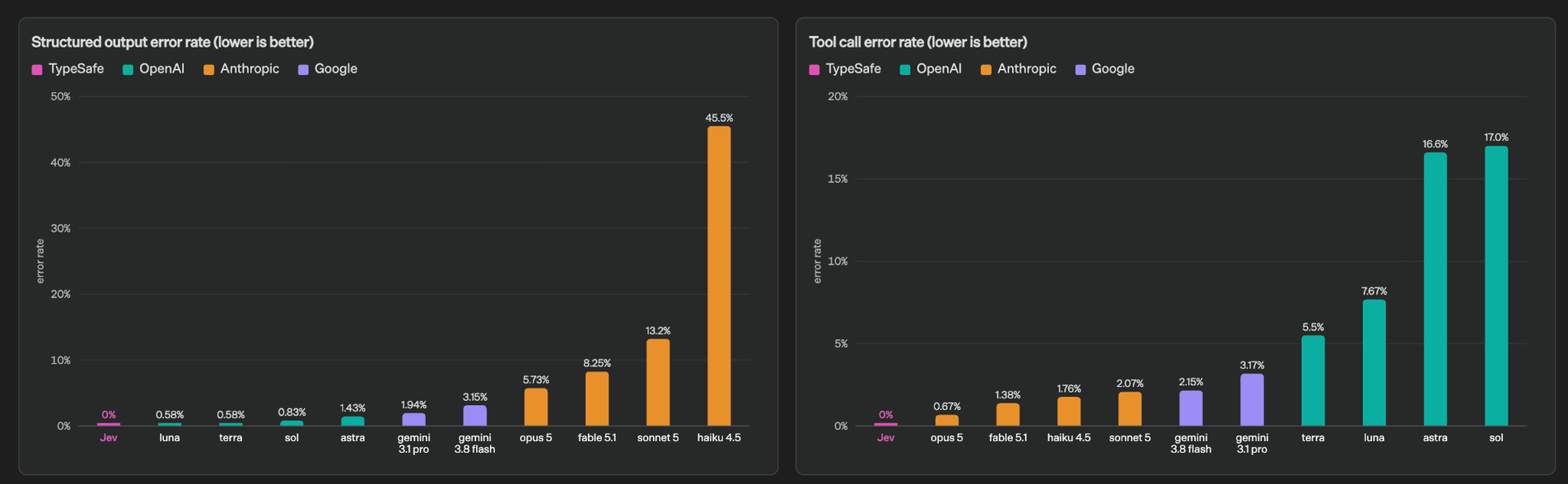
SummaryTypeSafe AI introduced a model called 'Jev'. The model relies on a new RLCD (Reinforcement Learning for Calibrated Decisions) technique, which opts to answer 'I don't know' in uncertain situations rather than making guesses. The company claims a near-zero hallucination rate of 0.042% in a 100,000-question benchmark; this rate is significantly lower than the 0.20% to 10% range typical of large language models (LLMs). |
Why it mattersHallucination remains the biggest trust barrier to deploying LLMs in regulated, safety-critical, or customer-facing workflows. A model that can be added as a calibration or safety layer on top of existing systems (such as GPT-6 Astra, Fable 5.1, etc.) could significantly reduce verification costs and liability risks for companies. If the 'refuse to answer when uncertain' paradigm scales, the industry's focus will shift from asking 'how smart is the model?' to 'how honestly does the model report its own limits?'. |
Highlights
|
Critical takeSince the article is explicitly labeled as 'Corporate PR', the 'zero hallucination' headline is marketing copy, not peer-reviewed evidence. A model that simply refuses to answer difficult questions can achieve a low error rate without providing practical utility. Furthermore, because the article does not define how 'hallucination' was measured in the benchmark, it is impossible to independently verify the 0.042% figure or compare it against the 0.20%–10% reference range. |