 MIT Araştırmacıları, 3D Baskılı Köprüyle Daha Sürdürülebilir İnşaatın Yolunu Gösteriyor3D-printed bridge points the way to greener constructionHabere gitRead the article Türkçe (otomatik çeviri) English (automatic translation) |
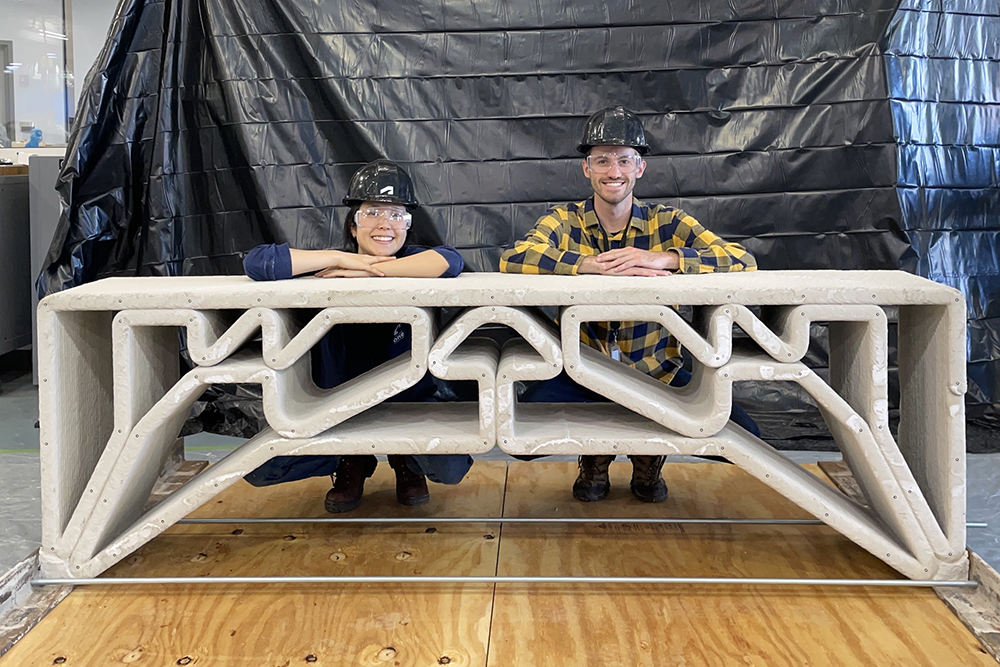
ÖzetSummaryMIT araştırmacıları, gerçek 3D yazıcı kısıtlamalarını (boncuk genişliği, dönüş yarıçapı, kesintisiz yol) doğrudan topoloji optimizasyonuna yerleştiren bir çerçeve geliştirdi. Ekip, bu yöntemi 2,3 metrelik bir beton köprü basıp yük testiyle doğruladı. Köprü, neredeyse hiç eğilmeden 2.000 poundun üzerinde ağırlığı taşıdı.MIT researchers developed a framework that directly incorporates real 3D printer constraints (bead width, turning radius, continuous path) into topology optimization. The team validated this method by printing a 2.3-meter concrete bridge and subjecting it to load testing. The bridge carried over 2,000 pounds with almost no deflection. |
Neden ÖnemliWhy it mattersBeton üretimi, küresel karbon emisyonlarının en büyük kaynaklarından biri. 3D baskı, kalıp kullanımını ortadan kaldırarak malzeme israfını azaltma sözü veriyor. Çalışmanın temel bulgusu şu: Sınırlayıcı faktör betonun dayanıklılığı değil, mevcut yazıcı donanımı. Bu durum, üreticilere belirsiz bir sürdürülebilirlik vaadi yerine somut bir hedef sunuyor. Örneğin 1 santimetrelik boncuk genişliğiyle %76 malzeme tasarrufu sağlanabilir.Concrete production is one of the largest sources of global carbon emissions. 3D printing promises to reduce material waste by eliminating the need for formwork. The study's key finding is that the limiting factor is not the durability of the concrete, but the existing printer hardware. This offers manufacturers a concrete target rather than an ambiguous sustainability promise. For example, using a 1-centimeter bead width can achieve a 76% material savings. |
Öne ÇıkanlarHighlights
|
EleştiriCritical takeBaşlıkta yer alan %76 malzeme azaltma oranı, tek bir 2,3 metrelik açıklıktan türetilen teorik bir üst sınırdır. Saha testleriyle doğrulanmış bir sonuç değildir. Çok katlı yapılara ölçeklendirme, hava koşullarına dayanıklılık ve bina yönetmeliği uyumu gibi konular ise hiç ele alınmamış. Bu durumu 'daha yeşil inşaat' yoluna işaret eden bir gelişme olarak sunmak abartılı olabilir. Küçük bir köprüde malzeme tasarrufu, çimento üretiminin küresel karbon ayak izinde neredeyse hiç fark yaratmaz.The 76% material reduction rate mentioned in the title is a theoretical upper limit derived from a single 2.3-meter span. It is not a result validated by field tests. Issues such as scaling to multi-story structures, weather resistance, and building code compliance are not addressed at all. Presenting this as a step toward 'greener construction' may be an exaggeration. Material savings on a small bridge make almost no difference to the global carbon footprint of cement production. |