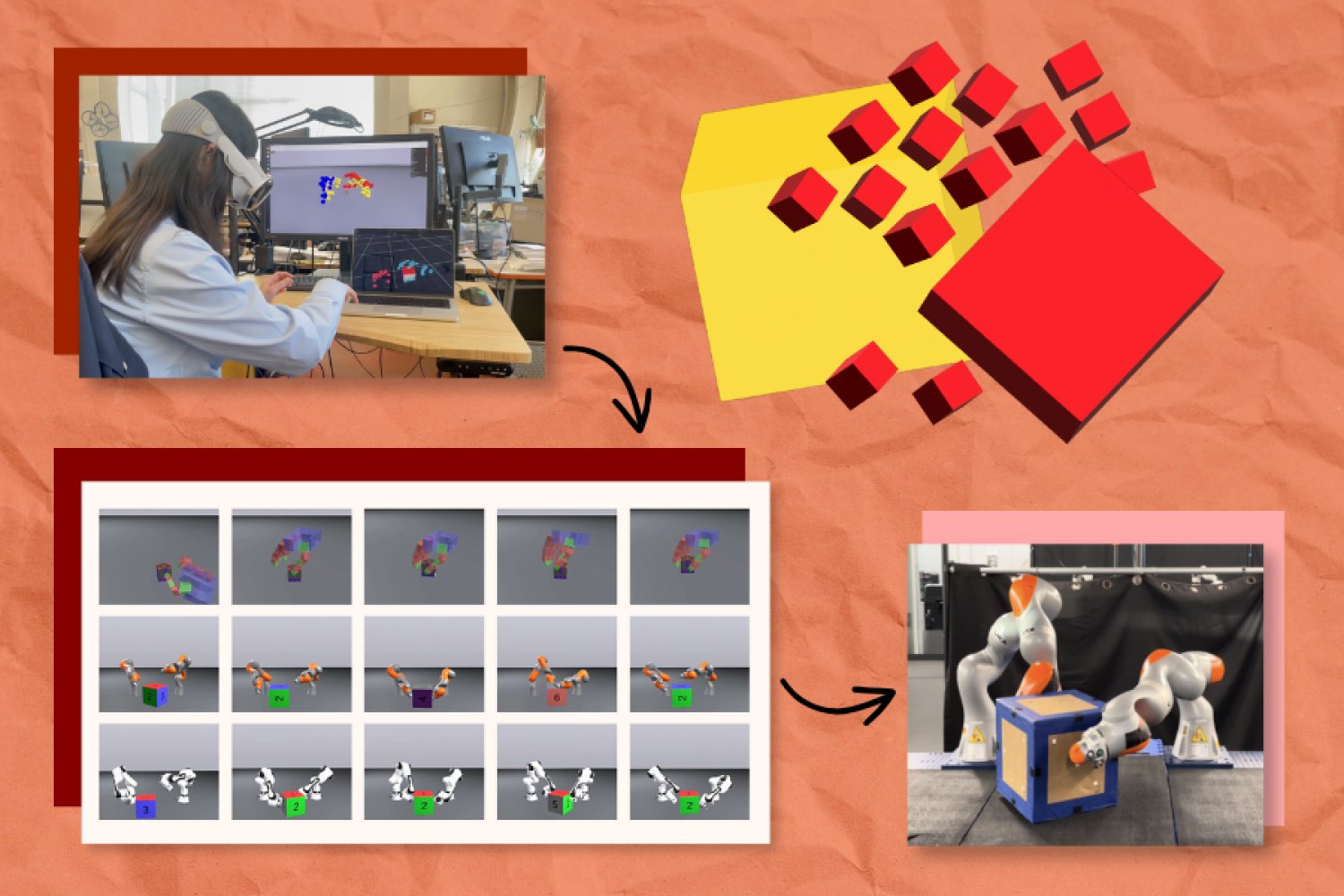
 Simulation-based pipeline tailors training data for dexterous robotsRead the article English (automatic translation) |
SummaryPhysicsGen, developed by MIT CSAIL, converts approximately 24 VR human hand demos into nearly 3,000 robot-specific simulation trajectories. As a result, the success rate of dexterous manipulation increases by up to 60% compared to a baseline based solely on human demos. |
Why it mattersCollecting task-specific demos for every new arm or hand remains the fundamental data bottleneck preventing the achievement of the 'foundation model' maturity reached by LLMs. PhysicsGen decouples the human demo set from machine-specific execution through physics simulation and trajectory optimization. This approach offers a scalable method for generating robot-specific training data without re-recording for every hardware variant. |
Highlights
|
Critical takeThe 81% rate mentioned in the title comes from a single, relatively simple virtual task (a suspended hand rotating a block). The 30% improvement in multi-arm scenarios is still a modest absolute gain. The paper lacks error mode analysis, generalization to new or cluttered objects, and cost/efficiency data for the simulation pipeline. Therefore, the claim of 'nearly 3,000 simulations' may overstate practical readiness for cluttered real-world conditions. |