 Using generative AI to diversify virtual training grounds for robotsRead the article English (automatic translation) |
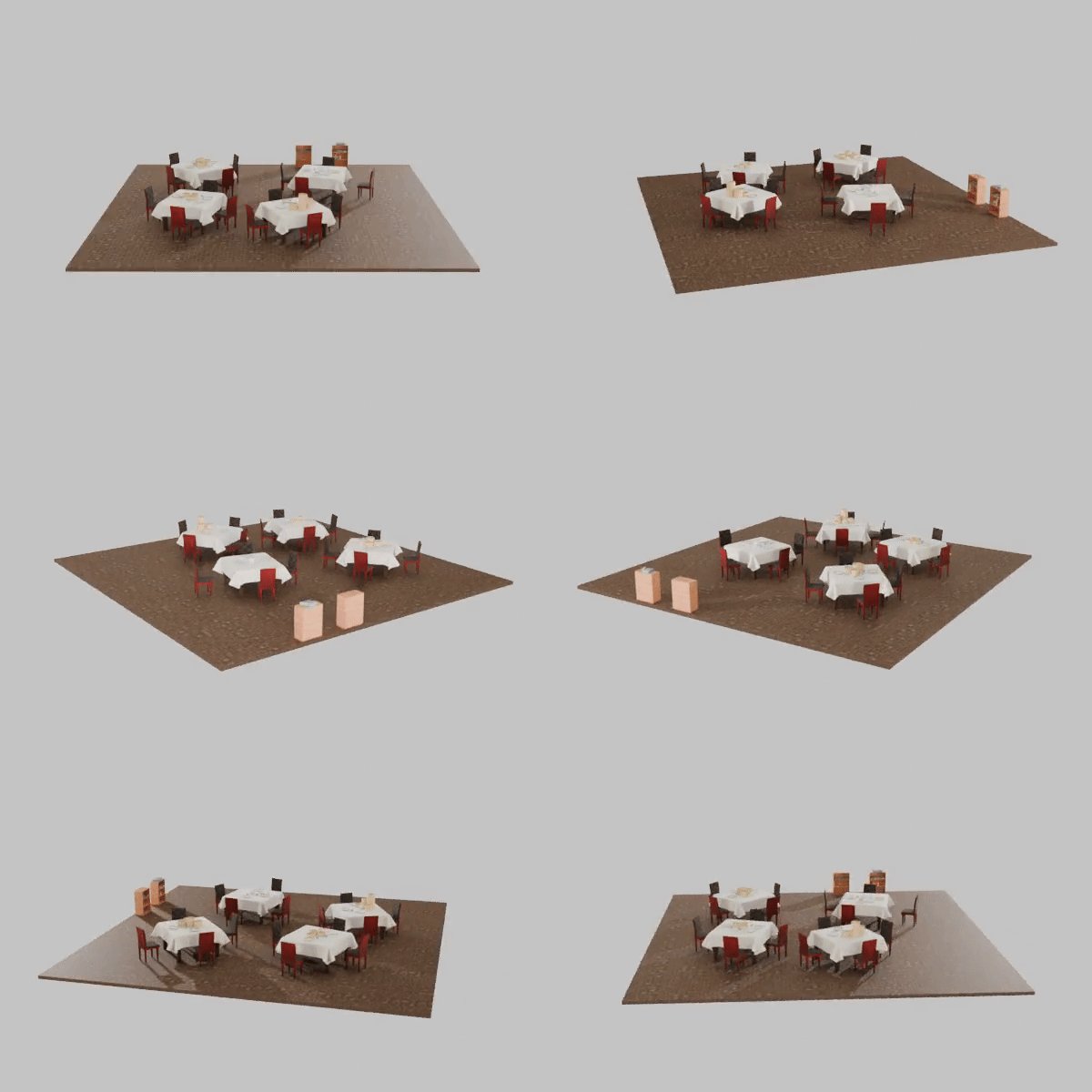
SummaryMIT CSAIL and Toyota Research Institute have introduced a tool for 'directed scene generation.' The tool steers a diffusion model using Monte Carlo tree search, reinforcement learning, or text prompts. The goal is to generate physically plausible 3D scenes of kitchens, living rooms, and restaurants. This aims to enable the mass creation of diverse training data for robot foundation models. |
Why it mattersCollecting real-world robot demonstrations is slow, expensive, and non-reproducible. This creates a significant bottleneck for general-purpose robotics. A tool that can reliably generate millions of physically consistent and task-aligned 3D scenes could significantly reduce data barriers. This could accelerate the path to robot assistants for homes or factories. The work also marks the first use of MCTS as a sequential decision-making framework in scene generation. This is a methodological contribution beyond robotics. |
Highlights
|
Critical takeThe paper conflates the concept of 'physically plausible' (absence of clipping, prompt alignment) with true physical fidelity. No quantitative benchmark against real-world robot task success rates is provided. Therefore, the critical simulation-to-reality transfer gap is not fully addressed. The 98% and 86% accuracy rates are measured in narrow, well-defined scene types. Thus, generalization to the long tail of cluttered objects in real homes remains an open question. |