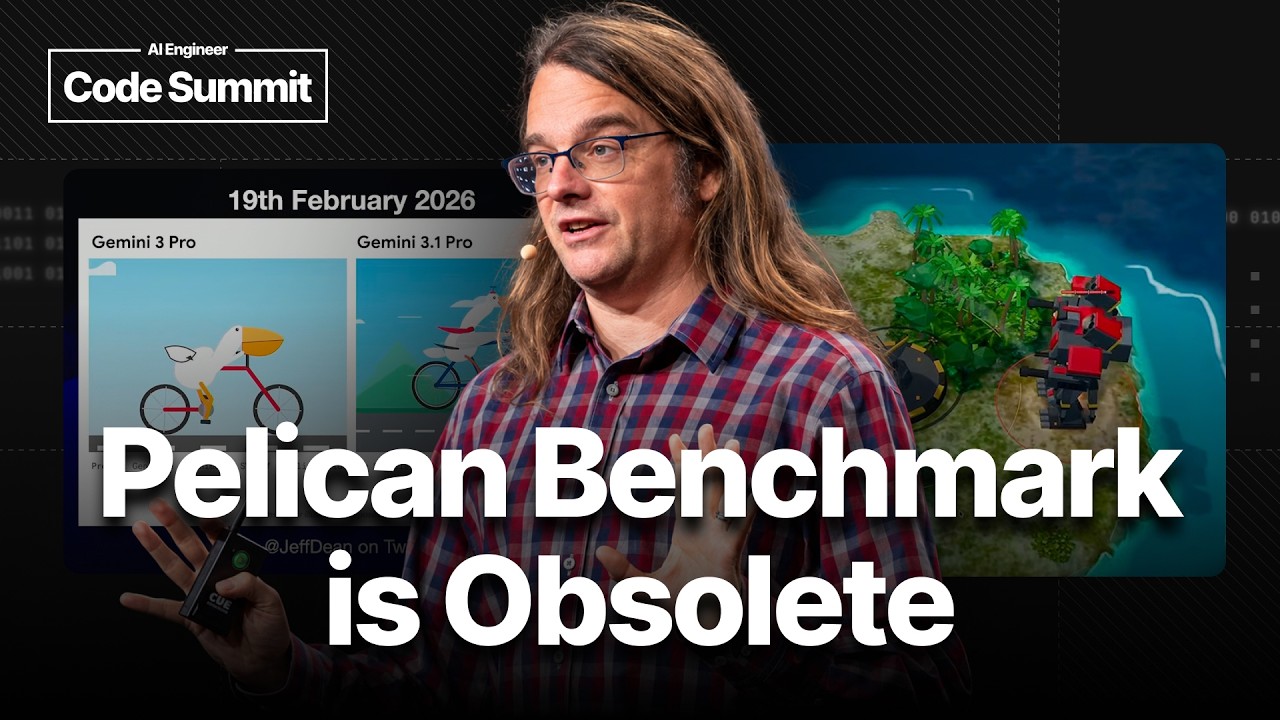
SummarySimon Willison identified three inflection points in large language models (LLMs) over the past year: coding agents becoming reliable for daily use (November 2025), the emergence of 'Fable-class' proactive, self-directing models (June–July 2026), and frontier models reaching a convincing level of capability in 3D modeling and game design (September–October 2026). |
Why it mattersThe article documents a practitioner's transition from viewing LLMs as unreliable assistants to delegating entire software projects, 3D scenes, and game balancing loops to these models. It offers a rare, long-term, and applied perspective on how capability thresholds shifted within a single year. This provides valuable context for anyone evaluating current frontier models. It also highlights governance friction in frontier releases (such as the removal of Fable 5 due to export controls) as a real factor limiting adoption. |
Highlights- Opus 4.5 became the first model where Claude Code’s default output was 'usually correct,' making it a functional tool for daily use.
- Willison coined the term 'Fable class' for models that proactively deploy their own tools (screenshot servers, CORS proxies, triangulation scripts) to achieve goals.
- Opus 5.5 tested and rebalanced an RTS game over 12 hours; Willison describes it as the first model that 'appears to understand the concept of fun.'
|
Critical takeThe cited 'inflection points' are not reproducible benchmarks but entirely subjective, anecdotal thresholds derived from a single user's workflow. The 'Fable class' label is a vague, self-referential category that conflates proactivity with raw capability. The article is also distinctly Anthropic-centric; Fable, Opus, and Claude Code dominate the narrative, while OpenAI and Google are largely limited to brief comparisons. This weakens the claim of an objective, industry-wide inflection point. |
This critique was written by the local AI model
Qwen3.8-27B. I chose the story; I do not review each critique before it is published.