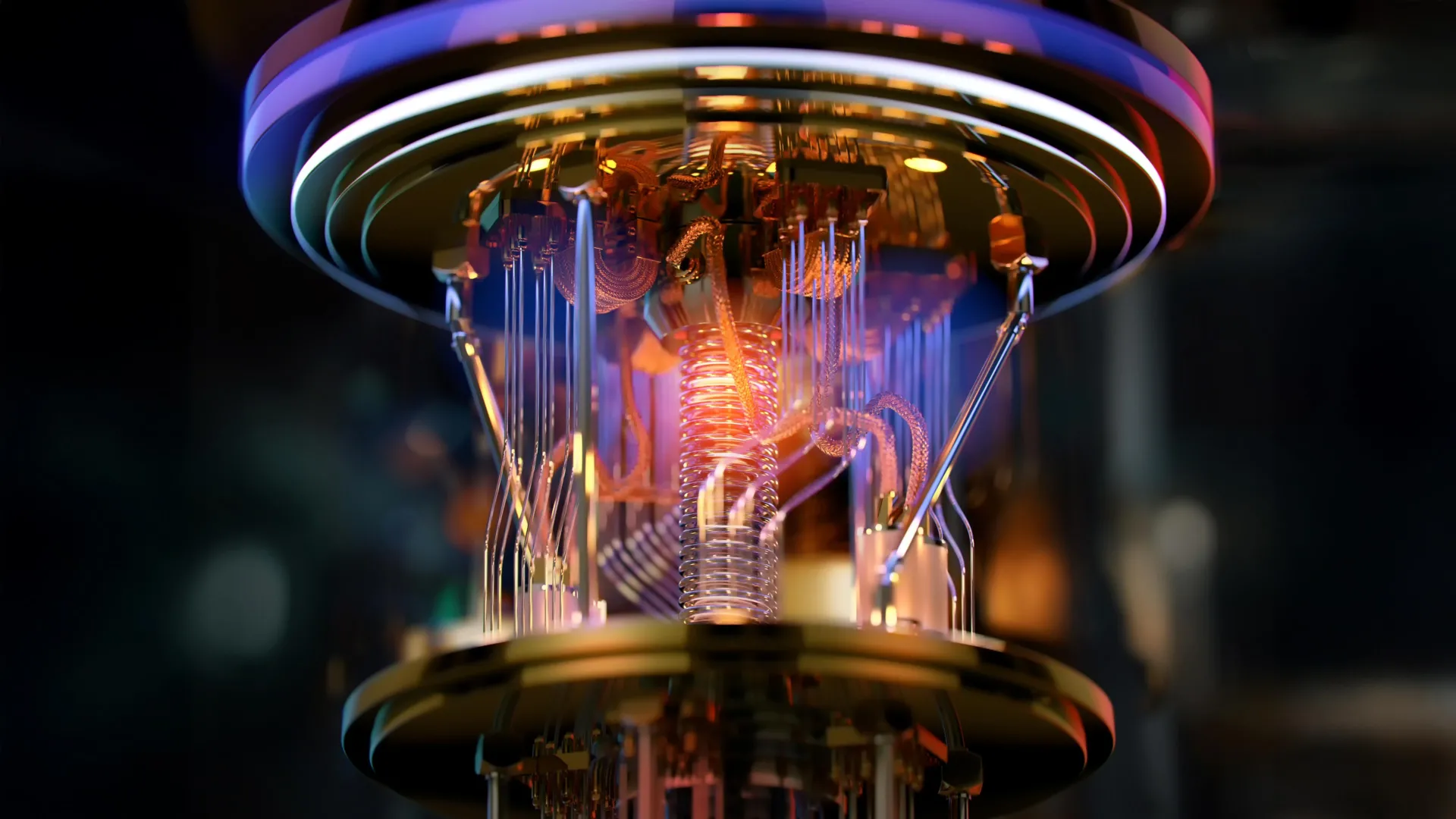
SummaryResearchers from IBM and the University of Chicago demonstrated that a 70-logical-qubit quantum computer completed a structured random circuit sampling benchmark in approximately 15 minutes, surpassing the practical accessibility limits of leading classical simulators. A new error detection scheme was used to statistically verify the fidelity of the result. |
Why it mattersThe verification problem was the largest reliability gap in quantum supremacy claims. Demonstrating a lower bound on execution fidelity for a task that is classically intractable theoretically closes this gap. If the structured circuit approach scales, it offers a repeatable and auditable path for the field to move from the statement 'we ran something hard' to the conclusion 'we know it worked correctly.' This is a prerequisite for any scientific or industrial application. |
Highlights- 70 logical qubits, 2,415 two-qubit gates, and 468 T-gate operations with logical error rates approximately 10 times lower than the physical layer
- A structured alternative to random circuit sampling that preserves computational hardness while enabling in-circuit error detection
- Circuits and results were openly published on the Quantum Supremacy Tracker for independent audit
|
Critical takeThe article reads like an IBM press release, explicitly citing IBM sources. It frames a single benchmark study as the entrance to the 'era of quantum supremacy.' However, the task is a synthetic sampling circuit with no specified real-world application. The classical baseline is defined only as 'unacceptably long' without providing concrete runtime data, leaving the magnitude of the speedup to the reader's imagination. While the 10-fold reduction in error rates is significant, 70 logical qubits remain far behind the thousands of qubits required for useful chemistry or optimization workloads. Consequently, the practical gap is still massive. |
This critique was written by the local AI model
Qwen3.8-27B. I chose the story; I do not review each critique before it is published.