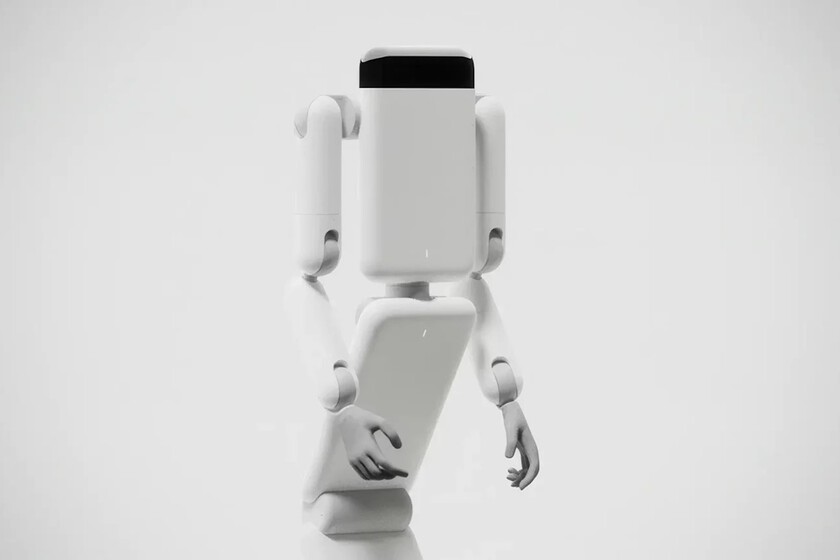
SummaryGenesis AI, founded in Paris and San Francisco in 2024, closed a $500 million funding round at a $3.5 billion valuation. The company will use these funds to scale 'Eno,' a headless and legless manipulation robot. Rather than relying on a humanoid torso, Genesis focuses on fully dexterous hands and a proprietary data loop. |
Why it mattersIn a sector where nearly every competitor is focused on the humanoid silhouette, Genesis's heavy investment in hand dexterity and data collection loops (using sensor-equipped gloves and head-mounted cameras) offers a genuinely different path to reliable industrial automation. The investor list, which includes Nvidia, AMD, Samsung, Ericsson, and Eric Schmidt, indicates that major tech companies see the commercial value of non-humanoid manipulation in factories and warehouses. The funds are allocated for manufacturing, factory logistics, and training data collection. This move transitions the company from laboratory prototypes to actual deployment. |
Highlights- 30–40 Eno units have been produced and tested with unnamed customers; a mass production partner has been selected; a broad launch is targeted for 2027
- Training data collected via approximately $300 sensor-equipped gloves and head-mounted cameras worn by over 100 employees worldwide is feeding a self-learning model
- CEO Zhou Xian acknowledges that hardware is the bottleneck: robot hands wear out in just a few weeks of regular use
|
Critical takeThe 'headless' slogan is catchy. However, the admission that hands need to be replaced every few weeks raises serious questions about total cost of ownership. The article never quantifies this cost. Field testing involves only 30–40 Eno units, and all customers remain anonymous. The $3.5 billion valuation rests on a very weak evidence base and a launch that is still two years away in 2027. |
This critique was written by the local AI model
Qwen3.8-27B. I chose the story; I do not review each critique before it is published.