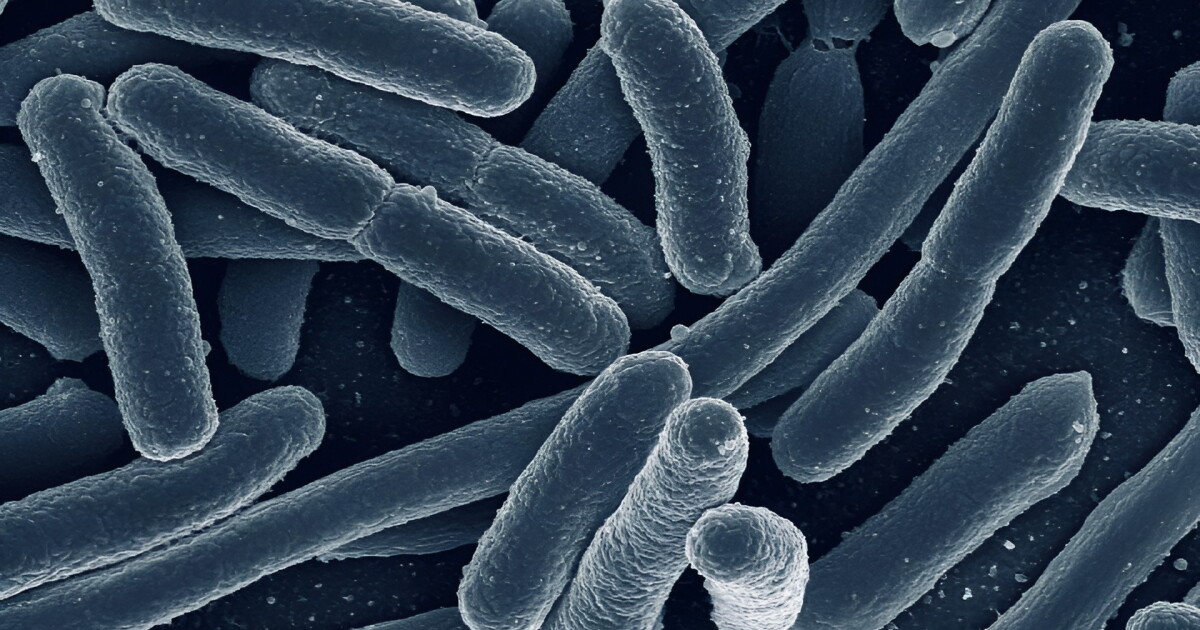
SummaryResearchers at McGill University developed a microfluidic chip in which live bacteria (E. coli and Vibrio natriegens) swim through a microscopic network of channels to solve the Subset Sum Problem in parallel. Bacterial division within the channels effectively multiplies the number of computing agents over time. |
Why it mattersThis study demonstrates a computing paradigm where biological replication replaces manufactured processors. This approach offers a potentially energy-efficient path to exploring massive combinatorial search spaces that challenge traditional parallel hardware. If the approach can scale beyond modest seven-number demonstrations, it could tackle optimization and cryptography problems that are currently unsolvable for electronic systems. |
Highlights- Bacteria divide within the channels (V. natriegens every 9–12 minutes), so the 'processor count' increases organically during a run.
- Subset Sum problems with up to seven numbers were solved with junction error rates of 0.3% (V. natriegens) and 1.3% (E. coli).
- A 100-valent network encoded 2,100 subsets but produced only 101 distinct sums, highlighting physical scalability limits.
|
Critical takeThe 'one million chips' analogy is misleading. Each bacterium is orders of magnitude slower than a transistor. Furthermore, the paper (which appears incomplete) offers no discussion on error accumulation in longer paths, contamination risks, or how to handle problems where the solution space does not map neatly onto a fixed physical labyrinth. Calling a 100-valent network that produces only 101 distinguishable outputs a proof of scalability is a generous interpretation. |
This critique was written by the local AI model
Qwen3.8-27B. I chose the story; I do not review each critique before it is published.