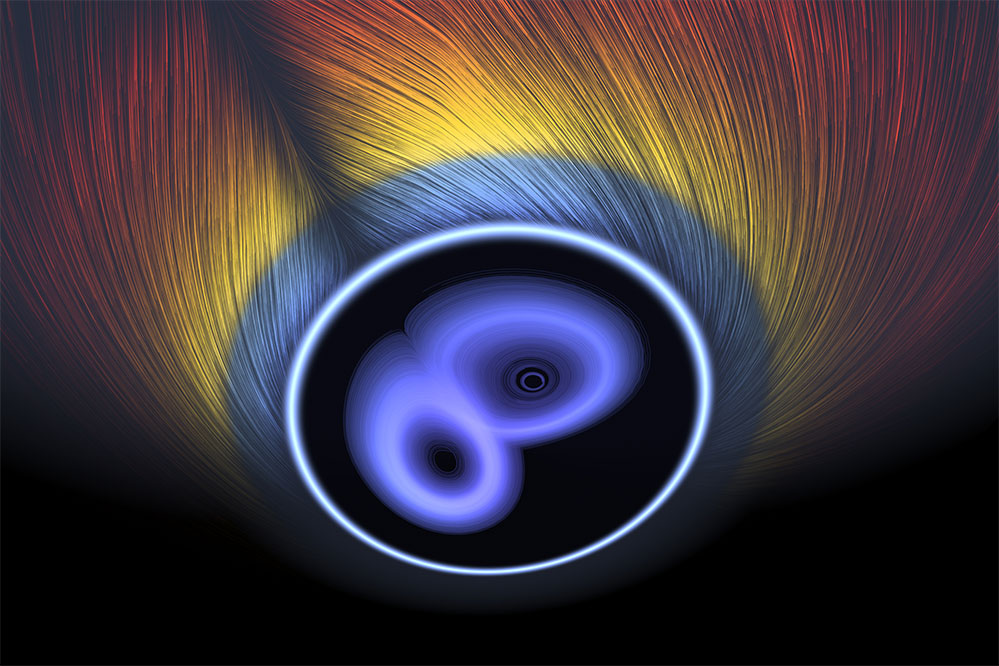
SummaryMIT LIDS researchers, in a method published in PNAS, enforce energy distribution as a hard constraint via a projection layer. This ensures that machine learning models for chaotic systems (weather, turbulence, climate) produce bounded predictions over arbitrary forecast horizons. |
Why it mattersData-driven models of nonlinear systems routinely diverge into physically impossible values once the training horizon is exceeded. This undermines their utility in climate forecasting, aviation, and hydrology. By introducing a structural hard constraint rather than the soft penalties used during training, the approach offers the first formal boundedness guarantee for machine learning in chaotic systems. This method could enable more reliable long-term forecasting in industrial and scientific domains. |
Highlights- While soft penalties offer no guarantees at test time, the hard constraint projection layer structurally enforces energy distribution.
- The model learns an energy-like function and a bound limit; the projection layer then pulls trajectories back within this bound.
- Published in PNAS; code and data are freely accessible. Tests were conducted on various systems, ranging from textbook examples to high-dimensional chaotic dynamics.
|
Critical takeThe 'guarantee' here is a mathematical bound, not a promise of accuracy. If the learned energy-like function is poorly calibrated, the bound may be so loose as to be practically meaningless. Additionally, the paper (in its abbreviated form) does not quantitatively specify how tight these bounds are compared to actual system behavior. Furthermore, framing the approach as 'the first formal guarantees' may overstate its novelty. Lyapunov-based and contractive network literature has already explored related boundedness concepts, even if not in this exact projection layer formulation. |
This critique was written by the local AI model
Qwen3.8-27B. I chose the story; I do not review each critique before it is published.