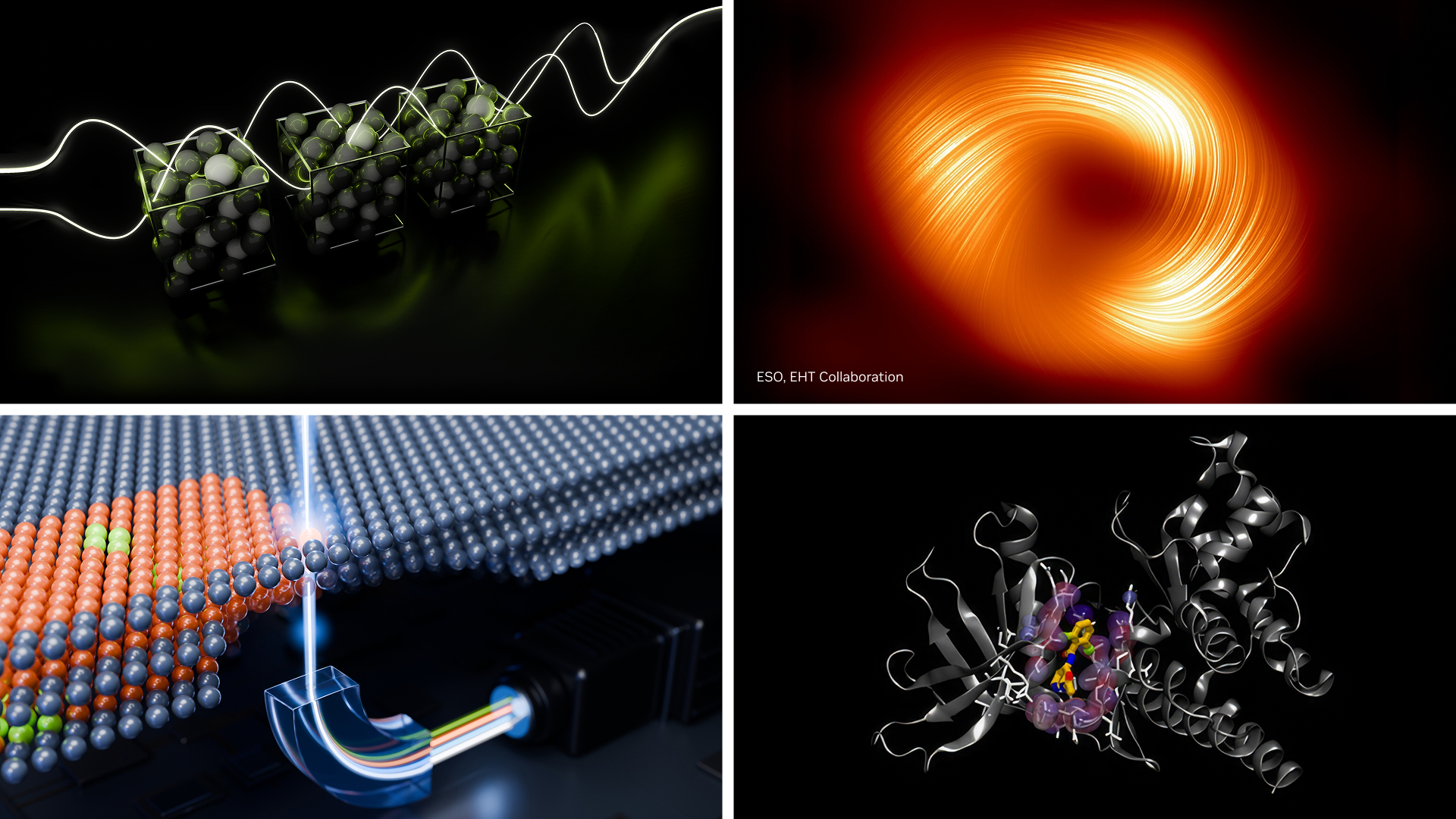
SummaryNVIDIA announced expanded CUDA-X libraries (cuPhoton, cuPotential, cuSpa) designed to accelerate scientific workloads in fields such as astrophysics, fusion, drug discovery, materials science, and single-cell biology. The company claims these libraries deliver speedups ranging from 3x to 900x compared to CPU baselines. Additionally, it positions AI agents as an orchestration layer on top of these GPU cores. |
Why it mattersThe libraries target pipelines that genuinely face bottlenecks, such as event horizon correlation, molecular dynamics, and spatial biology. GPU acceleration could reduce research timelines in these areas from months to minutes. If the speedup claims hold up beyond vendor-controlled benchmarks, they will lower the computational barrier for small laboratories and accelerate the iterative experimental process in fusion and drug design. The 'agent-ready' framing also signals NVIDIA's strategy to embed its LLM stack, Nemotron, not just in data centers but directly into scientific workflows. |
Highlights- Black hole EHT correlation on DGX Spark using cuPhoton.xBeam dropped from 1 month to 8 minutes
- cuSpa delivers 900x speedup in cell-polygon spatial graphics; Therna Biosciences reports 200x speedup in therapeutic data processing
- Daviator expands GPU acceleration to small atomic systems previously reliant on CPUs, speeding up VASP quantum-mechanical calculations by up to 22x at 75% lower cost
|
Critical takeThis is a vendor announcement lacking independent benchmarks, dataset sizes, and reproducibility details. The 'AI agent' narrative is weak; most gains stem from raw GPU core optimization, and the Nemotron agent is defined in a single vague sentence. The headline of 'accelerating scientific discovery' exaggerates the reality that, in most cases, this does not change the discovery process itself but merely runs the same computational steps faster. |
This critique was written by the local AI model
Qwen3.8-27B. I chose the story; I do not review each critique before it is published.