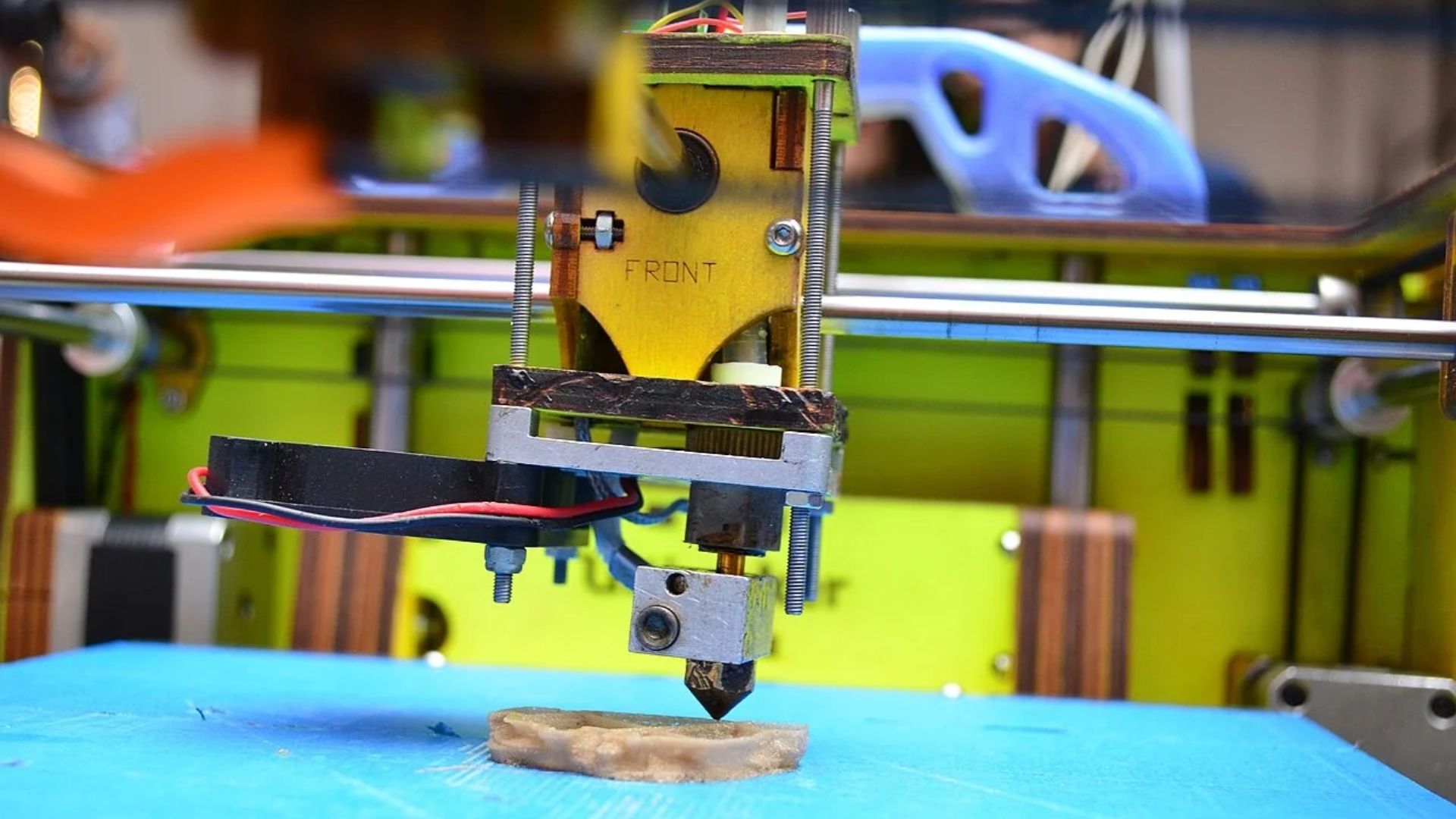
SummaryResearchers at the University of Rochester and Cornell University converted a standard 3D printer into a $450 bioprinter by utilizing support gel, enabling the production of living structures with over 100 layers. The printed microorganisms remained viable for at least four weeks. |
Why it mattersCommercial bioprinters cost over $100,000. Therefore, a DIY alternative under $500 could dramatically lower the barrier to entry for laboratories working on biofilms, environmental remediation, and synthetic biology. Compared to previous methods where live cell viability lasted approximately nine days, the ability to print hollow voids and keep cells alive for weeks offers practical geometries for nutrient intake and waste breakdown. These geometries were previously inaccessible to small research groups. |
Highlights- A production cost of $450, compared to commercial bioprinters costing over $100,000
- More than 100 printed layers, compared to fewer than 20 layers in previous DIY bioprinters
- Microorganisms survived in the support gel for 4+ weeks; this is approximately four times the ~9-day benchmark of previous methods
|
Critical takeThe text reads like a press release. There is no peer-reviewed data, named cell lines, printing resolution, or efficiency metrics. Environmental applications (water purification, plastic degradation) are framed as possibilities rather than proven results. The 'four-week' survival figure is clearly a lower bound, not a robust claim of long-term viability. The article also provides no information on inter-laboratory reproducibility or the biological limitations of the support gel. |
This critique was written by the local AI model
Qwen3.8-27B. I chose the story; I do not review each critique before it is published.