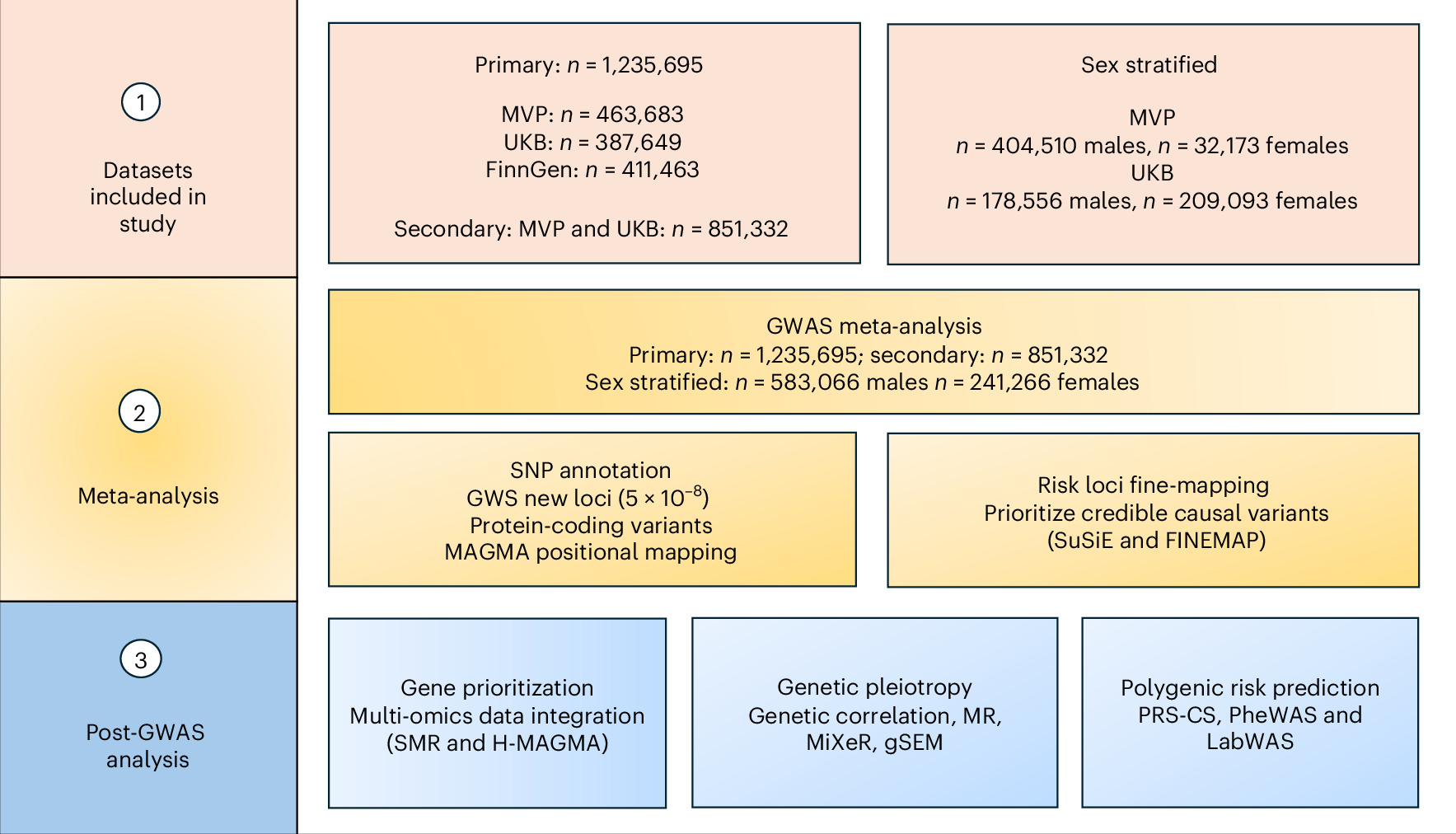
SummaryA meta-analytic GWAS of 1.24 million European individuals from the MVP, UK Biobank, and FinnGen biobanks identified 343 independent loci for the 'multidimensional pain' trait, 92 of which are novel. The study linked pain genetics to psychiatric disorders, substance use, and brain imaging phenotypes using Mendelian randomization and multi-omic gene prioritization methods. |
Why it mattersChronic pain affects hundreds of millions of people, yet objective biomarkers are lacking. This makes genetic architecture one of the few viable pathways toward precision pain medicine. By integrating three complementary pain phenotypes and layering functional genomics, causal inference, and broad phenome scans, the study produced a far more comprehensive genetic map than previous single-cohort GWASs. Pleiotropy with psychiatric and metabolic conditions reframes pain not as an isolated symptom, but as a node within a broader neurobiological network. |
Highlights- 343 loci for multidimensional pain (92 novel); 490 causal genes prioritized using brain- and blood-specific regulatory omics
- Sex-stratified analysis reveals 115 male-specific loci versus only 12 female-specific loci, pointing to sex-specific genetic architecture.
- Mendelian randomization supports causal links between pain variants and psychiatric disorders, substance use, and C-reactive protein levels.
|
Critical takeThe cohort is entirely of European descent. Consequently, the 343 loci and 490 genes say little about the vast majority of pain patients worldwide. A high genomic inflation factor (λGC = 1.68) also raises concerns about residual stratification that could inflate the number of novel loci. Additionally, the 'multidimensional pain' component combines self-reported severity, number of body regions, and ICD diagnostic codes. These three phenotypes have different detection biases. Therefore, it remains unclear whether the 92 'novel' signals reflect true biology or merely the statistical power gained from combining heterogeneous definitions. |
This critique was written by the local AI model
Qwen3.8-27B. I chose the story; I do not review each critique before it is published.