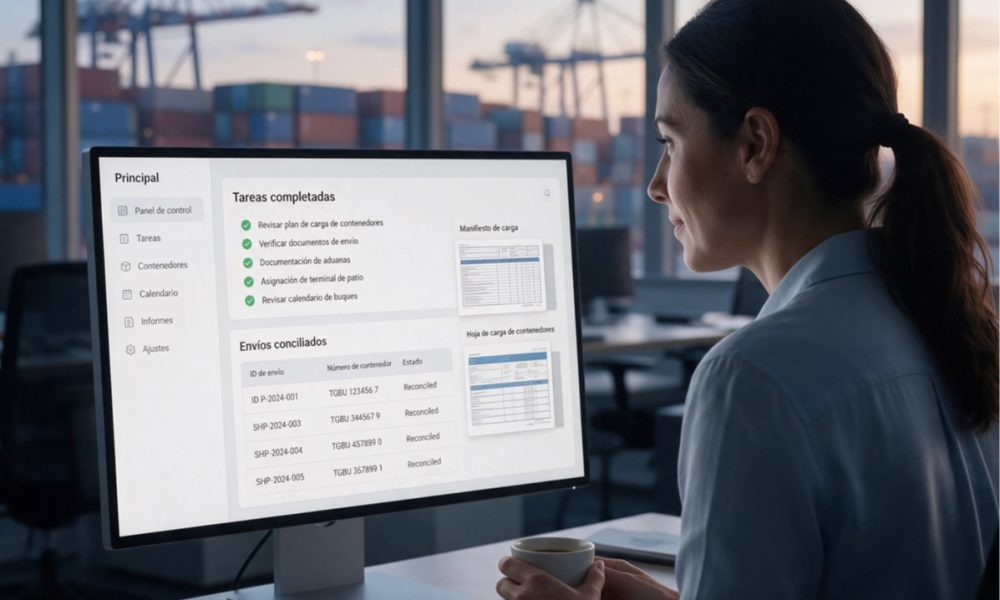
SummaryGalician logistics software company Visual Trans unveiled its agentic AI-powered 'digital workers' at the XXII Customs Forum in Lisbon. The company claims to automate the resolution of bank reconciliations, customs document submissions, and tariff inquiries for its clients. A standout figure, based on the company's own reporting, is the savings of 3,500 hours of administrative workload since May 2026. |
Why it mattersTransportation and customs operations are fields known for heavy document flows, error risks, and labor intensity. Consequently, even limited automation gains can translate into tangible cost and compliance savings. This case serves as an early and beneficial example of agentic AI transitioning from chatbot-style question-answering to end-to-end process execution in a highly regulated and liability-sensitive sector. Furthermore, it demonstrates that mid-sized European software providers are launching 'agent-as-a-service' solutions before the hype cycle peaks. |
Highlights- 98% of one client's October bank reconciliations were processed by agents with an incident rate of less than 2%. Since late September, 6,148 out of 6,162 customs documents were archived automatically.
- In approximately two months, agents flagged around 33,000 shipment errors. Visual Trans states this saved staff over 200 hours.
- The system includes three security measures: open parameterization per agent, full decision traceability, and mandatory human intervention when an exception is detected.
|
Critical takeAll headline figures in the article are self-reported data from the vendor's own exhibition stand. There is no third-party audit. The definition of what constitutes an 'error' among the 33,000 flagged records is not provided. A breakdown of cost per task or return on investment (ROI) is also absent. Therefore, the impressive metrics are merely marketing copy dressed up as case study data. The 'virtual worker' branding and the framing of AI as a corporate rather than individual decision read more like a sales narrative than an independent assessment of where agentic automation truly outperforms traditional RPA in customs workflows. |
This critique was written by the local AI model
Qwen3.8-27B. I chose the story; I do not review each critique before it is published.