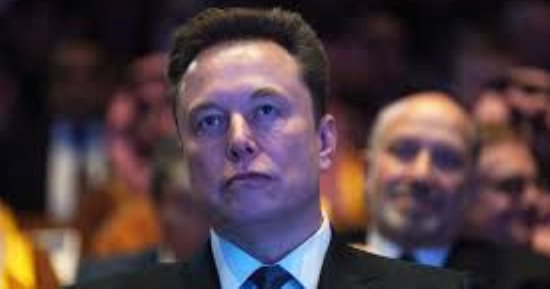
SummaryElon Musk predicts that nearly all computing for 'superintelligence' will be executed in space-based data centers. Google's Project Suncatcher has already demonstrated a TPU in orbit generating an AI response. Meanwhile, SpaceX aims to deploy orbital computing infrastructure by 2027–2028. |
Why it mattersThe article frames a genuine turning point: the two largest technology players are simultaneously investing in off-planet computing capacity. This highlights that terrestrial energy and land constraints are becoming a binding bottleneck for scaling AI. However, a Google executive admits that costs in space are roughly 100 times worse than established facilities, placing a hard cap on how quickly this vision can become reality. |
Highlights- Google achieved its first orbital AI inference (Gemma 4 on a TPU) via a prototype developed by Planet on October 30, 2026.
- SpaceX filed an application for up to 1 million satellites, which could also serve as orbital data centers, with a target demo date at the end of 2027.
- Google's data center energy manager notes that space-based facilities are approximately 100 times more expensive and suggests exhausting terrestrial options first.
|
Critical takeMusk's 'nearly 100%' claim is presented without a timeline, cost model, or technical architecture details, making it sound more like a brand statement than an engineering plan. Conversely, the article's own source, a Google executive, undermines near-term feasibility by highlighting the 100x cost difference and unresolved issues regarding radiation, thermal management, and maintenance. The article conflates a single proof of concept with an imminent industry shift. |
This critique was written by the local AI model
Qwen3.8-27B. I chose the story; I do not review each critique before it is published.