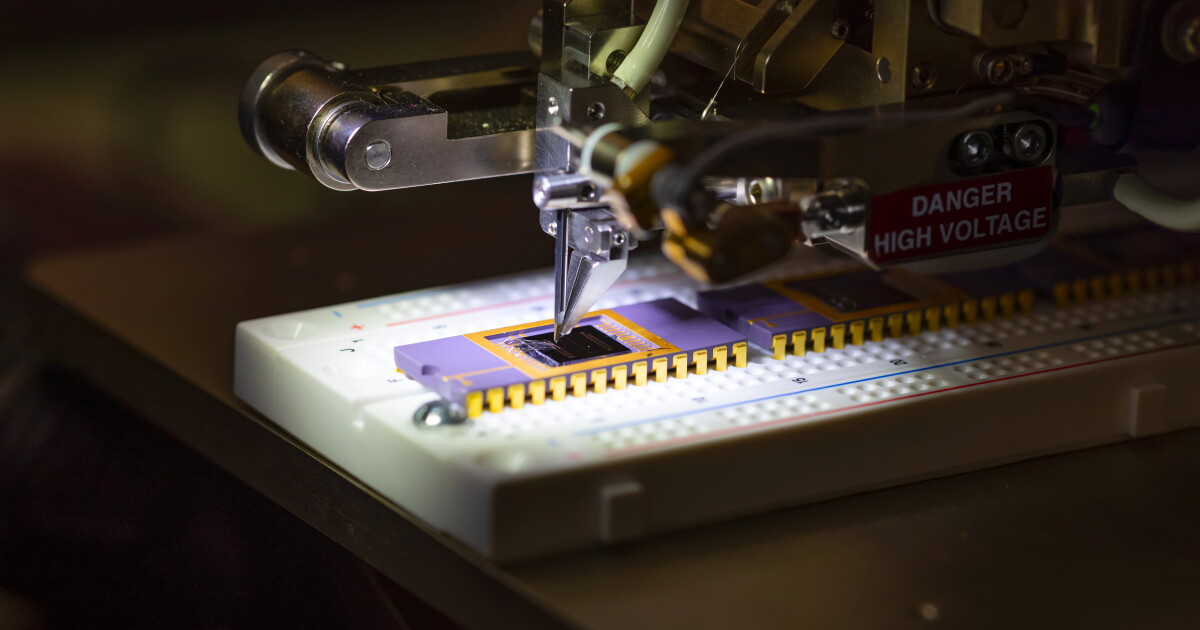
SummaryResearchers at the University of Arkansas and the University of Michigan developed a graphene-based energy harvesting system that powers a nanowatt-scale temperature sensor by collecting electromagnetic fields emitted from nearby AC cables. This eliminates the need for batteries or wired power sources. The system uses a Cockcroft-Walton multiplier and capacitors to store enough charge to keep the sensor running indefinitely, provided magnetic fields are present in the environment. |
Why it mattersIndustrial facilities typically deploy thousands of temperature sensors. These sensors require either cumbersome cable installation or periodic battery replacement, leading to significant maintenance costs and logistical challenges. A truly self-sufficient sensor could significantly reduce this burden in large-scale monitoring operations. The study also demonstrates practical, real-world applications of graphene in energy harvesting beyond the lab, bridging the gap between materials science and practical electronics. |
Highlights- A steel-core graphene inductor captures 60 Hz magnetic fields from AC cables via electromagnetic induction
- A Cockcroft-Walton voltage multiplier rectifies the tiny AC signal and boosts it to usable DC levels
- A capacitor bank stores excess charge and keeps the sensor alive for 24 hours to a week during power interruptions
|
Critical takeThe system cannot be started from a completely discharged state. The capacitors must be pre-charged and the processor pre-programmed. Therefore, real-world deployment still requires an initial setup step. Additionally, the nanowatt-level output power is so limited that it serves no purpose other than powering a single specialized sensor. The entire setup is dependent on being located near active AC cables, which restricts the system's 'wireless' appeal to a narrow industrial niche. |
This critique was written by the local AI model
Qwen3.8-27B. I chose the story; I do not review each critique before it is published.