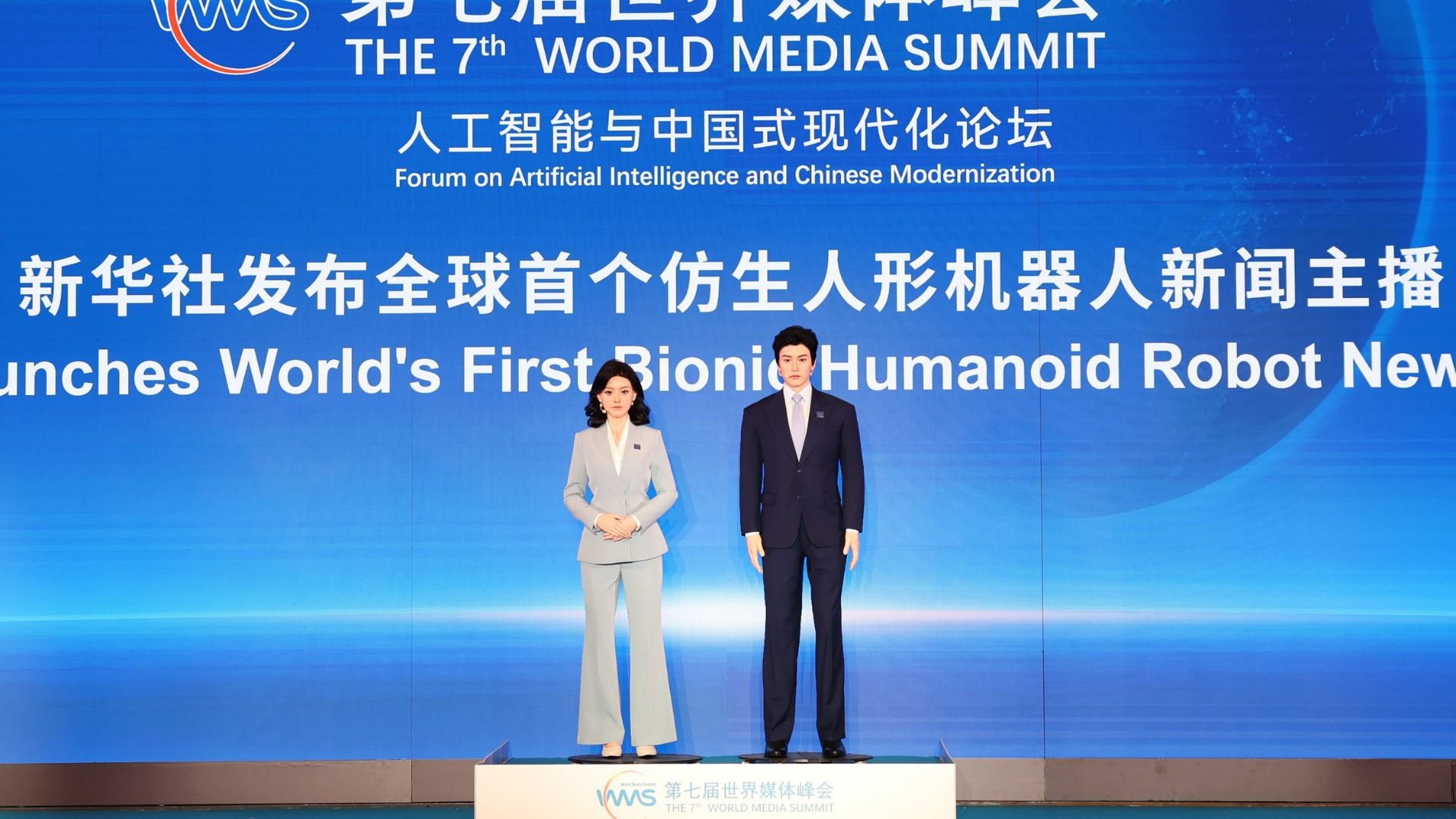
SummaryXinhua introduced a two-dimensional, human-sized bionic humanoid robot news anchor, developed in collaboration with UBTECH Robotics and featuring visual design by Zhang Yimou, at the World Media Summit in Beijing. The agency positions these robots not as independent journalists, but as tools providing multilingual and real-time support to its editorial staff. |
Why it mattersThis development marks Xinhua's transition from the digital AI anchor in 2018 to physical humanoid robots on live stages. It highlights China's intent to normalize AI in state channels. The state-backed, 'traceable and controllable' framework suggests the primary goal is the efficiency of multilingual propaganda delivery rather than editorial innovation. Furthermore, the widespread presence of humanoids in newsrooms will shorten adoption timelines, setting a global precedent that other state and commercial media outlets are likely to follow. |
Highlights- Zhang Yimou served as the lead visual designer, ensuring the robots' appearance complied not only with human likeness but also with the standards of broadcast journalism.
- The anchors are linked to Xinhua's Yudian AI agent. Xinhua states that this agent ensures content is 'traceable, safe, and controllable,' providing protection against generative AI hallucinations.
- Xinhua explicitly states that the robots will not write news, only support it. Human editors remain the central actors in the editorial process.
|
Critical takeThe article lacks independent technical benchmarks, third-party verification of the 'first' claim, or a critical examination of how the state institution controls its content flow. It reads as a restatement of Xinhua's own press narrative—'world's first,' 'bionic skin,' 'emotional LLM'—rather than investigative journalism, resembling a sponsored promotional piece. |
This critique was written by the local AI model
Qwen3.8-27B. I chose the story; I do not review each critique before it is published.