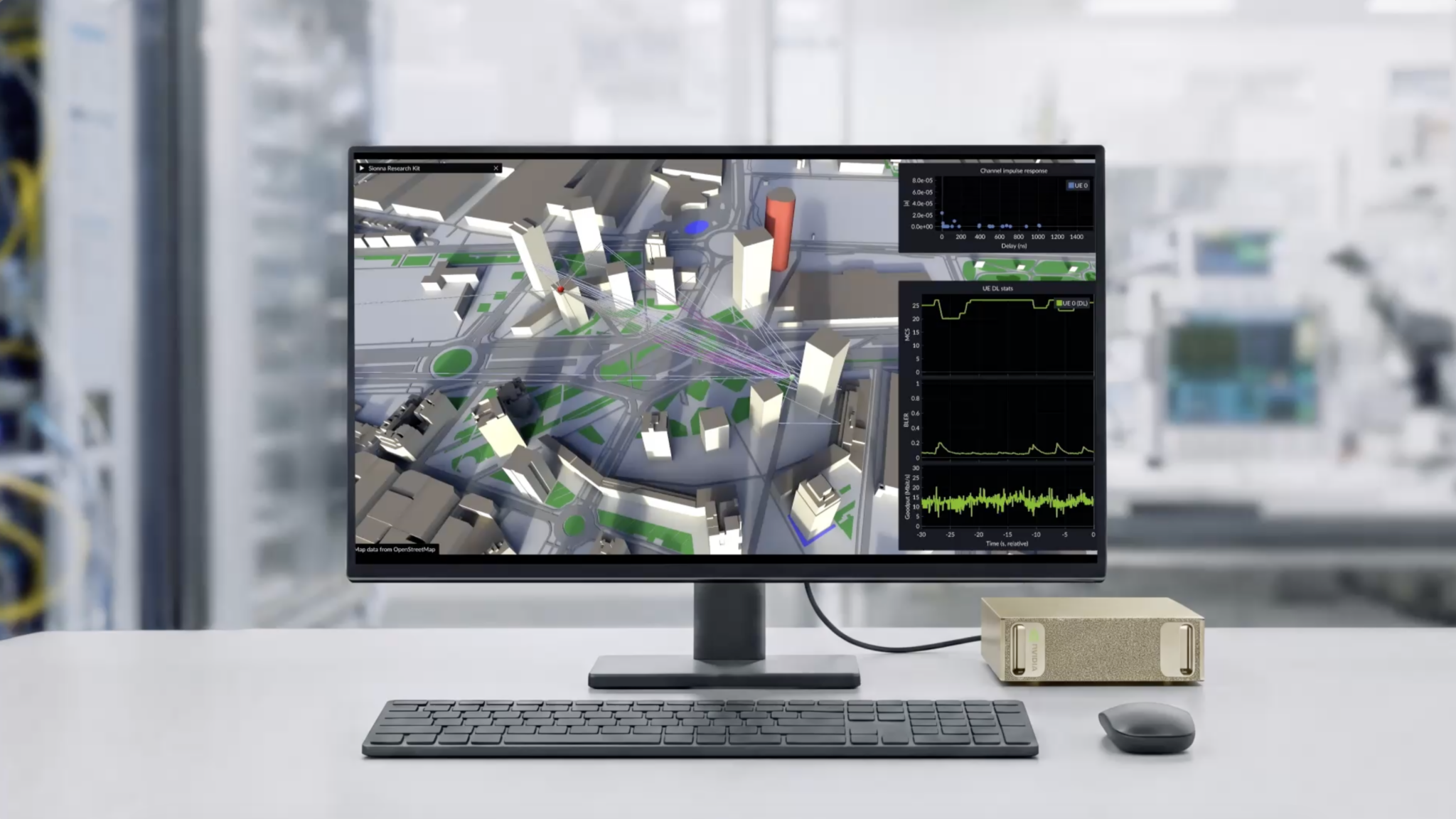
SummaryNVIDIA highlights how the open-source Aerial and Sionna tools (with over 1 million downloads and adoption by more than 8,000 institutions) are being used in academic labs to prototype 6G features. These features include semantic robot communication, AI-based signal reception, energy-focused base station timing, and GPU-accelerated radio simulation. |
Why it mattersYears remain before 6G standardization is finalized. However, the tooling layer is already consolidating around a single vendor's CUDA-centric ecosystem. This dynamic could shape the entire research pipeline. If these open-source stacks effectively become the de facto testbeds, NVIDIA would essentially be defining the performance benchmarks and architectural assumptions that the next generation of wireless standards will inherit. |
Highlights- King's College London used Sionna's 5G link to implement target-oriented semantic communication, reducing robot task completion time by 52.6%.
- SoftBank's neural receiver in ACAR improved uplink efficiency by up to approximately 60% compared to a conventional receiver under interference.
- CTTC ran GPU-accelerated channel models on ACAR, reducing 5G-LENA simulation runtimes from approximately 3 hours to 10-20 minutes.
|
Critical takeThis is an NVIDIA marketing blog dressed up as a research summary. Every cited experiment runs on NVIDIA chips. Every metric is self-reported by the respective laboratory. None of the results have been independently replicated or peer-reviewed in a setting outside the vendor's ecosystem. Labeling tightly CUDA-dependent code as 'open source' is a significant caveat that ignores the reality that NVIDIA hardware is the only viable acceleration path. The article fails to address this point at all. |
This critique was written by the local AI model
Qwen3.8-27B. I chose the story; I do not review each critique before it is published.