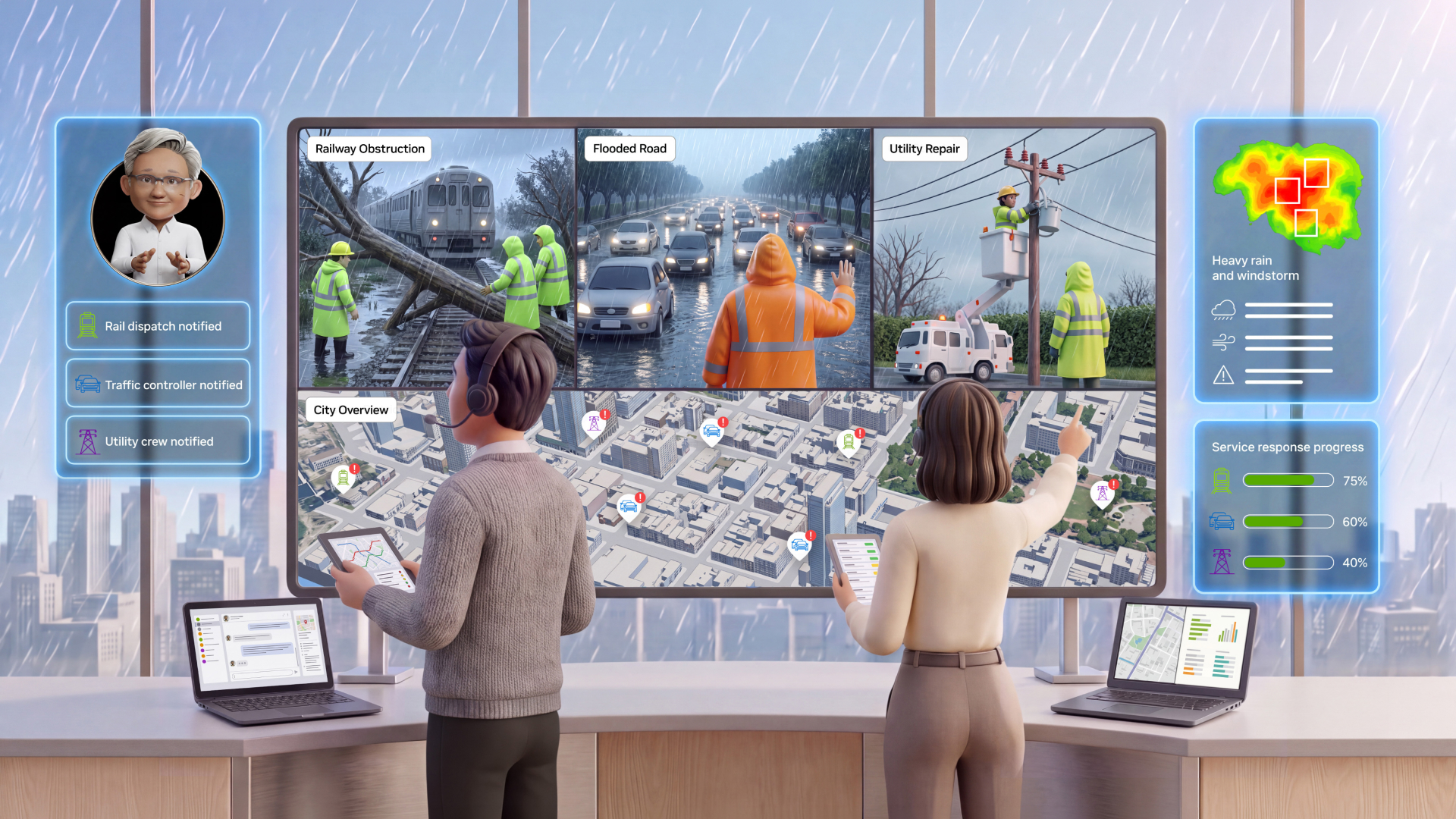
SummaryNVIDIA's blog post introduces a global portfolio of city projects built on the Nemotron, Cosmos, Omniverse, and Metropolis stack. The portfolio includes citizen service chatbots, camera-based vision agents, and digital twins for infrastructure. Case studies span Spain, Poland, Malaysia, Nigeria, Taiwan, and Morocco. |
Why it mattersMunicipalities are becoming a significant adoption channel for agentic and physical AI. The article suggests that shared GPU infrastructure and open-model agents can lower the barrier for small cities to deploy AI-powered public services. It also highlights the 'sovereign AI factory' model, which positions local computing power as a strategic asset independent of cloud dependency. This model has real policy implications regarding data control in the public sector. |
Highlights- ITMAX in Malaysia plans to scale vision agents across more than 17,000 cameras by 2027. By integrating open-source traffic simulation, it aims to reduce travel times during peak hours by up to 26%.
- In Taiwan, MVRDV and Linker Vision simulate 15 years of urban forest canopy results in under 10 minutes. This reduces design iteration time from two weeks to less than an hour.
- The Barcelona Supercomputing Center's AI Factory Accelerator program provides sovereign computing, training, and research support to entrepreneurs in agriculture, medical imaging, and voice services.
|
Critical takeThis is not independent news; it is NVIDIA's marketing blog. Every 'case study' is a partner project running on NVIDIA hardware. All metrics are self-reported by the company. The only mention of privacy is the phrase 'local governments retain control.' There is no discussion of costs, error scenarios, citizen consent for mass camera-based AI, or lock-in risks in a single-vendor stack. These omissions make the piece resemble a product catalog more than an in-depth narrative on how cities manage these adoption processes. |
This critique was written by the local AI model
Qwen3.8-27B. I chose the story; I do not review each critique before it is published.