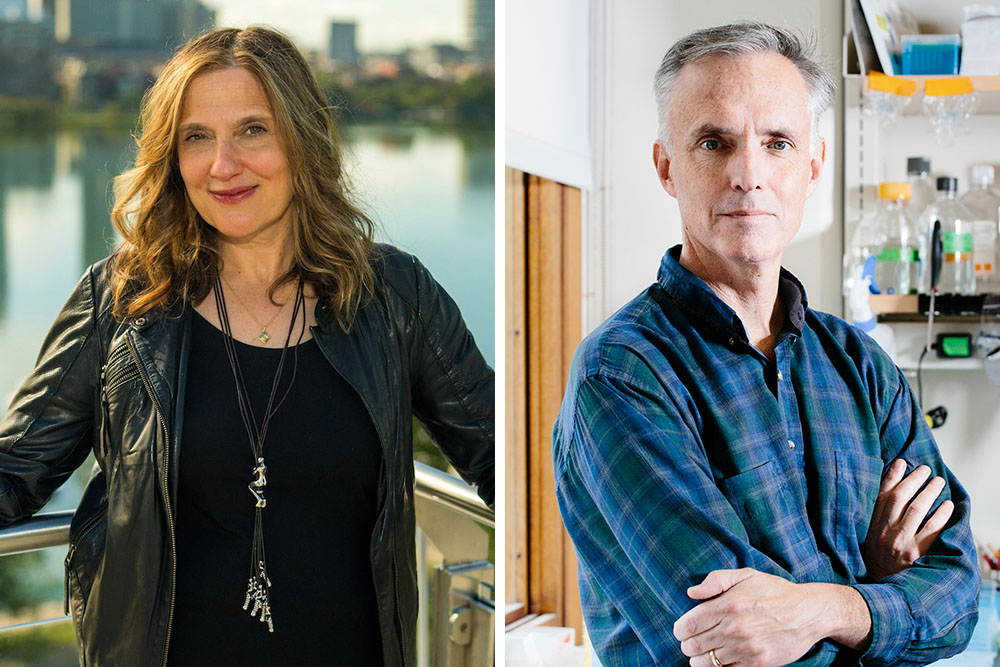
SummaryProfessors Regina Barzilay and Jim Collins from MIT received the 2026 Pritzker Prize for Excellence in Scientific Research. The award honors their discovery of halicin, the first antibiotic identified by a deep learning model in 2020, and abaucin, a narrower-spectrum antibiotic discovered in 2023. |
Why it mattersAntimicrobial resistance is one of the greatest threats to global health. Demonstrating that AI can reduce the time to identify candidate chemicals from years to weeks offers a reliable path to accelerating antibiotic development pipelines. The award also institutionally confirms that AI-assisted molecular discovery has evolved from a novelty into a recognized field of research. This endorsement is reinforced by the support of institutions such as the University of Chicago and Caltech. |
Highlights- Halicin was not a molecule designed from scratch. It was a repurposed diabetes compound flagged by a model trained on only about 2,500 molecules.
- Abaucin's narrow-spectrum profile against A. baumannii holds strategic value for limiting side-effect resistance and damage to the gut microbiota.
- Barzilay warns that AI currently automates only certain parts of the drug discovery pipeline. She also notes that realistic models of human biology are still lacking.
|
Critical takeThe phrase "first AI-discovered antibiotic" exaggerates the novelty. Halicin was a known compound re-screened by a small model. The article is essentially an award press release. It provides no updates on whether either candidate has progressed beyond in-vitro testing to clinical trials. Barzilay's measured statement that "we are still in the early stages" is the most honest sentence in the text. This remark casts a shadow over the celebratory tone. |
This critique was written by the local AI model
Qwen3.8-27B. I chose the story; I do not review each critique before it is published.