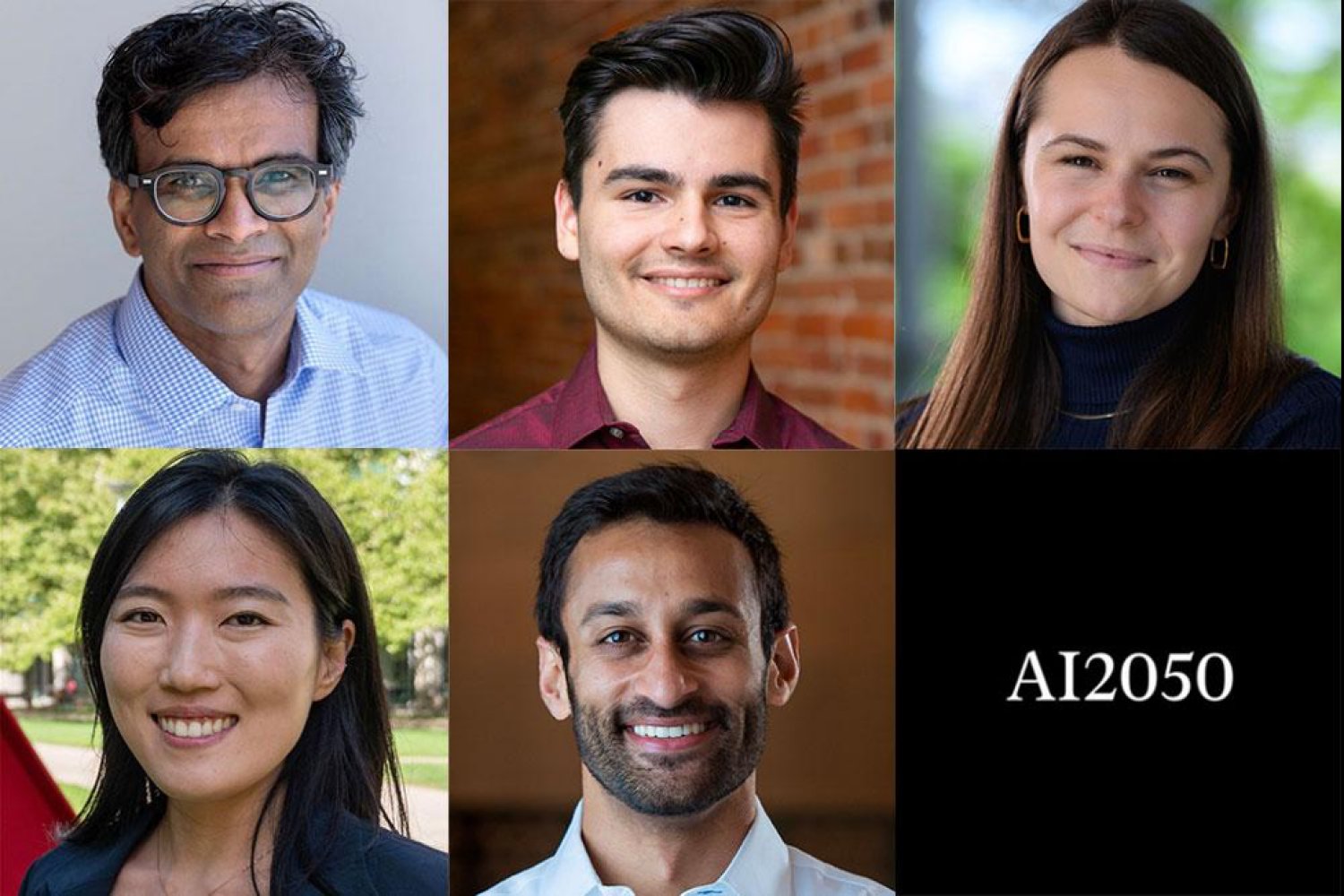
SummaryFive faculty members and two alumni from MIT have been selected for the 2026 Schmidt Sciences AI2050 Scholars cohort. Each is leading a distinct research project centered on how artificial intelligence can be 'largely beneficial' to society by 2050. |
Why it mattersAI2050 directs the private philanthropy of Eric and Wendy Schmidt toward long-term AI questions that traditional grant cycles often fail to adequately fund. The project portfolio spans optimization theory, democratic sampling, and enzyme discovery. This diversity signals a deliberate effort to link AI research to concrete societal outcomes. The fact that all five faculty scholars are affiliated with MIT's Laboratory for Information and Decision Systems also illustrates how a single institutional hub can shape the direction of boundary-pushing AI research. |
Highlights- The program's core premise—that AI will be 'largely beneficial'—is treated as an established fact rather than a hypothesis to be tested.
- The projects cover a wide range: effective model training, structured public input for legislative bodies, enzyme function prediction, mitigating the harms of AI dependency, and translating AI patterns into testable theories.
- All five faculty scholars are affiliated with MIT's Laboratory for Information and Decision Systems. This suggests the existence of a tightly clustered institutional pipeline for AI2050 funding.
|
Critical takeThe text reads as a flat press release that omits funding amounts, selection criteria, or how these efforts differ from existing grant-supported work. It does not question the program's optimistic framing, presenting the 2050 utopia as a design constraint rather than a debatable assumption. |
This critique was written by the local AI model
Qwen3.8-27B. I chose the story; I do not review each critique before it is published.