 Scientists reach the ultimate quantum limit on a surfaceRead the article English (automatic translation) |
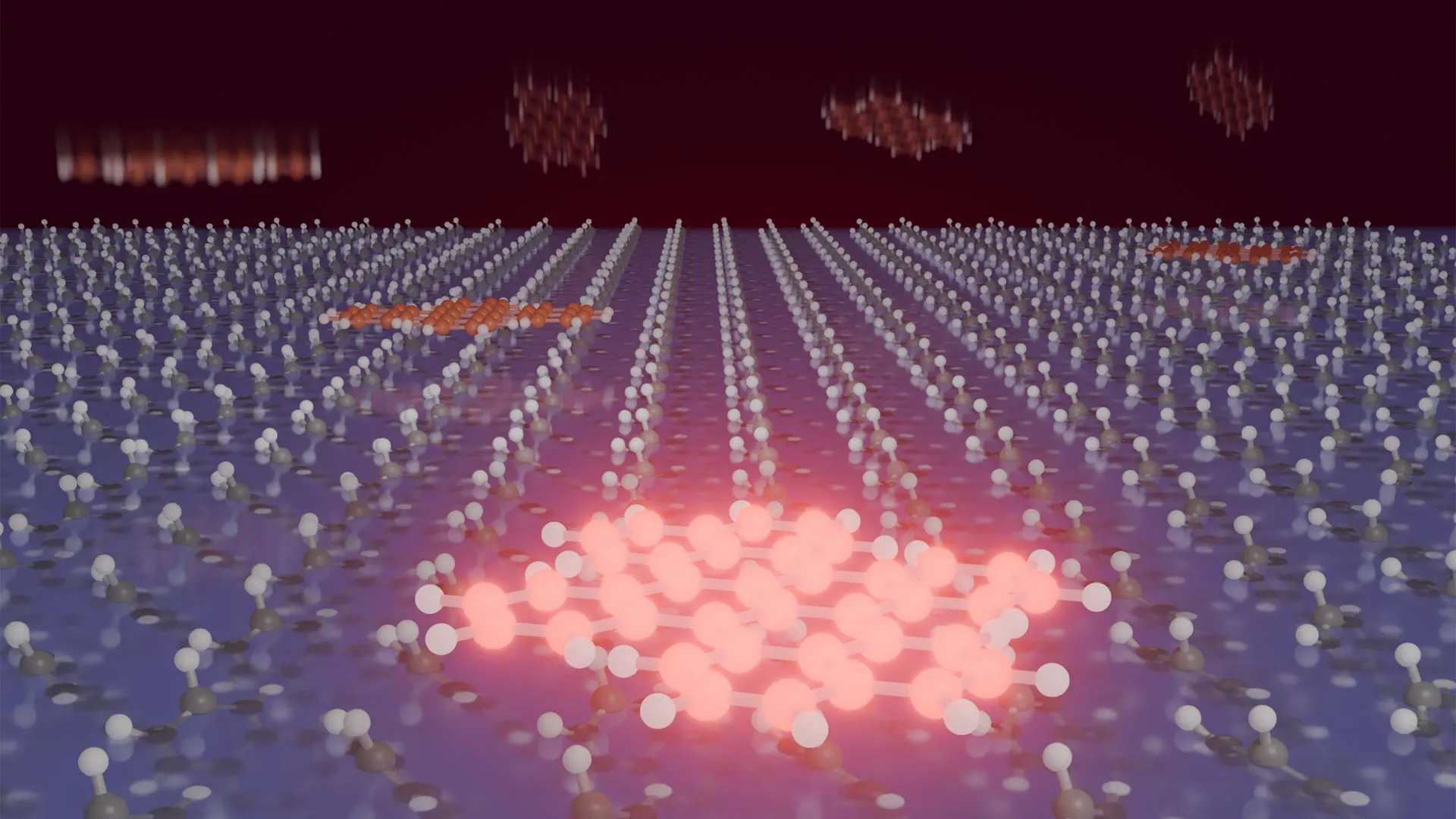
SummaryResearchers at the Max Planck Institute for the Science of Light demonstrated that a single molecule adsorbed onto an ultra-clean crystal surface can reach the Fourier limit of optical coherence, using a sublimation-based cleaning technique within a cryostat. Published in Science, this study marks the first time a surface-bound molecule has achieved this fundamental coherence limit. |
Why it mattersSurfaces have long been a hostile environment for quantum emitters because contamination and noise destroy coherence at rates far exceeding the physical limit. Reaching the Fourier limit on a surface eliminates this bottleneck. Additionally, it makes the molecule accessible to atomic-scale probes like STM and AFM, an advantage not offered by emitters trapped in vacuum or embedded in solid bulk. This paves a practical path for manipulating individual quantum emitters at the nanometer scale for future quantum computing and communication hardware. |
Highlights
|
Critical takeThe article reads like a sales-oriented press release, relying on terms like 'groundbreaking' and 'unprecedented.' It does not address limitations, reproducibility across different crystal types, or provide a fair comparison with mature solid-state emitters like diamond color centers. The most exciting claim—nanometer-scale manipulation via STM/AFM—is explicitly noted as future work. Therefore, the practical utility remains speculative at this stage. |