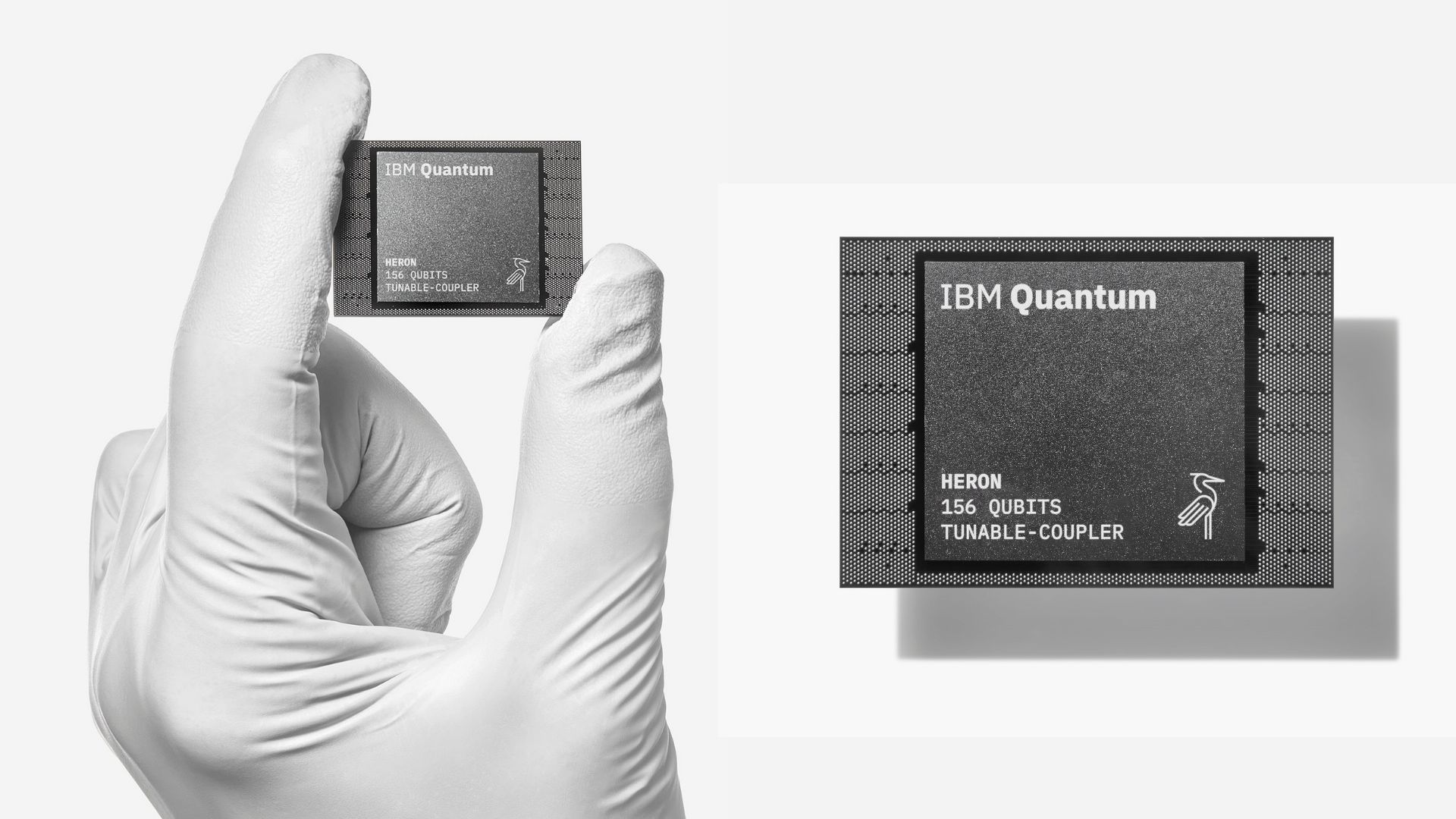
 IBM takes quantum error correction step with 100-qubit chipRead the article English (automatic translation) |
SummaryIBM researchers demonstrated a quantum error correction technique on a 100-qubit Heron processor. It was proven that repeated measurement and reset cycles can steer the system into a controllable state by suppressing chaotic behavior. A sharp phase transition was observed at the point where mixing and correction processes approached an approximately 50-50 balance. |
Why it mattersQuantum error correction is the fundamental bottleneck preventing quantum computers from performing long and useful calculations. Demonstrating that current hardware can repeatedly intervene without destroying information, and that this effect sharpens with system size, shifts the field from purely theoretical proposals toward practical fault-tolerant architectures. Observing a quantum phase transition in a system too large for classical simulation also independently validates existing theoretical models. |
Highlights
|
Critical takeThe article explicitly emphasizes that this is not a fault-tolerant quantum computer. However, the headline phrase 'advancing self-correcting quantum computers' slightly overstates the result achieved by demonstrating a single known theoretical mechanism. The real test will be whether this technique can be integrated into logical qubit architectures with the speed and fidelity required to outpace error accumulation in continuous workloads. |