 Astrositler, ALS'te motor nöronların mitokondri taşıma kusurlarını düzenliyorAstrocytes regulate mitochondrial transport deficits in motor neurons in ALSHabere gitRead the article Türkçe (otomatik çeviri) English (automatic translation) |
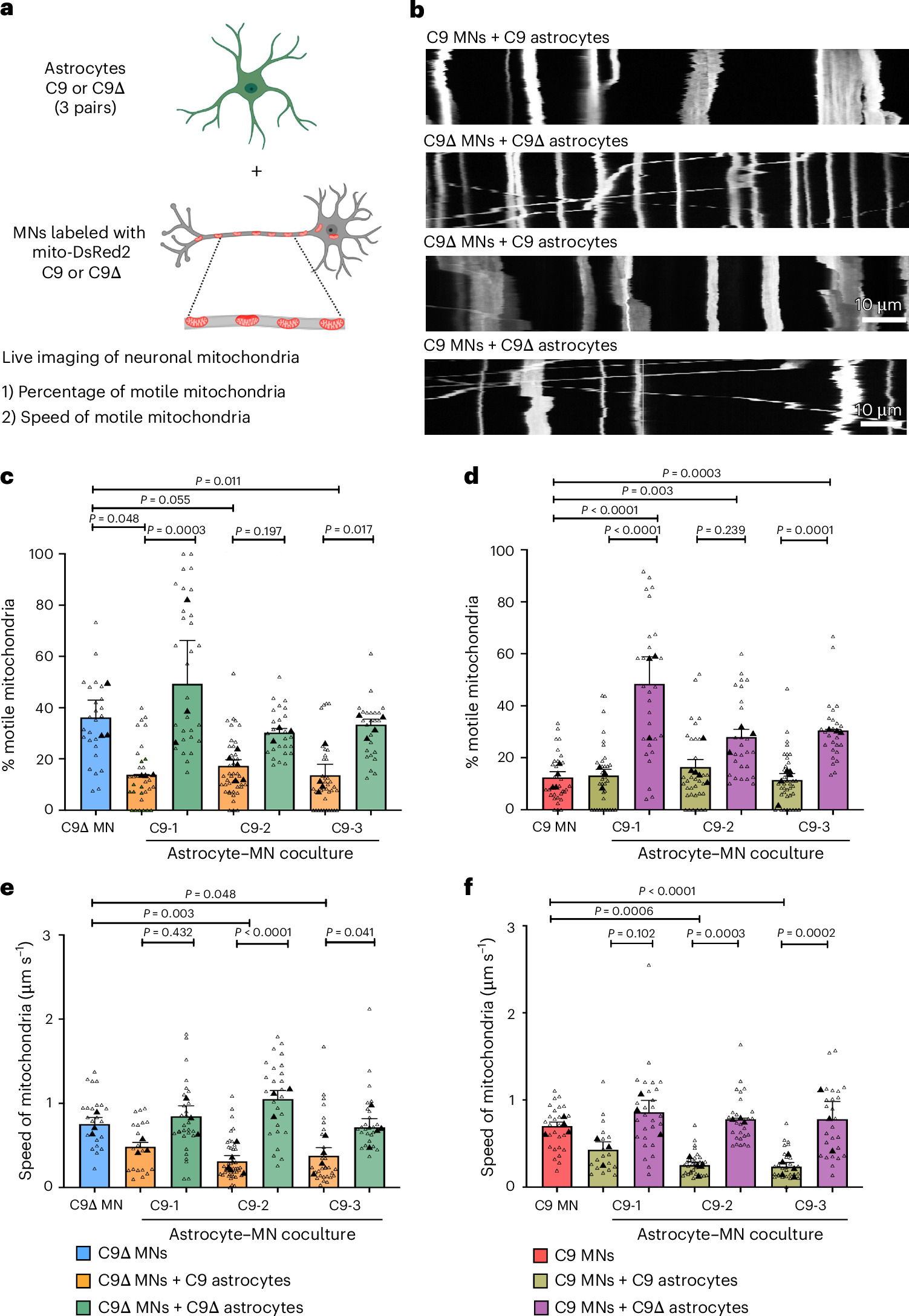
ÖzetSummaryHastadan elde edilen iPSC kaynaklı astrosit ve motor nöronlar kullanılarak yapılan çalışma, C9ORF72 mutasyonlu astrositlerin doğrudan hücre teması yoluyla birlikte kültür edilen nöronlarda aksonal mitokondri taşınımını bozduğunu gösteriyor. Ayrıca gen düzeltilmiş astrositler veya artırılmış astrositik mitokondri biyoenerjisi, bu eksikliği yabani tip düzeyine kadar düzeltiyor.A study using patient-derived iPSC-derived astrocytes and motor neurons shows that C9ORF72-mutant astrocytes disrupt axonal mitochondrial transport in co-cultured neurons via direct cell contact. Furthermore, gene-corrected astrocytes or enhanced astrocytic mitochondrial bioenergetics restore this deficit to wild-type levels. |
Neden ÖnemliWhy it mattersC9ORF72 genişlemesi, ailesel ALS'nin en yaygın genetik nedenidir ve sporadik vakaların yaklaşık %10'una katkıda bulunur. Ancak alan, astrosit disfonksiyonu ile aksonal taşınım bozukluğunu büyük ölçüde paralel ve bağımsız patolojiler olarak ele almıştır. Bu çalışma, birlikte kültürde taşınım fenotipini nöron genotipinin değil astrosit genotipinin belirlediğini göstererek ALS'yi hücre otonom olmayan bir hastalık olarak yeniden çerçeveliyor. Çalışma, mutasyonlu nöronun kendisinden farklı olarak, astrositik mitokondri metabolizmasını hedeflenebilir bir terapötik düğüm olarak işaret ediyor.C9ORF72 expansion is the most common genetic cause of familial ALS and contributes to approximately 10% of sporadic cases. However, the field has largely treated astrocyte dysfunction and axonal transport defects as parallel and independent pathologies. By demonstrating that the transport phenotype in co-culture is determined by the astrocyte genotype rather than the neuron genotype, this study reframes ALS as a non-cell-autonomous disease. It also identifies astrocytic mitochondrial metabolism as a targetable therapeutic node, distinct from the mutant neuron itself. |
Öne ÇıkanlarHighlights
|
EleştiriCritical takeBu çalışma, tamamen in-vitro iPSC birlikte kültürlerine dayanan kısa bir iletişim niteliğinde. Çalışma temas bağımlı bir etkiyi belirliyor ancak sinyali taşıyan spesifik moleküler köprüyü (örneğin hangi reseptör, adezyon molekülü veya metabolik taşıyıcının aracı olduğunu) adlandırmıyor. Bu durum, küçük molekül veya gen terapisi müdahalesine giden çevrimsel yolu spekülasyon düzeyinde bırakıyor. Ayrıca tüm bulgular tek bir ALS alt tipi (C9ORF72) ve tek bir ölçüm (mitokondri hareketliliği) ile sınırlı kaldığı için, diğer genetik veya sporadik ALS formlarına genellenebilirlik henüz test edilmemiş durumda.This study is a short communication based entirely on in-vitro iPSC co-cultures. While it identifies a contact-dependent effect, it does not name the specific molecular bridge (e.g., which receptor, adhesion molecule, or metabolic transporter mediates it), leaving the pathway to small molecule or gene therapy interventions at the level of speculation. Additionally, because all findings are limited to a single ALS subtype (C9ORF72) and a single measurement (mitochondrial motility), generalizability to other genetic or sporadic forms of ALS remains untested. |