 Astrocytes regulate mitochondrial transport deficits in motor neurons in ALSRead the article English (automatic translation) |
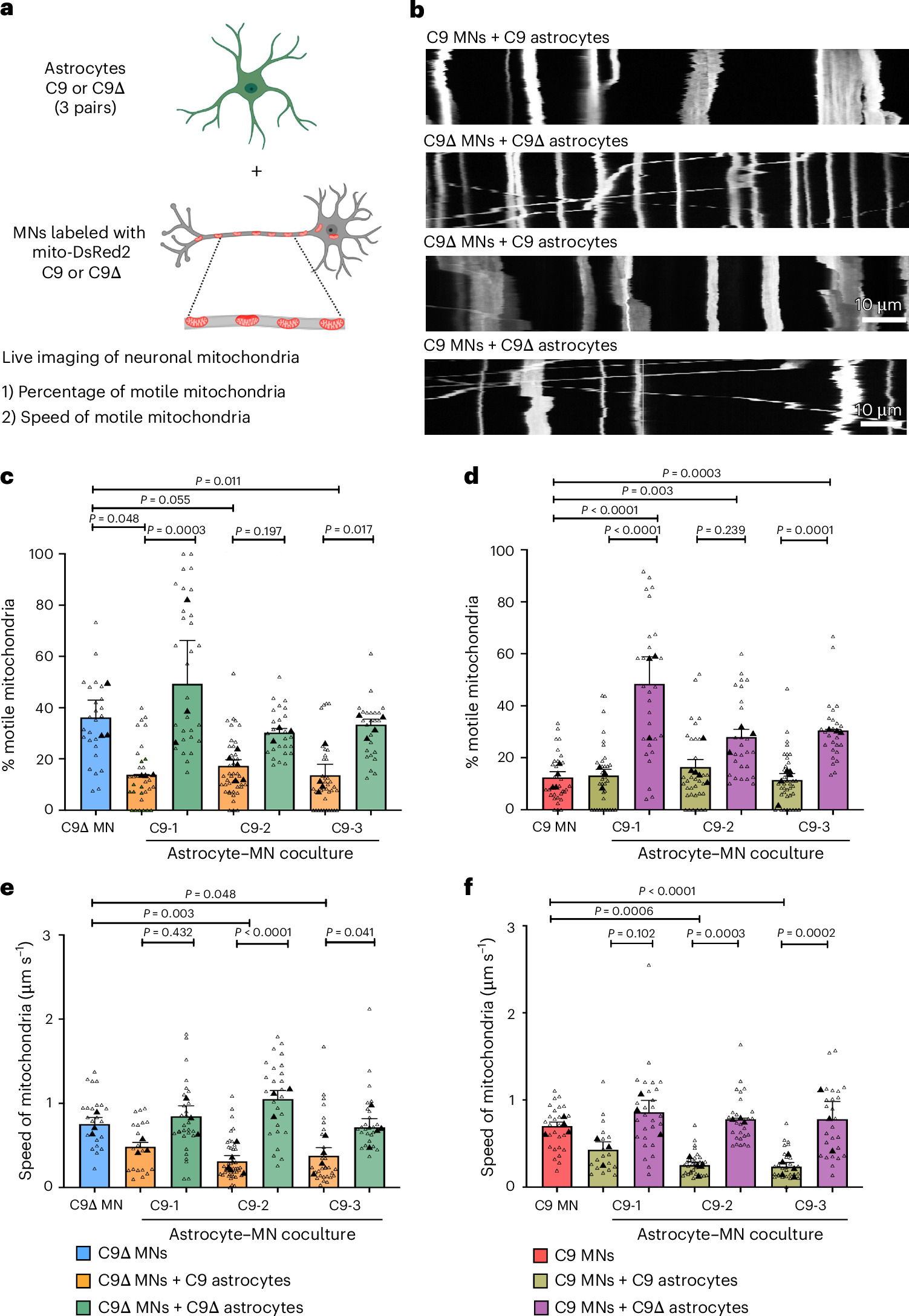
SummaryA study using patient-derived iPSC-derived astrocytes and motor neurons shows that C9ORF72-mutant astrocytes disrupt axonal mitochondrial transport in co-cultured neurons via direct cell contact. Furthermore, gene-corrected astrocytes or enhanced astrocytic mitochondrial bioenergetics restore this deficit to wild-type levels. |
Why it mattersC9ORF72 expansion is the most common genetic cause of familial ALS and contributes to approximately 10% of sporadic cases. However, the field has largely treated astrocyte dysfunction and axonal transport defects as parallel and independent pathologies. By demonstrating that the transport phenotype in co-culture is determined by the astrocyte genotype rather than the neuron genotype, this study reframes ALS as a non-cell-autonomous disease. It also identifies astrocytic mitochondrial metabolism as a targetable therapeutic node, distinct from the mutant neuron itself. |
Highlights
|
Critical takeThis study is a short communication based entirely on in-vitro iPSC co-cultures. While it identifies a contact-dependent effect, it does not name the specific molecular bridge (e.g., which receptor, adhesion molecule, or metabolic transporter mediates it), leaving the pathway to small molecule or gene therapy interventions at the level of speculation. Additionally, because all findings are limited to a single ALS subtype (C9ORF72) and a single measurement (mitochondrial motility), generalizability to other genetic or sporadic forms of ALS remains untested. |