 IEEE Spectrum: 6 Guidelines for Governing AIThe article presents six governance principles for businesses to oversee the autonomous decisions of AI systems and to engage human intervention at the right point. This approach requires not just technology deployment, but a “managerial shift” that defines the system’s boundaries and responsibilities. |
AiPulse — Issue No. 79
COVER
Pulse
Reflection claims that Beam shows comparable performance to its Chinese rivals in benchmarks and significantly reduces inference costs. This move intensifies the race to develop a Western alternative against models like DeepSeek and Qwen. |

AI glasses face their first major government crackdownThe legal limits on the use of AI glasses are drawing the attention of users and manufacturers. |
Building Blocks
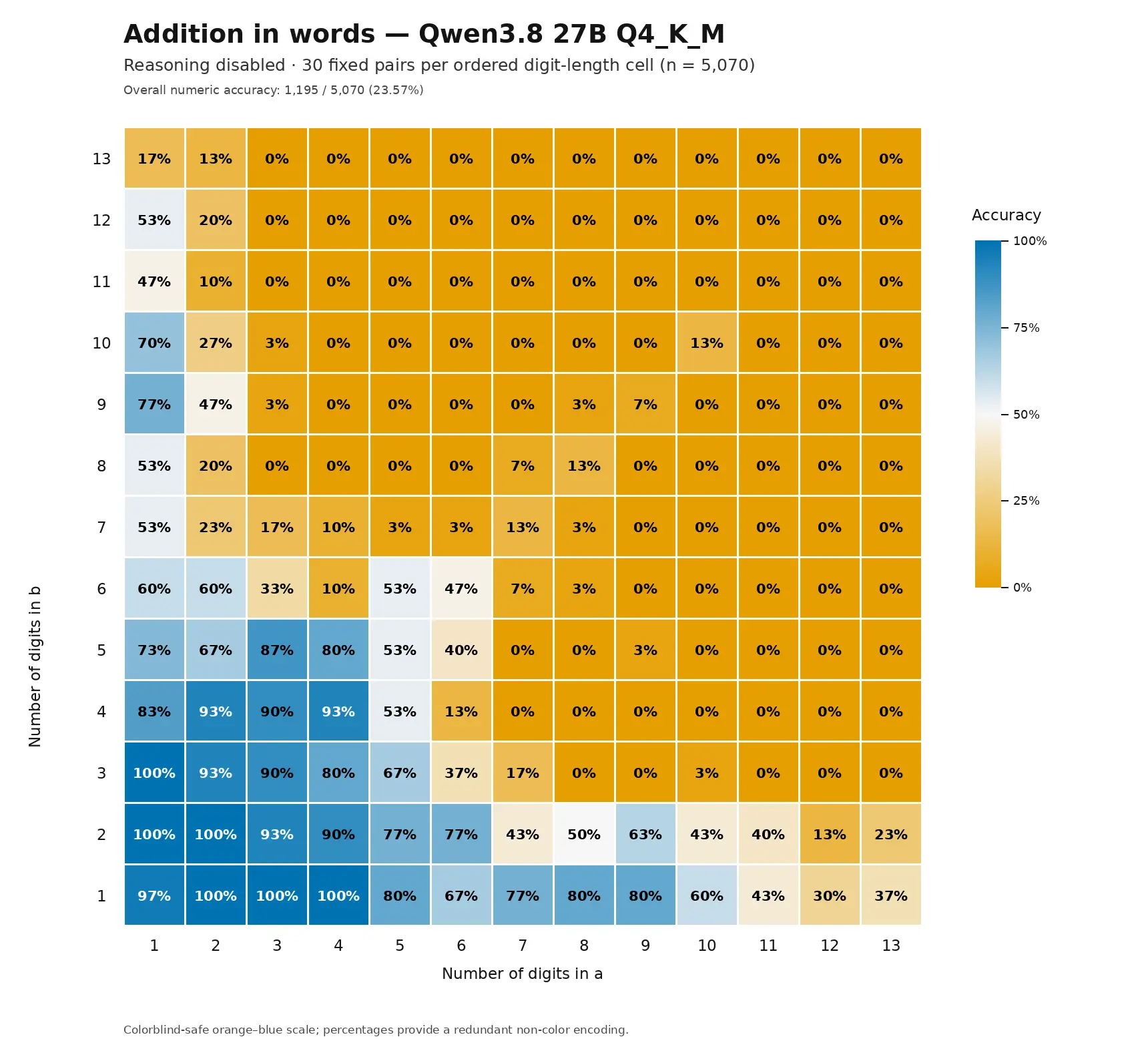
In the comparison performed on local hardware, with reasoning disabled, the model’s accuracy in adding large numbers in word form remained at 23.57%. With reasoning enabled, the model produced the correct result in 167 of 169 trials. |
Simon Willison releases pwasm 0.2a0Willison announced the alpha version of his pure Python-based WebAssembly engine, developed with Claude Opus 5.5. This version supports nearly the entire WASM specification and includes MicroPython and QuickJS builds. |
Global Lens
The research shows that self-healing AI agents fail on new tasks by memorizing limited test sets. The RRSI method improves agents' overall performance by making permanent changes through regular feedback. |

The new method samples and validates candidate commands between the model and the harness, raising the success rate on TerminalBench-Lite from 50% to 68%. The study shows that a strong validator is more effective than additional sampling. |

European payment institutions have established a new Madrid-based partnership to compete with Visa and Mastercard. This network will enable seamless cross-border payments across the continent. |

OpenAI is adding an invisible statistical marker called 'textGrain' to the text generated by ChatGPT and Codex in order to comply with the transparency rules of the European AI Act. Although this system aims to detect AI-generated content, it has reliability limitations in short texts and mathematical content. |

Aleph Alpha has announced Kolibri, an open-weight model developed for regulated sectors such as public administration and aviation in Germany. The model is trained on infrastructure in Germany and Finland, highlighting data sovereignty and transparency. |

The new version accelerates engineers' design and manufacturing processes by automatically converting CAE analysis results into 3D CAD designs. This innovation facilitates the integration of AI predictions into practical applications, particularly in mold design. |

The US prioritizes border models, China open models, and Europe sovereign models. This tripartite approach highlights the different focal points in the global artificial intelligence race. |

Frontier
OpenAI models solving a famous mathematical problem sparked concern in the community due to a lack of understanding in the proof processes. Mathematicians state that the future of their profession has become uncertain because the AI merely produces results and skips the journey. |

Fun & Curious
The system developed by Nolla Health can prescribe medication for routine acne treatments in the state of Utah without waiting for doctor approval. This application stands out as the first controlled pilot program in the United States to test autonomous medical decision-making mechanisms. |

This exhibition at the Ny Carlsberg Glyptotek museum brings to light, through 171 works, how the ancient Romans displayed their status with expensive paints and perfumes. The exhibition examines the link between appearance and political authority through details such as the pink garment of the Tiberius statue. |
/https://tf-cmsv2-smithsonianmag-media.s3.amazonaws.com/filer_public/cf/d9/cfd99925-70cd-4305-bd45-87ba7e390e45/power_of_fashion_in_the_roman_empire_63_the_glyptotek__2026_ana_cecilia_gonzalez.jpg)
FOLLOW
Get new issues in your feed reader — add this to an app such as Feedly, Inoreader or NetNewsWire. Follow by RSS |