 İnsan hipokampusu, büyük dil modelleriyle benzer semantik kodlamayı kullanıyorHuman hippocampus uses similar semantic coding as large language modelsHabere gitRead the article Türkçe (otomatik çeviri) English (automatic translation) |
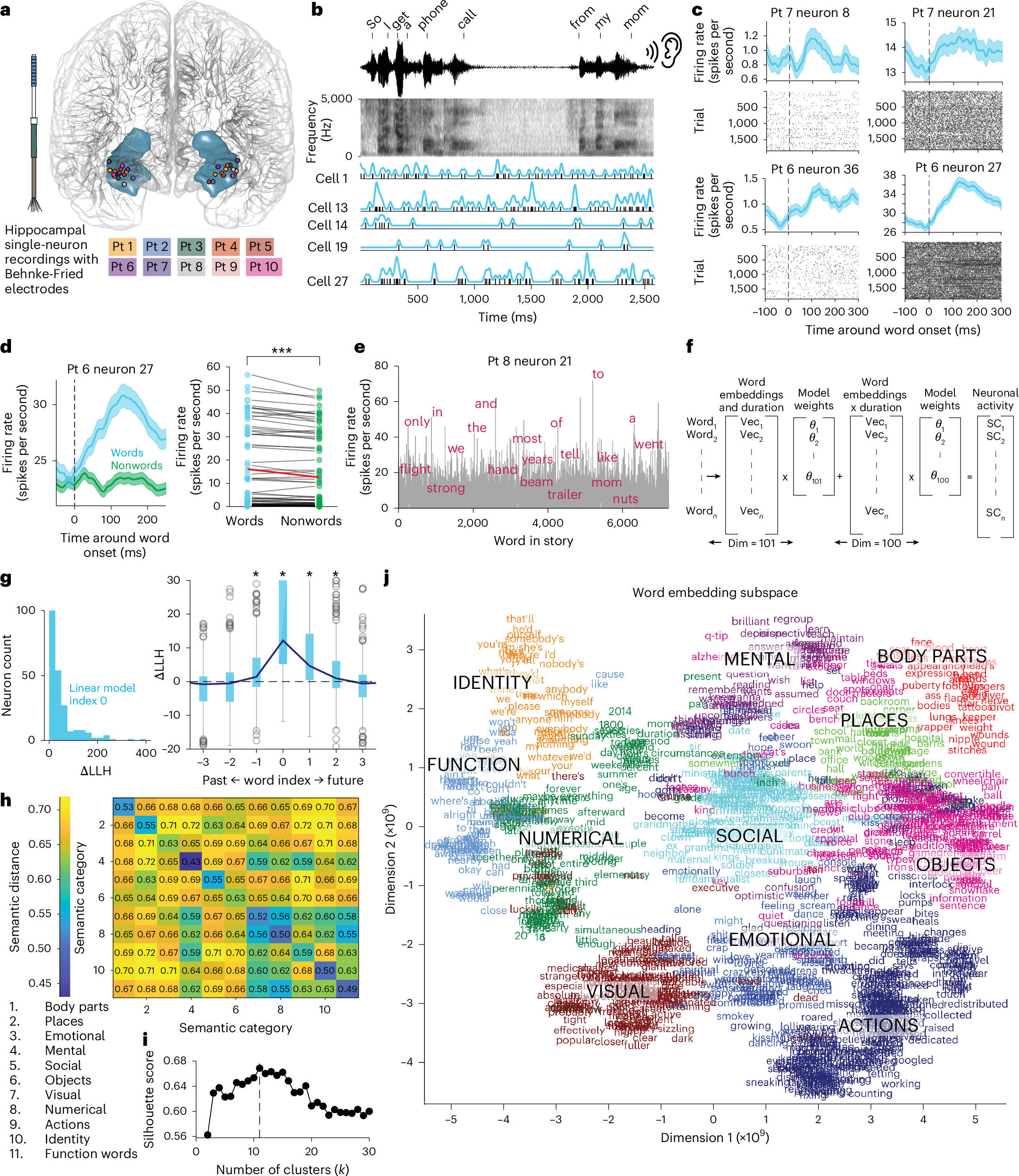
ÖzetSummaryAraştırmacılar, anlatısal konuşma sırasında hipokampal nöronları kaydetti. Nöron popülasyonundaki aktivitenin, kelime anlamlarını dağıtık ve bağlama duyarlı bir biçimde kodladığını tespit ettiler. Bu aktivitenin geometrik yapısı, yani mesafe ilişkileri, büyük dil modellerinin (LLM) gömme uzaylarıyla büyük ölçüde örtüşüyor. En güçlü uyum GPT-2 vektörleriyle sağlanıyor.Researchers recorded hippocampal neurons during narrative speech. They found that activity in the neuronal population encodes word meanings in a distributed and context-sensitive manner. The geometric structure of this activity, specifically the distance relationships, largely overlaps with the embedding spaces of large language models (LLMs). The strongest alignment is achieved with GPT-2 vectors. |
Neden ÖnemliWhy it mattersBu bulgu, belirli bir beyin bölgesinin kodlama şeması ile transformer tabanlı dil modellerinin temsil geometrisi arasında çizilen en doğrudan ampirik köprülerden biri. LLM'lerin insanın anlamı işleme biçimiyle ilgili gerçek bir şeyi yakaladığı fikrine biyolojik bir olasılık katıyor. Hipokampusu yalnızca bir bellek deposu olarak değil, gerçek zamanlı dil anlama sırasında aktif bir semantik kodlayıcı olarak yeniden konumlandırıyor. Bu durum, hem bilişsel teori hem de LLM'lerin yorumlanabilirliği açısından önemli sonuçlar doğuruyor.This finding represents one of the most direct empirical bridges drawn between the coding scheme of a specific brain region and the representational geometry of transformer-based language models. It adds biological plausibility to the idea that LLMs capture something real about how humans process meaning. It repositions the hippocampus not merely as a memory store, but as an active semantic encoder during real-time language comprehension. This has significant implications for both cognitive theory and the interpretability of LLMs. |
Öne ÇıkanlarHighlights
|
EleştiriCritical takeGPT-2 ile sağlanan uyum dikkat çekici olsa da bir uyarı niteliği taşıyor. GPT-2, 2019 tarihli ve 1,5 milyar parametreli bir model. 'En yakın eşleşme' ifadesi, görevin basitliğinden, yani anlatıyı pasif dinlemeden kaynaklanıyor olabilir. Bu durum, en son nesil LLM'lerle derin bir hesaplama izomorfizmi anlamına gelmeyebilir. Benzer kelimeler için gözlemlenen ters korelasyon, 'karşıtlık kodlamasının gürültü azaltma faydası' şeklinde tek bir cümleyle açıklanıyor. Bu açıklamada, hipokampal toplulukta yanıt doygunluğu veya kayıt gürültüsü gibi daha basit karışık etkenleri dışlayacak resmi bir model veya kontrol bulunmuyor.While the alignment achieved with GPT-2 is striking, it carries a caveat. GPT-2 is a 2019 model with 1.5 billion parameters. The 'closest match' expression may stem from the simplicity of the task, i.e., passive listening to narratives. This does not necessarily imply a deep computational isomorphism with the latest generation of LLMs. The observed inverse correlation for similar words is explained in a single sentence as the 'noise-reduction benefit of contrastive coding.' This explanation lacks a formal model or control to rule out simpler confounding factors, such as response saturation or recording noise in the hippocampal population. |