 H3C focuses on token efficiency rather than GPU count in AI infrastructureRead the article English (automatic translation) |
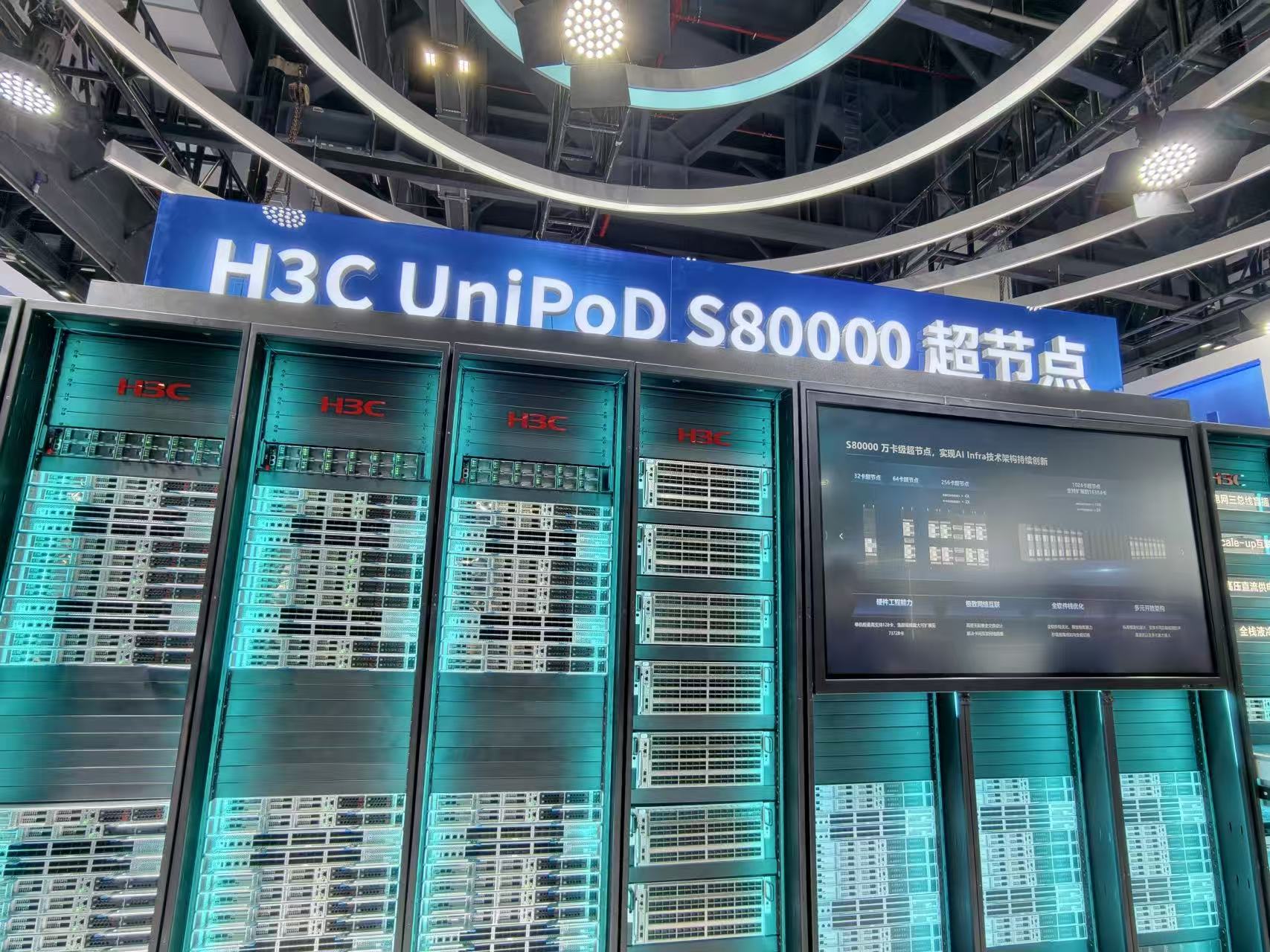
SummaryH3C argued at the 2026 Apsara Conference that the competition in AI infrastructure is shifting from raw GPU counts to system-level token efficiency. The company supported this claim with its SuperPod platform, which supports up to 16,384 GPUs, three-tier high-speed connectivity layers, and high-performance storage solutions designed to reduce GPU idle time and inference latency. |
Why it mattersAgentic AI is creating workloads at the scale of trillions of tokens. In this scenario, the bottleneck is no longer just computational power (FLOPs) but the entire pipeline, including networking, storage, scheduling, and power management. The industry's optimization goal is shifting from 'more chips' to the number of 'useful tokens per dollar.' H3C's approach to this issue offers a concrete product roadmap for this transition. The emphasis on open protocols compared to closed ecosystems signals which interaction standards will be decisive in the next generation of clusters. |
Highlights
|
Critical takeThe article reads like a vendor promotion thinly veiled as news. All performance figures (15% latency reduction, 90% TTFT drop, 30% less GPU idle time) rely on H3C's own claims without independent benchmarking or third-party verification. The 'industry transformation' narrative is merely the product roadmap of a single Chinese IT vendor being presented as a market trend. |