 Deep Learning from the Foundations – fast.aiRead the article English (automatic translation) |
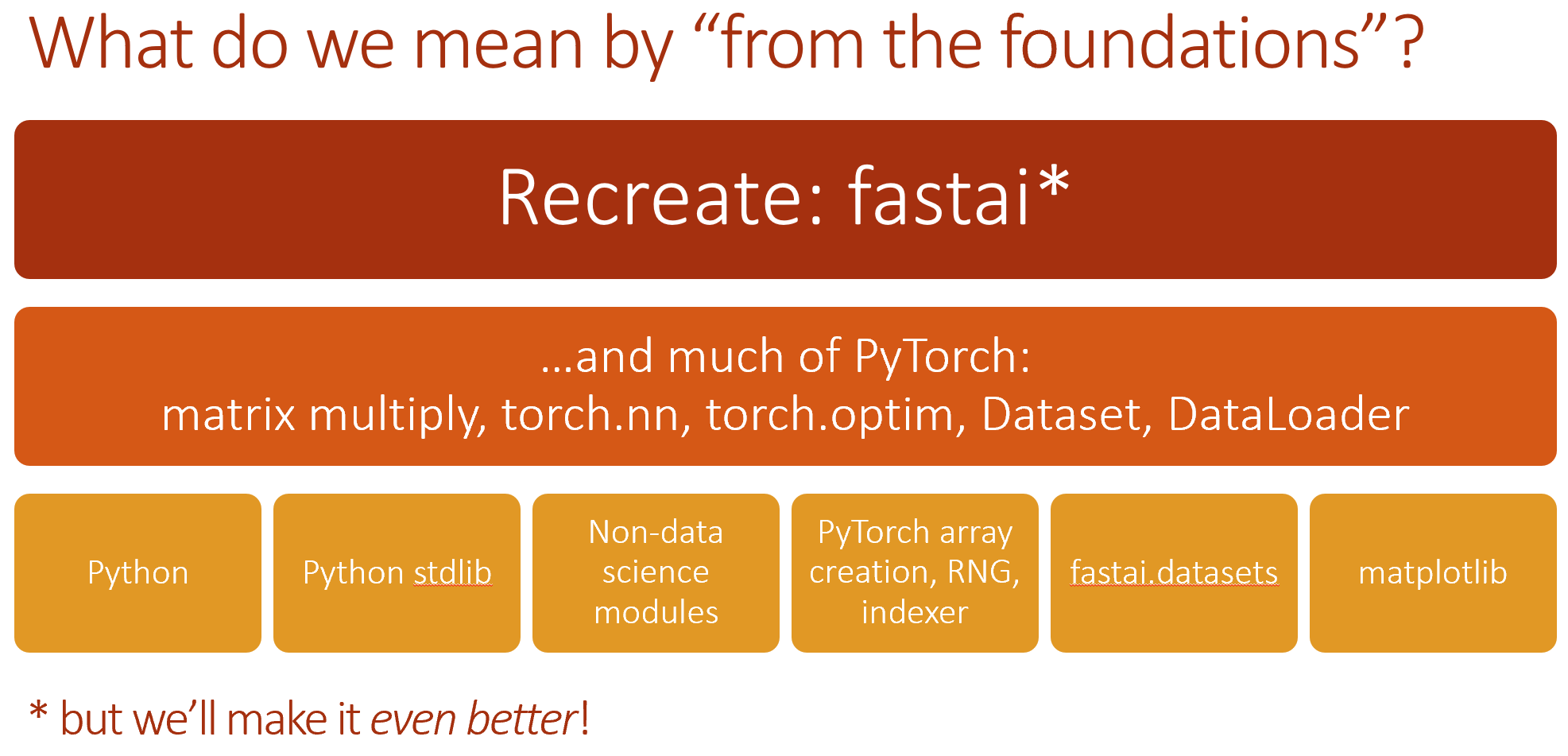
Summaryfast.ai has launched a free 15-hour course that takes students from manually implementing matrix multiplication and back-propagation steps to training ImageNet-class models. The course re-codes significant portions of the fastai and PyTorch libraries from scratch. The final two lessons, covering Swift for TensorFlow, are co-led by Chris Lattner. |
Why it mattersIn a field where practitioners often view frameworks as black boxes, this code-centric curriculum reconstructs internal structures, addressing topics such as initialization schemes, training loops, callbacks, and mixed-precision training. This approach provides learners with a conceptual advantage in adapting to rapidly evolving architectures. The collaboration with Google Brain's Swift for TensorFlow team (which released version 0.4 concurrently) highlights a rare open, cross-ecosystem educational initiative at a time when deep learning education is largely confined to a single framework. |
Highlights
|
Critical takeThe 'state-of-the-art' framework is inherently time-dependent. As of 2019, the architectures covered (ResNet, ULMFiT) were already a generation behind the rising transformer-based models. The Swift for TensorFlow track was also locked to version 0.4, which had uncertain long-term sustainability. Furthermore, requiring Part 1 as a mandatory prerequisite means the 'fundamentals' course is effectively a two-course commitment. This may deter the entry-level students that the free access mission aims to attract. |