 3D-printed bridge points the way to greener constructionRead the article English (automatic translation) |
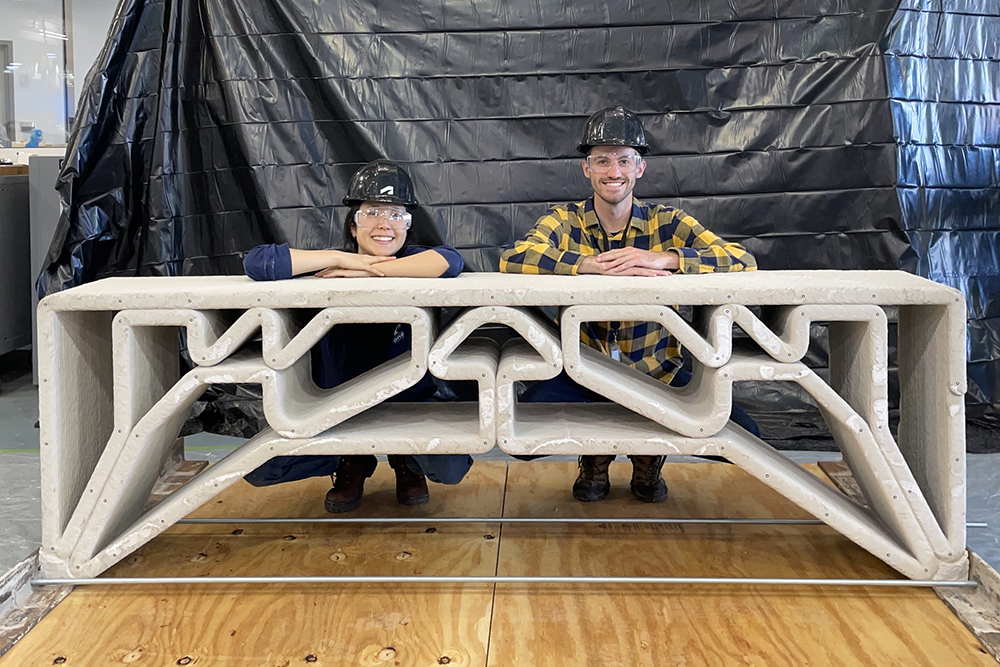
SummaryMIT researchers developed a framework that directly incorporates real 3D printer constraints (bead width, turning radius, continuous path) into topology optimization. The team validated this method by printing a 2.3-meter concrete bridge and subjecting it to load testing. The bridge carried over 2,000 pounds with almost no deflection. |
Why it mattersConcrete production is one of the largest sources of global carbon emissions. 3D printing promises to reduce material waste by eliminating the need for formwork. The study's key finding is that the limiting factor is not the durability of the concrete, but the existing printer hardware. This offers manufacturers a concrete target rather than an ambiguous sustainability promise. For example, using a 1-centimeter bead width can achieve a 76% material savings. |
Highlights
|
Critical takeThe 76% material reduction rate mentioned in the title is a theoretical upper limit derived from a single 2.3-meter span. It is not a result validated by field tests. Issues such as scaling to multi-story structures, weather resistance, and building code compliance are not addressed at all. Presenting this as a step toward 'greener construction' may be an exaggeration. Material savings on a small bridge make almost no difference to the global carbon footprint of cement production. |