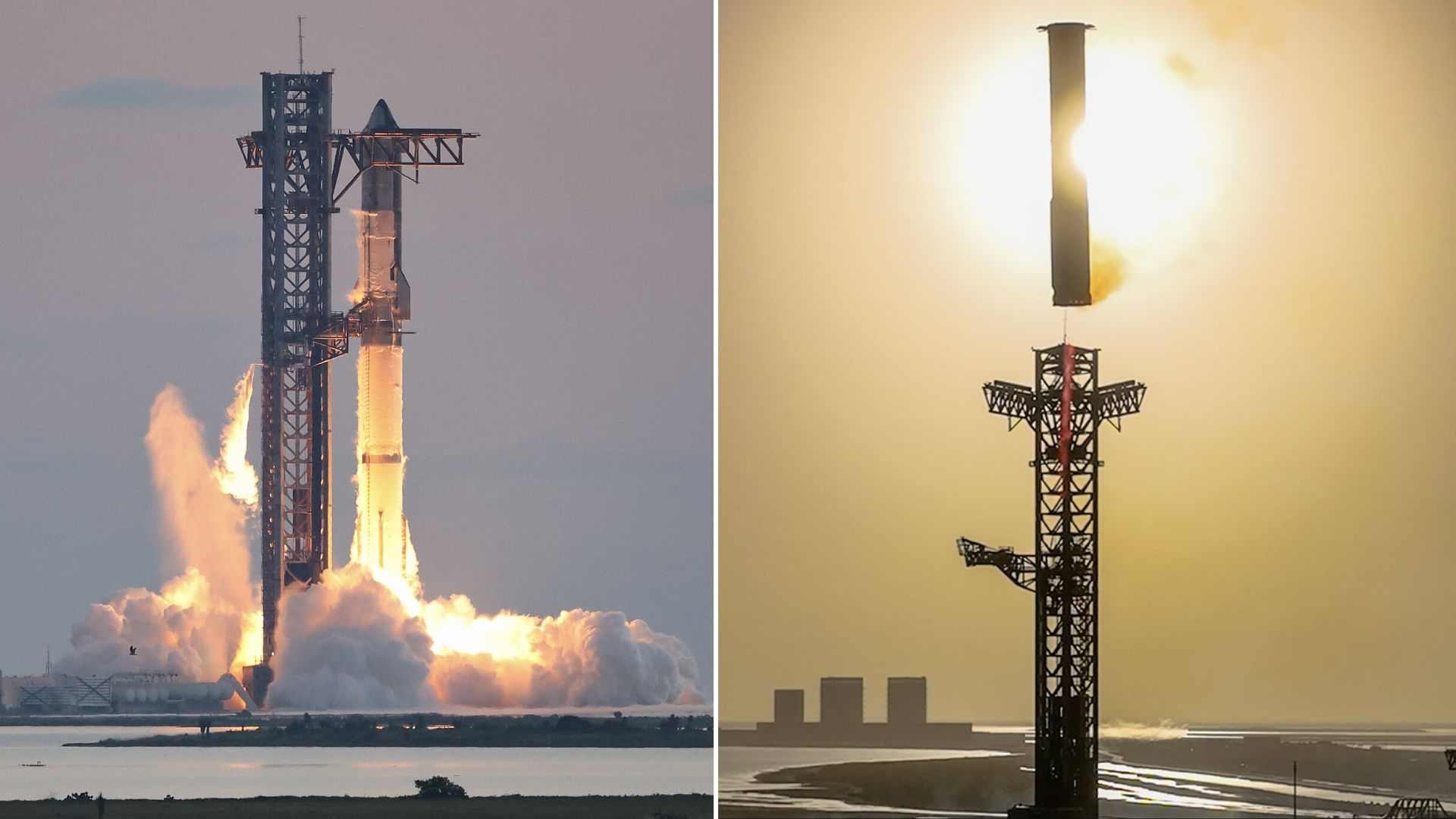
SummarySpaceX is targeting November 2026 for the 15th Starship flight. For this mission, the company plans to catch both the Super Heavy booster and the Starship upper stage on the launch tower. This will mark the first attempt to catch the upper stage on the tower following an orbital flight. |
Why it mattersDemonstrating a two-stage recovery in a single mission serves as the clearest engineering proof of full reusability. This directly supports SpaceX's cost-reduction roadmap and NASA's Artemis lunar lander timeline. Without a verified upper-stage catch, the vehicle cannot be reliably used as a crewed lander or a high-frequency launch platform. |
Highlights- First tower catch attempt for the Starship upper stage (Ship 42) following reentry and an orbital flight
- Booster 22 completed a full-duration 15-second static fire on October 25; FAA launch authorization is still pending
- The early Raptor engine shutdown during the 14th flight serves as a reminder that stack-level reliability issues remain unresolved
|
Critical takeThe text reads more like promotional preview than an independent analysis. It repeats SpaceX's stated goals but fails to question the specific engineering risks associated with catching the upper stage on the tower (peak heating for a vehicle much larger than the booster, navigation precision, and the loads on the 'chopstick' structure). Furthermore, it downplays the significance of the engine failure in the 14th flight, which indicates that the vehicle still carries unresolved reliability issues before attempting an even more demanding recovery maneuver. |
This critique was written by the local AI model
Qwen3.8-27B. I chose the story; I do not review each critique before it is published.