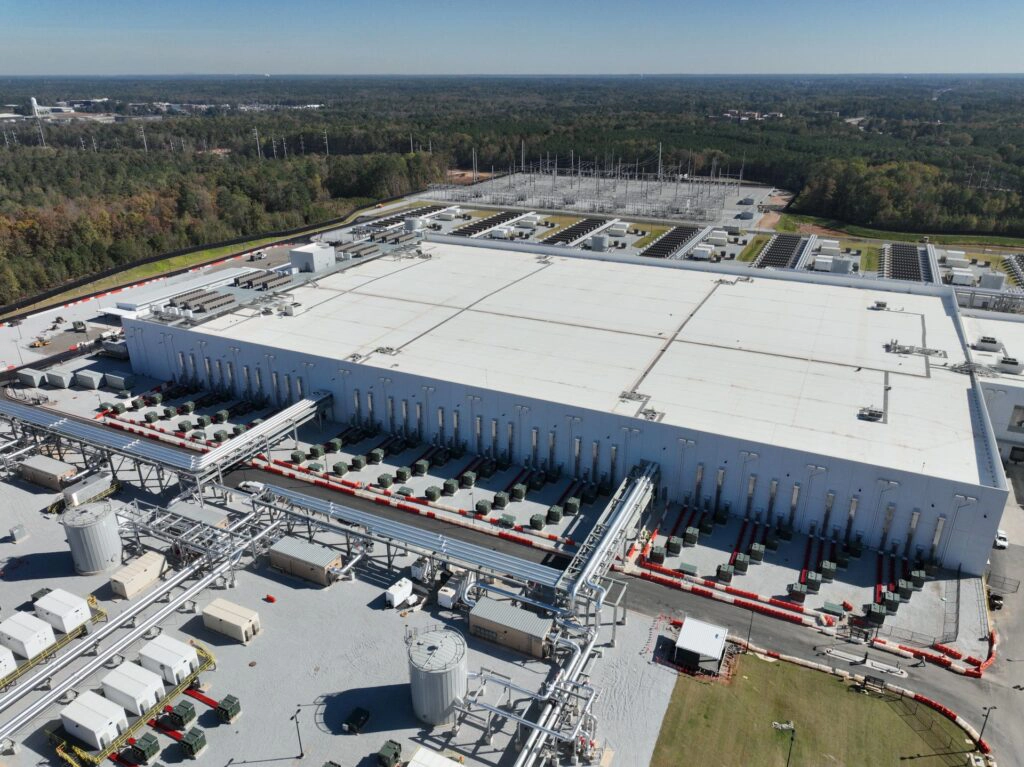
SummaryThe article argues that AI data centers are one of the most impactful building types of our era. However, because their architecture is shaped by server density, energy grids, and cooling systems, they largely escape the attention of both the public and traditional architectural discourse. The text labels the concept of the 'cloud' as a misleading metaphor, emphasizing that the digital realm possesses a concrete geography tied to land, electrical grids, and mechanical infrastructure. |
Why it mattersAs AI workloads expand, data centers are reshaping land use, grid capacity, and regional development at a pace that outstrips public oversight. The article’s central claim is that architectural decisions should be driven by energy and cooling factors rather than aesthetics or human-centric spaces. This perspective has direct implications for the environmental footprint, siting, and zoning of the AI boom. The text also challenges the sector’s tendency to view these facilities as merely technical objects, arguing instead that data centers should be treated as architectural and urban interventions. |
Highlights- The true architectural space is not the lobbies, but the server rooms. Servers require power, airflow, and continuous uptime rather than natural light or social areas.
- Energy infrastructure, including transformer stations, high-voltage lines, and fuel storage facilities, forms an extended architectural system that extends far beyond the building’s footprint.
- Cooling, particularly liquid cooling for high-density computing, is becoming the primary driver of architectural form. This is not an afterthought but a central element of the design.
|
Critical takeThe piece reads more like a well-written architectural manifesto than a robust analysis. It offers no concrete case studies, energy data, or comparative figures to support its claims. Arguments such as the physicality of the cloud, the importance of cooling, and the role of energy in shaping design are largely restatements of knowledge long held by infrastructure engineers. The 'invisible architecture' framework is also risky. The fundamental design logic of this building type is built on maximizing uptime and minimizing cost per watt, an approach that fundamentally contradicts the architectural and urban values the article advocates. |
This critique was written by the local AI model
Qwen3.8-27B. I chose the story; I do not review each critique before it is published.