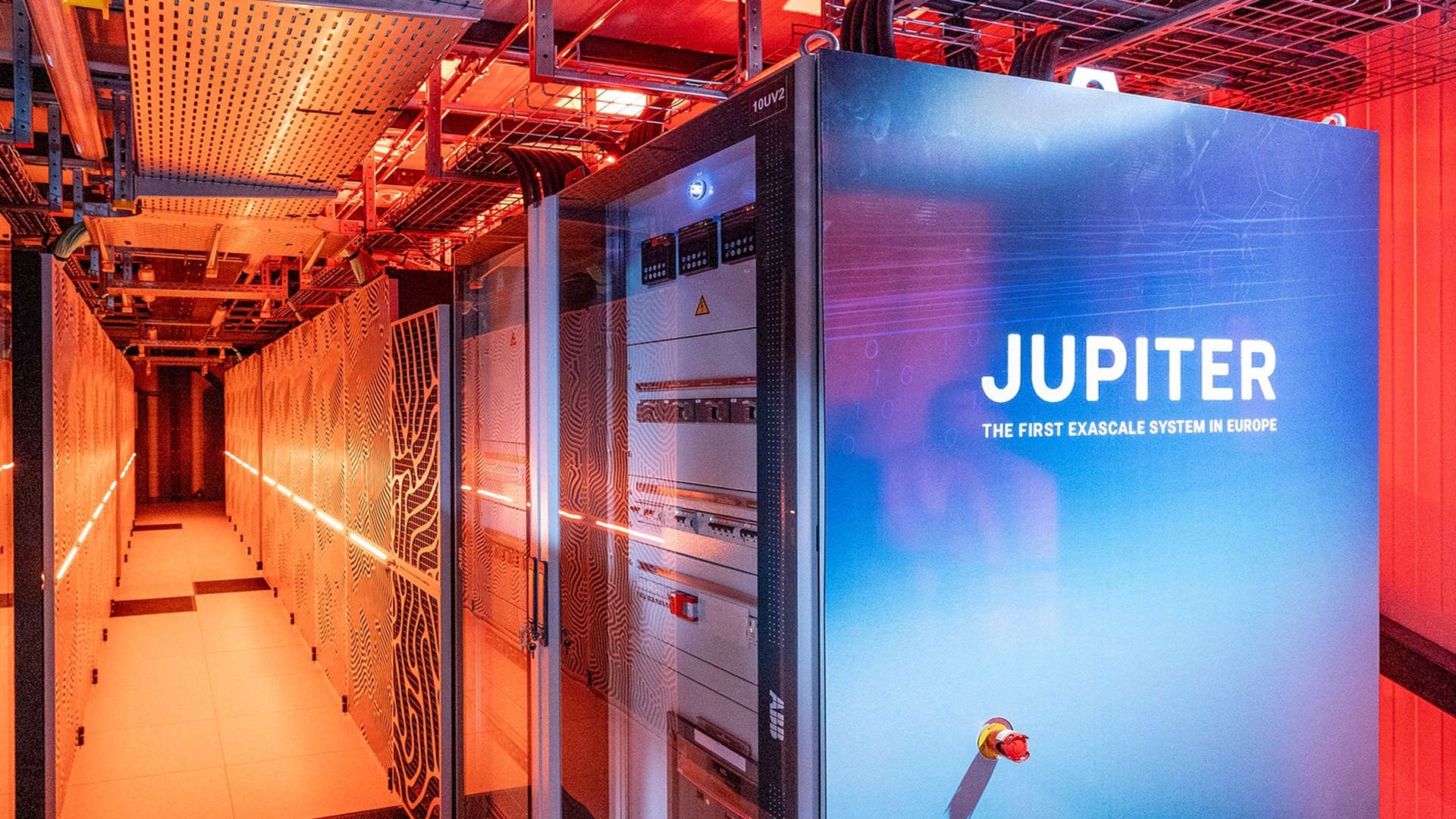
 NVIDIA performs 104-qubit quantum simulation on JUPITER supercomputerRead the article English (automatic translation) |
SummaryNVIDIA ran a 104-qubit fault-tolerant quantum simulation on the JUPITER exascale supercomputer in Europe, using 8,192 GH200 GPUs to model realistic hardware noise. This work validates the magic state distillation approach for future quantum processors. |
Why it mattersMagic states can consume up to 95% of a quantum computer's physical qubits, making their efficient production a bottleneck for practical fault-tolerant machines. Noise-sensitive simulations at this scale allow for stress-testing circuit designs before expensive hardware is built, potentially shortening the path to useful quantum applications in fields like drug discovery and materials science. Additionally, this sharpens the race between classical and quantum hardware, as Google's Willow chip addresses the same magic state problem on a physical processor. |
Highlights
|
Critical takeThis text reads like an NVIDIA press release. The term 'record' in the headline applies only to the classical simulation of quantum circuits, not to any quantum computing milestone. Furthermore, no independent peer-reviewed results are cited. Framing a GPU-based simulation as a step toward 'transformative quantum applications' risks confusing a useful design tool with actual quantum supremacy, which remains years away. |