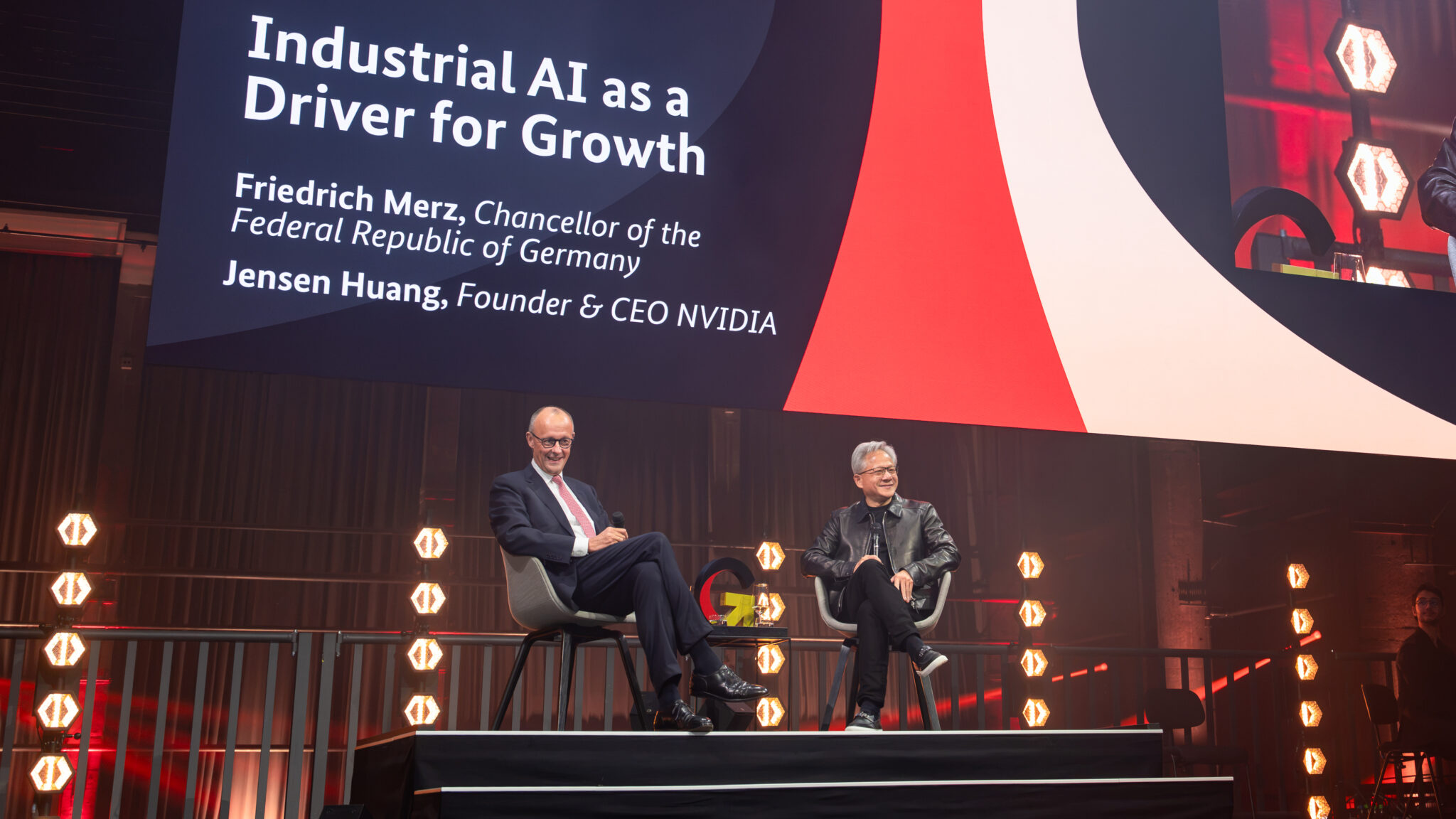
 Germany Aims for World Leadership in Industrial AIRead the article English (automatic translation) |
SummaryThe German federal government signed a non-binding Letter of Intent with NVIDIA to establish an industrial AI ecosystem at the European scale. NVIDIA announced it would make new investments in four German startups and launch a collaboration with Siemens for autonomous manufacturing. |
Why it mattersThis move reflects Germany's strategy to convert its manufacturing and Mittelstand data assets into a competitive advantage in physical AI. The country is positioning itself as a balancing force in Europe against US-led AI. The approximately $10 billion European commitment and concrete investments in startups like Agile Robots, Avelios Medical, Mirelo, and Reflex Aerospace move the discussion beyond rhetoric. However, the binding nature of a “Letter of Intent” remains limited. |
Highlights
|
Critical takeThis text is not independent news but NVIDIA’s corporate blog post. Every claim (Siemens’ 85%/20% figures, the “record-breaking” 104-qubit simulation) was published by the company itself and has not been independently verified. The “Letter of Intent” is a non-binding political gesture with no enforcement mechanism. The text ignores the real adoption barriers for German SMEs—energy costs, data sovereignty constraints, and the fact that most Mittelstand companies still lack the digital infrastructure needed to “open their doors to AI.” Merz’s optimistic emphasis on this point only makes this gap more apparent. |