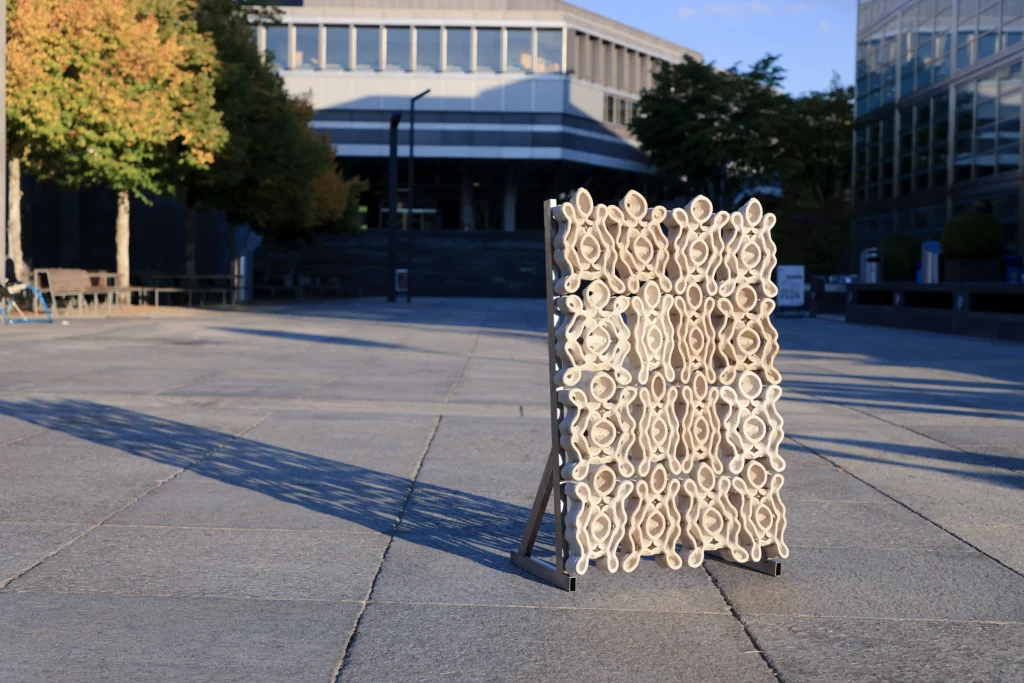
 Living Bacteria Create Stunning Sand Structures at ETH ZurichRead the article |
SummaryETH Zurich researcher Karen Antorveza Paez developed two robot-assisted methods that use Sporosarcina pasteurii bacteria to bind sand into architectural elements at room temperature. These methods, 3D biocement printing and stromatolit-inspired layer-by-layer spraying, eliminate the need for ovens. |
Why it mattersCement production requires temperatures above 1,000 °C and is a significant source of CO₂. A biological alternative that 'grows' mineral structures at room temperature could fundamentally change the production of low-rise architectural components. The work also introduces a new design variable for architects, forcing them to treat material not as a static input but as a living process: time and bacterial activity. |
Highlights
|
Critical takeThe sustainability claim is weakened by a fact acknowledged in the article itself: the ammonia byproduct harms the environment if not properly managed. Until this waste stream is resolved, it is premature to label the method a green alternative to cement. Additionally, the demonstrated outputs are still limited to modest facade panels. As the article notes, the difference between a laboratory-scale mortar and a load-bearing, code-compliant structural material likely requires decades of refinement. |