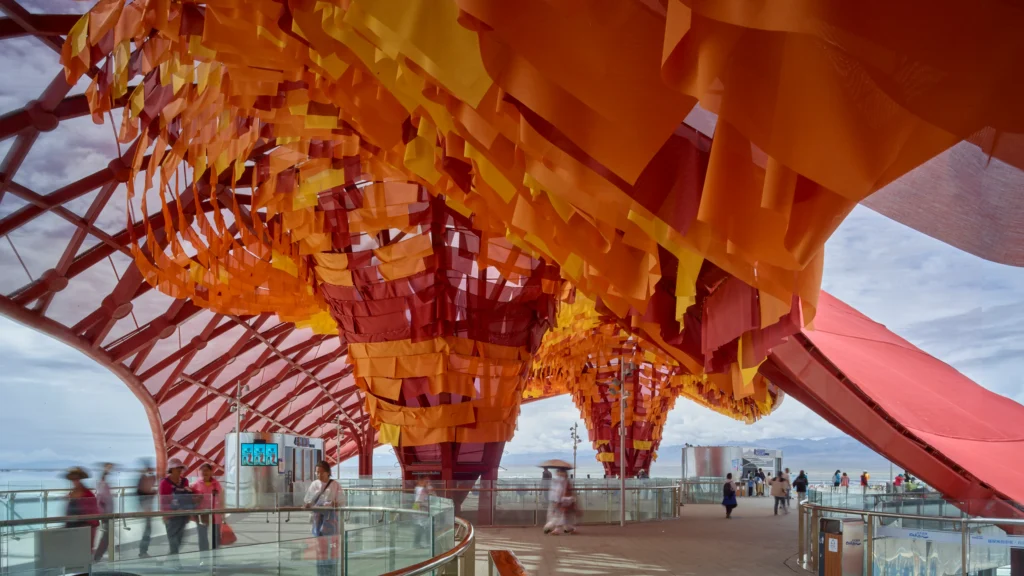
 Parametric Design Winds Transform Architecture at Chaka Train StationRead the article |
SummaryThe article introduces Chaka Train Station, located on the shores of Chaka Salt Lake in Qinghai Province, China. Designed by Tsinghua University's SUP Atelier team, the station stands out for its red grid structure and fabric cladding. The authors argue that parametric and computational design enabled the building to move with the wind rather than merely resisting it. |
Why it mattersThe text provides a concrete example of how computational workflows can translate site-specific conditions—such as wind, salt, and cultural imagery like red ribbons—into a producible structure. This is significant for anyone questioning whether parametric tools merely produce digital spectacle. Furthermore, the article positions a transport building not as a purely functional box, but as a public entry point that appeals to the senses. This framing is relevant to airports, stations, and public projects worldwide. |
Highlights
|
Critical takeSince the piece was published by the editorial team of a parametric-architecture-focused industry site, it reads more like a project showcase than an independent critique. The text does not mention costs, construction timelines, long-term maintenance of exposed fabric in a salt lake environment, or any design trade-offs. Additionally, the 'parametric' framing remains at the level of lyrical description without explaining which specific computational methods or algorithms primarily shaped the form. |