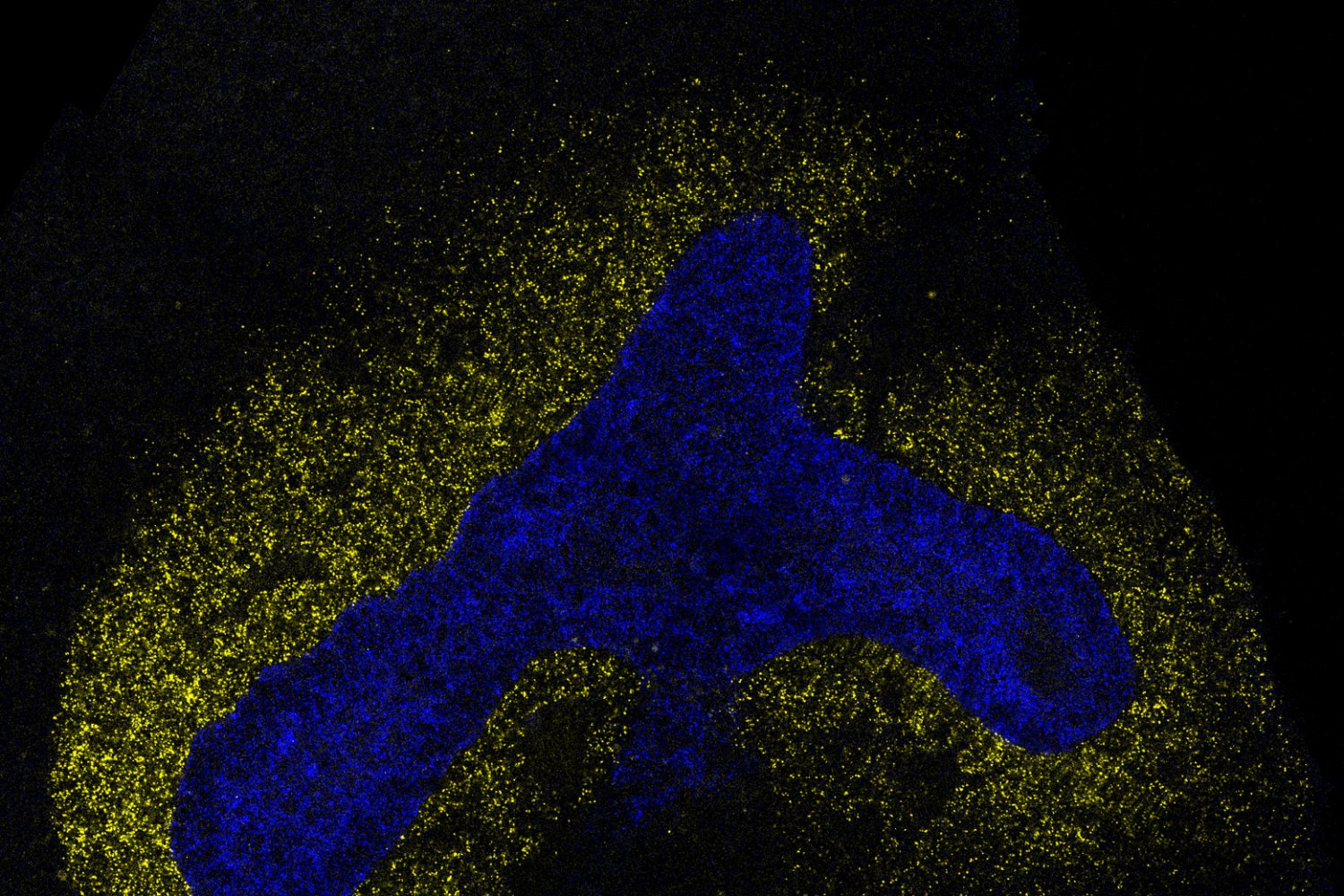
 IRIS model decodes the language cells use to communicateRead the article English (automatic translation) |
SummaryMIT researchers introduced IRIS, a neural network model that identifies consistent gene expression 'fingerprints' left by signaling pathways across different cell types. This allows the model to reconstruct a cell's signaling history without individually mapping every pathway in every cell type. The approach was validated in mouse gastrulation and lung development prediction. The study was published in Nature Methods in September 2026. |
Why it mattersIf signaling pathway fingerprints are truly transferable across cell types, the combinatorial explosion of 'test every pathway in every cell type' experiments collapses into a single learned atlas. This dramatically shortens the path from stem cell differentiation to functional organoid models. The approach holds direct value for regenerative medicine, drug screening in disease-associated tissues, and understanding developmental miswiring in conditions like pulmonary fibrosis. |
Highlights
|
Critical takeThe Siri/voice recognition analogy overstates the transfer claim. The model was trained on only six core pathways and a limited set of combinations. Current in vivo validation covers only a single developmental window (gastrulation) and one organ (lung). It remains unclear how well the model generalizes to later stages, rarer cell lineages, or the full combinatorial signaling landscape of a real embryo. The phrase 'unprecedented scale' in MIT's press release reads more like corporate PR language than a measured assessment of current capabilities. |