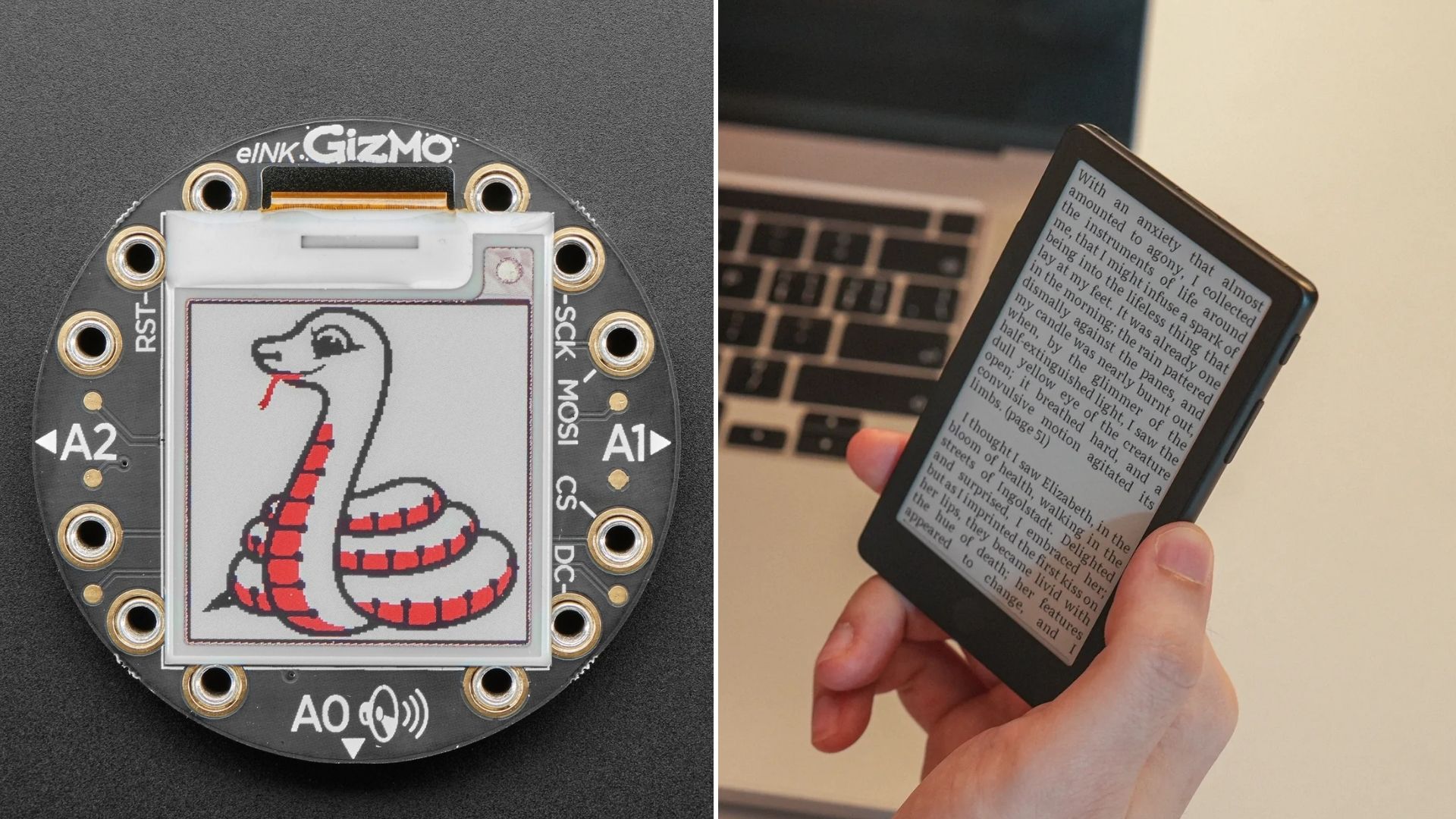
 How electrophoretic e-ink displays create images without a backlightRead the article English (automatic translation) |
SummaryE-ink screens create images by moving pigment particles within microscopic capsules via electrophoresis. This results in a reflective surface that retains the image without requiring continuous power. The article examines the underlying physics, the advantage of not needing backlighting, the trade-off of slow refresh rates, and the limitations of color e-ink step by step. |
Why it mattersIn a market dominated by light-emitting panels like LCD and OLED, e-ink’s bistable structure—consuming zero power to maintain an image—offers a fundamentally different energy model. This leads to concrete benefits in battery life for e-book readers, shelf tags, and low-power IoT displays. As readability in ambient light and reduced eye strain become design priorities, understanding this 'reflective, non-emissive' paradigm helps explain why e-ink persists in niches where lit screens cannot compete. |
Highlights
|
Critical takeThe article is a competent popular science explanation but carries a slightly promotional tone. It presents E Ink’s own data (120 ms full-screen refresh, power consumption only during updates) without independent benchmarks and frames all trade-offs as 'fully acceptable' for target use cases. There is no discussion regarding the environmental cost of the manufacturing process, e-waste, or real-world failure modes that limit e-ink’s lifespan (ghosting, dead pixels, capsule degradation). |