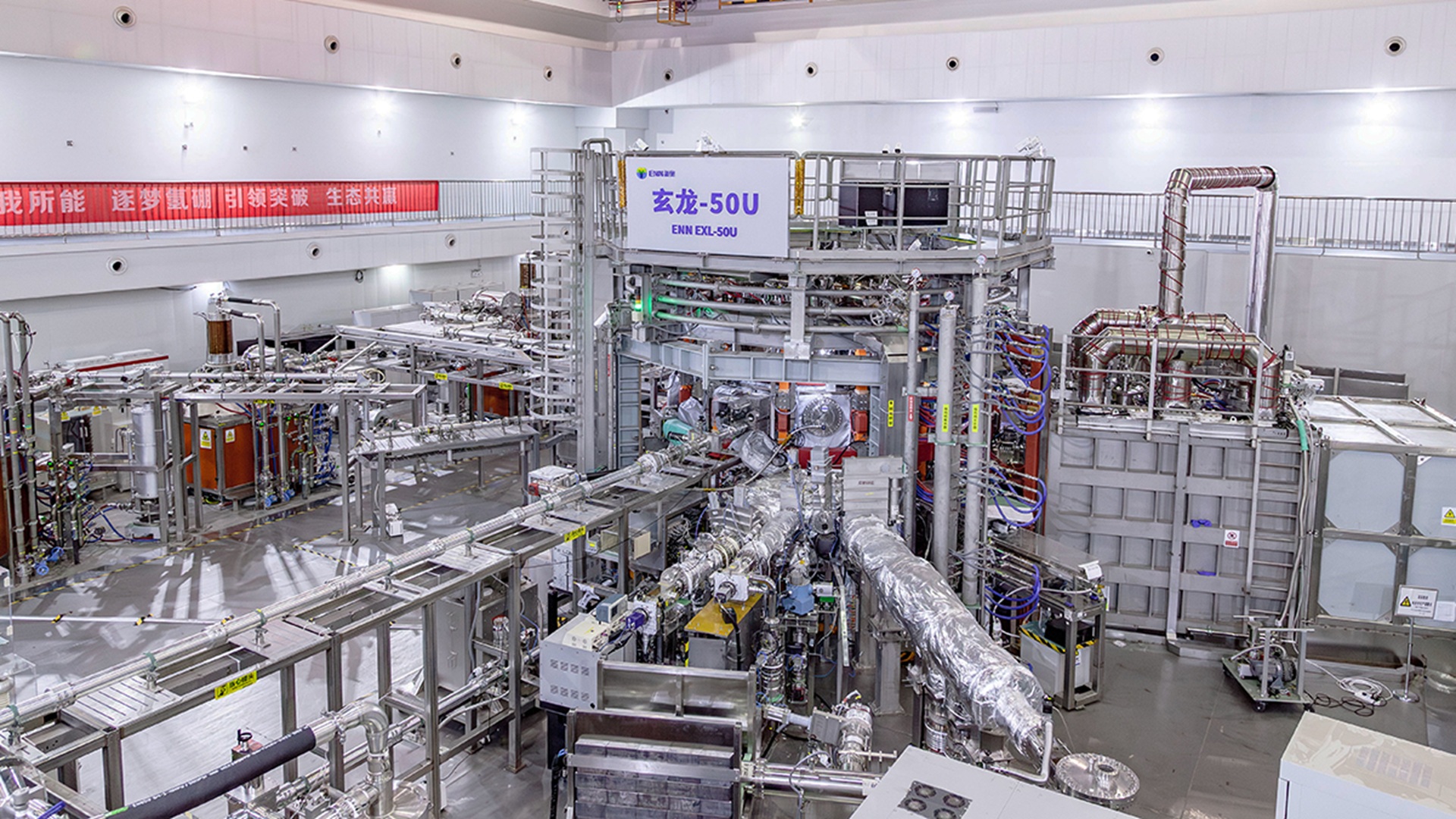
 Chinese ENN Group records 100 million hydrogen-boron fusion reactions per secondRead the article English (automatic translation) |
SummaryChina-based ENN Group reported achieving over 100 million hydrogen-boron fusion reactions per second in its EXL-50U global tokamak device. The company used neutral beam injection and radio frequency waves to bring protons to the first resonance peak. This result marks the first data obtained by a commercial fusion company on its own device. |
Why it mattersHydrogen-boron fusion is attractive because it eliminates the neutron damage and tritium scarcity issues associated with mainstream D-T fusion. The process produces only charged alpha particles, which can theoretically be converted directly into electricity. Even small-scale commercial validation of the fuel cycle pursued by companies like TAE Technologies and Marvel Fusion demonstrates that China's private sector is now a competitor in the global fusion race. Furthermore, it establishes a concrete benchmark (100 million °C plasma target and the Helong-2 device) that the community can track. |
Highlights
|
Critical takeThe article significantly overlooks the actual energy efficiency, which is in the single-digit watt range at a reaction rate of 100 million per second. Although the figure in the headline is a physical first, it risks being misinterpreted as a step toward net energy-producing fusion. The claim that the result was reviewed by 'more than 10 international experts' is vague. Since no journal, conference, or peer-review venue is named, independent verification via the text is difficult. |