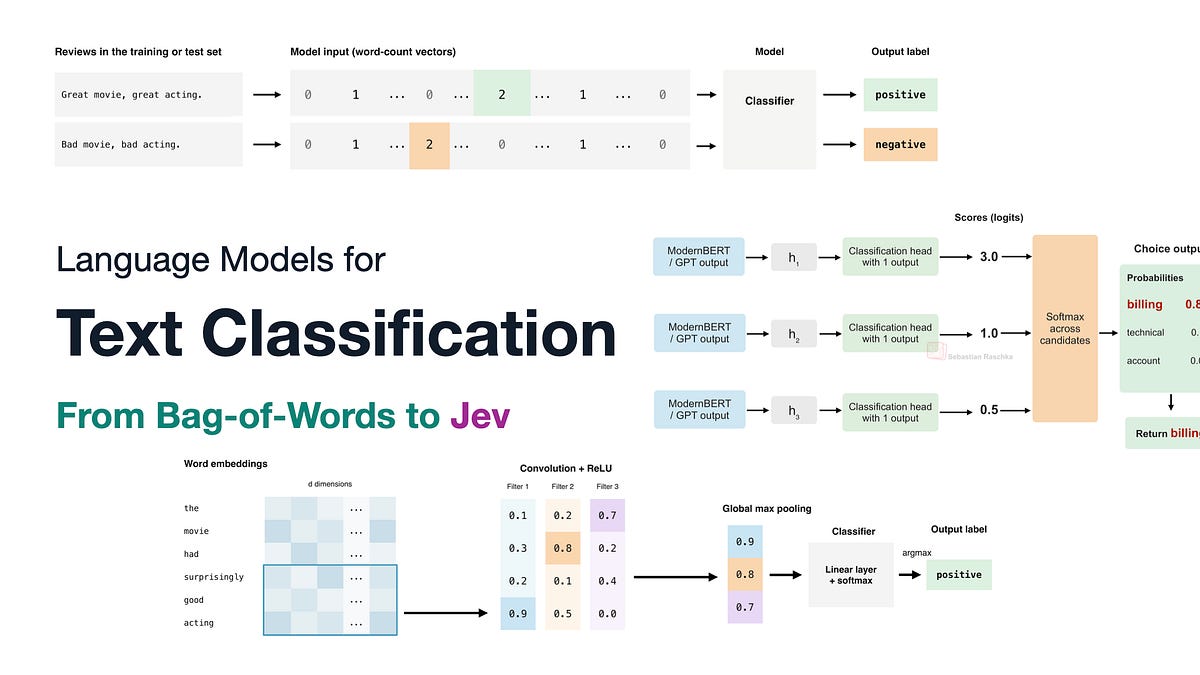
 The Place of the Jev AI Model in the History of Text ClassificationRead the article English (automatic translation) |
SummarySebastian Raschka positions the Jev AI model within the historical trajectory of text classification. This process spans from bag-of-words and naive Bayes to RNNs/CNNs, and then to transformers, where Jev offers a middle ground between narrow, task-specific classifiers and general-purpose large language models (LLMs). The model provides speed and cost advantages while retaining broader generalization capabilities. |
Why it mattersJev has become a focal point for cultural debate in technical communities. Discourse surrounding the model is either dismissive ('just a classifier') or uncritically enthusiastic ('hype'). A solid historical framework helps practitioners calibrate their expectations correctly: determining when a custom classifier, a Jev-style general classifier, or a full-fledged LLM is the right tool. Raschka’s long-standing credibility as a machine learning educator adds weight to the piece that goes beyond a typical product review. |
Highlights
|
Critical takeDespite its ambitious historical scope, the article reads more like a familiar textbook summary (bag-of-words → n-gram → embeddings → RNN/CNN) than a rigorous analysis of Jev’s actual architecture or benchmarks. The 'informed guess' framework and the author’s evident excitement ('wow, this really works better than I expected') shift the balance from neutral analysis to conscious advocacy. Additionally, the article’s excessive length risks burying a few genuinely new claims under well-known pedagogical ground. |