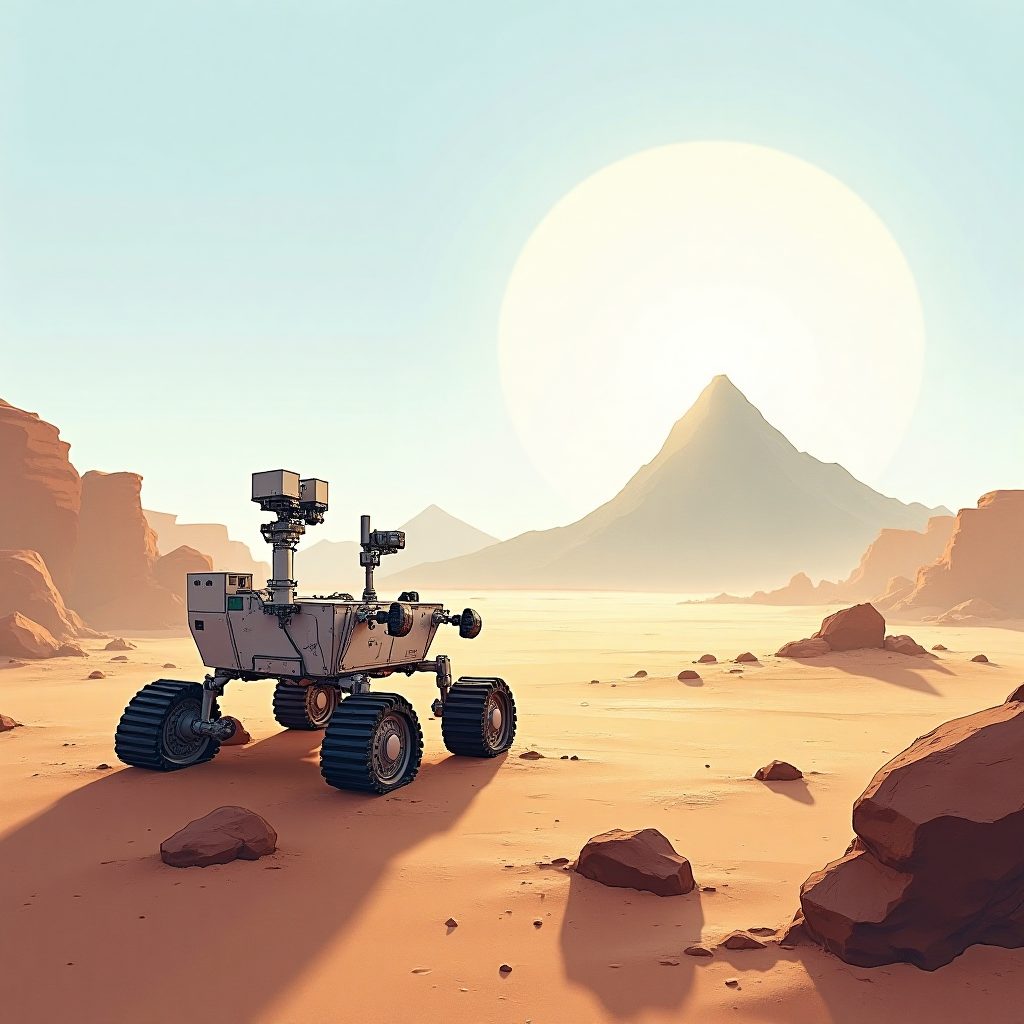
 Generative AI is giving spacecraft autonomyRead the article English (automatic translation) |
SummaryIEEE Spectrum reports on early-stage experiments signaling a shift from deterministic, Earth-centric control to generative AI-driven autonomy in spacecraft. Examples include NASA using Claude for route planning on Perseverance, an IBM model on the ISS, and Icarus Robotics' zero-gravity robot Joy. The article emphasizes that as missions become increasingly distant and complex, this transition is an inevitable evolution. However, it also acknowledges that the technology is not yet ready for full autonomous control. |
Why it mattersMissions to Europa or deep-space probes face light-delay windows where Earth-based commands are physically impossible. In such scenarios, onboard decision-making becomes a necessity rather than a luxury. The article highlights a genuine engineering tension: decades of space practice have prioritized predictable, deterministic behavior, whereas next-generation missions may require the interpretive flexibility that only non-deterministic AI can provide. Understanding where generative models work and where they fail in orbit will shape the architecture of all future robotic missions. |
Highlights
|
Critical takeThe article relies on a few early-stage demos (route planning assistance, cloud classifiers, chatbots) where humans remain in the loop to argue for a paradigm shift. However, none of these systems have made unsupervised decisions in orbit. Characterizing the situation as a 'larger shift' risks overstating a process that is still in a very early research stage. The Icarus section reads more like corporate promotion than independent reporting. Additionally, no concrete timeline, speed-ratio data, or independent validation is provided to support the autonomy claims. |