 When Should You Disclose AI Use? The PACED FrameworkRead the article English (automatic translation) |
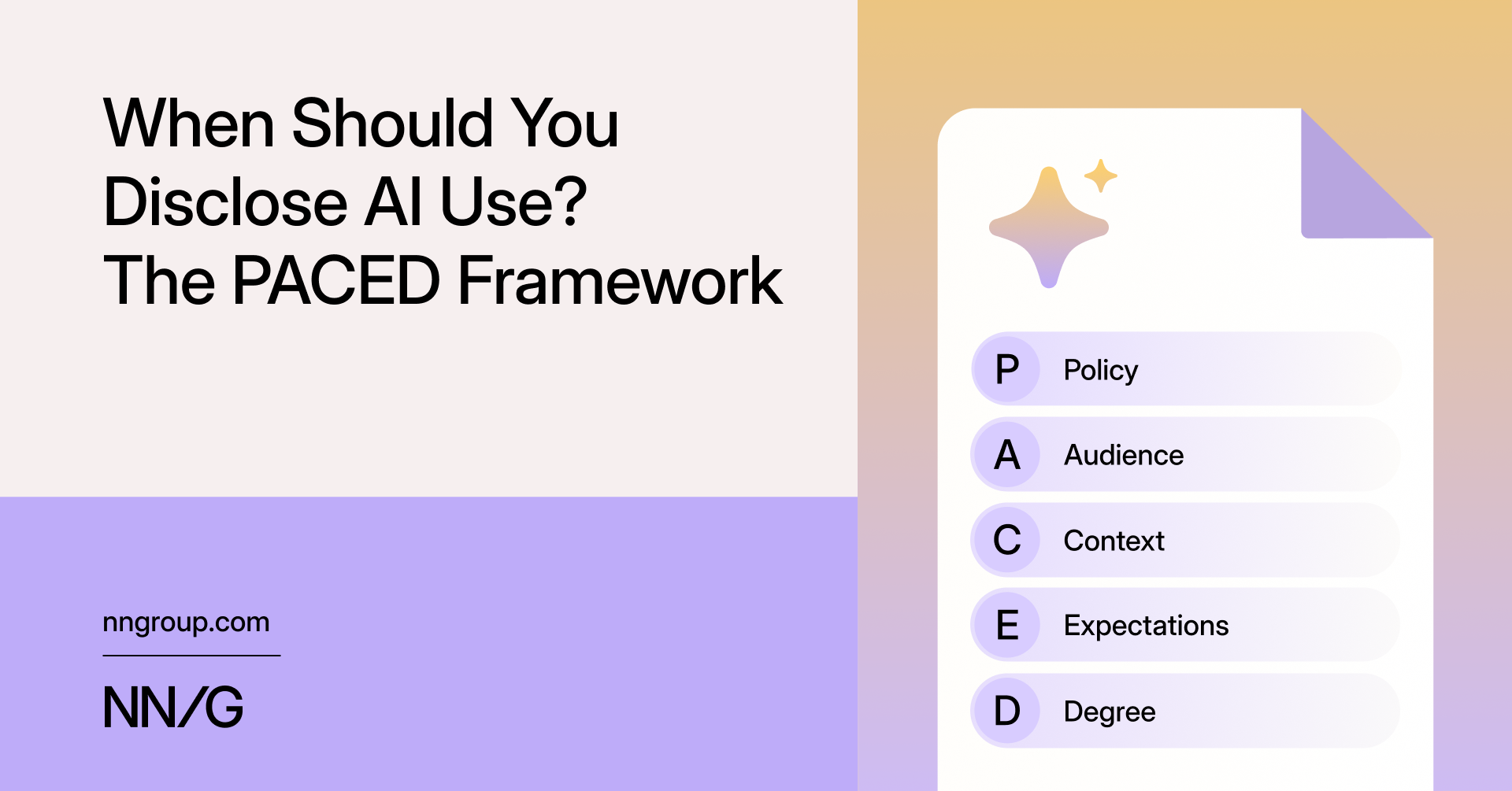
SummaryNN/g argues that disclosing AI usage does not result in a uniform trust penalty, synthesizing 47 studies. Reactions vary depending on the role AI plays, readers' expectations regarding human authorship, and the type of content. The article proposes a five-factor 'PACED' framework to guide disclosure decisions under the transparency obligations of the EU AI Act (effective from August 2026). |
Why it mattersThe disclosure rules of the EU AI Act are now in effect. Brands and content teams face a concrete compliance question that also carries real reputational risks. The article's key finding is that the impact of disclosure is not universally negative but context-dependent. This finding offers a more nuanced basis than the widespread 'AI = bad' assumption, helping to prevent overcorrections that could undermine trust in legitimately AI-assisted work. |
Highlights
|
Critical takeAlthough the article's evidence base is broad, it is largely attitudinal (self-reported Likert-style ratings) and includes only one behavioral study. The finding of 'no consistent effect' is partly due to the fact that most of the 47 studies did not cleanly isolate the disclosure effect from other variables. Additionally, as a text from a user experience consultancy, the practical guidance tends toward 'it depends, weigh the five factors.' This framework is more diagnostic than rule-based, leaving teams without a clear decision rule regarding the compliance deadline that the article itself references. |