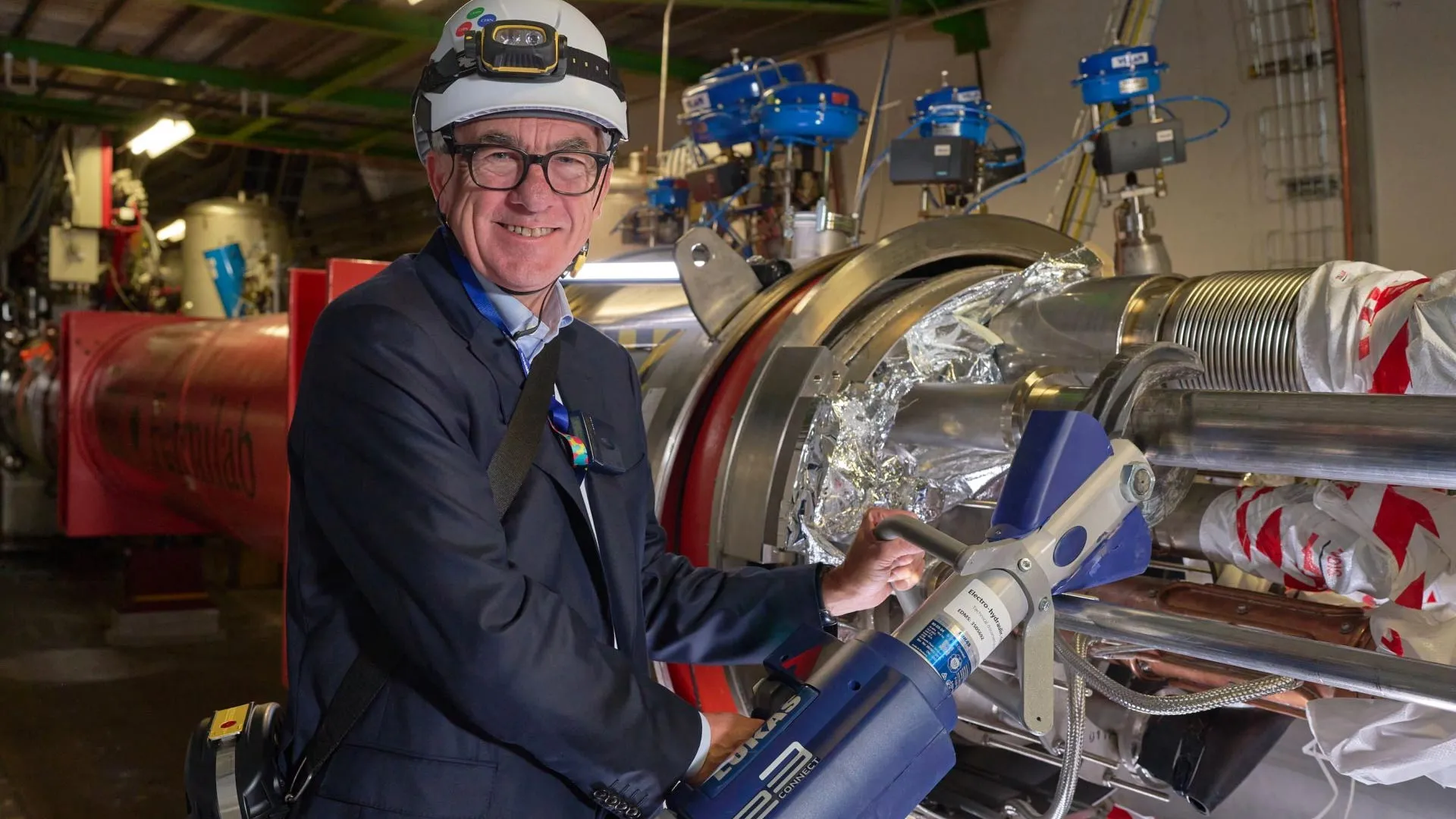
 CERN begins magnet replacement at the Large Hadron ColliderRead the article English (automatic translation) |
SummaryCERN has begun dismantling the existing inner triplet magnets during the LHC's third long shutdown. These magnets will be replaced with niobium-tin superconducting magnets that generate fields approximately 40% stronger (11.3 T), aiming to increase collision rates in the ATLAS and CMS experiments. |
Why it mattersLuminosity is the most critical lever for achieving new physics discoveries at the LHC. This represents the largest hardware modification since the machine's construction. Increased collisions mean more data for ATLAS and CMS, the primary detectors for Higgs boson precision studies and searches beyond the Standard Model. This upgrade also marks a generational shift in superconducting magnet technology (from NbTi to Nb3Sn), setting a benchmark for future accelerator projects. |
Highlights
|
Critical takeThe article reads like a CERN press release disguised as news. There is no discussion of budget figures, risk assessments, or the gap of over two years between the initial cuts today and the delivery of the first new magnet in 2029. Labeling this as a 'new era' is marketing. The actual physical benefit depends entirely on whether higher luminosity translates into statistically significant discoveries, which is by no means guaranteed. |