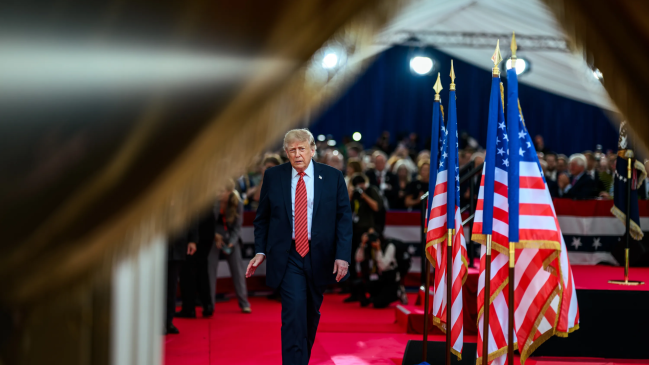
 Trump establishes 'AI Force' to keep US AI race movingRead the article English (automatic translation) |
SummaryTrump announced plans to establish a federal 'AI Force' and appoint a new AI chief to accelerate US artificial intelligence development. Dismissing existential risk warnings as 'a scam,' Trump argued that existing criminal and civil laws are sufficient to monitor misuse. This move is positioned as a competitive response to China, although structural details have not yet been shared. |
Why it mattersThe proposal signals a shift from voluntary sectoral self-regulation to a top-down federal structure. This will directly impact how the US balances speed with safety. The proposal also comes amid a genuine energy crisis. The International Energy Agency (IEA) predicts that electricity consumption by AI data centers could triple by 2030. This turns the policy's infrastructure assumptions into a live political and economic issue. |
Highlights
|
Critical takeThe article reads more like a press release summary than investigative journalism. It lacks named officials, legal instruments, or a timeline. This reduces the 'AI Force' from a policy to a slogan. Equating AI governance with 'existing criminal and civil law' ignores the reality that new, rapidly evolving model capabilities may outpace the legal frameworks Trump references. The article never questions this gap. |