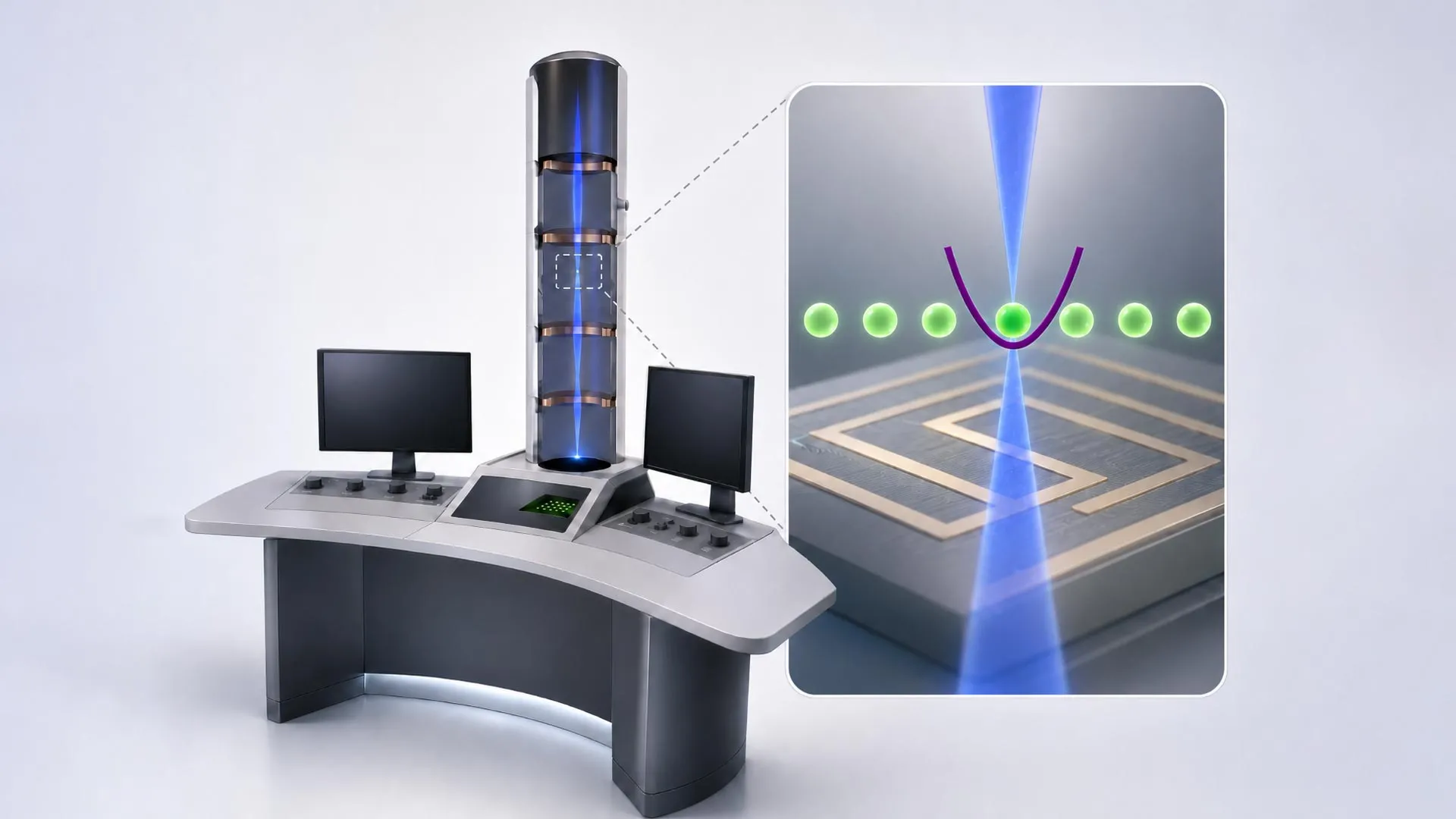
 New quantum computer-powered microscope being built in AustriaRead the article English (automatic translation) |
SummaryAustrian researchers are integrating a trapped-ion quantum computer into an electron microscope. This allows the quantum entanglement between passing electrons and ions to reveal information lost in traditional electron counting. The system could enable clearer images using fewer electrons and causing less damage to fragile biological samples. |
Why it mattersTraditional electron microscopy is limited by statistical noise arising from the counting of a limited number of electrons. This imposes a trade-off between image quality and sample damage, a problem particularly pronounced for sensitive structures like single proteins. If entanglement-based readout works, researchers can reach this statistical limit without needing new electron sources. This would open a genuinely new regime for subatomic imaging. The project also demonstrates a rare and concrete integration of quantum computer hardware with a classical scientific instrument. This use case goes far beyond the usual 'quantum speedup' narrative. |
Highlights
|
Critical takeThe article reads like an optimistic press release. There is no experimental data yet, and the system is still being built. The core engineering challenge—reliably coupling a free electron beam to a trapped-ion qubit array within a functioning microscope—remains unproven. Phrases like 'overcoming statistical limits' are strong claims for a proposal that currently exists only on paper. |